

If you have highly reactive skin, shopping for sunscreen feels less like self-care and more like navigating a minefield.
I realized this last week while packing for a Whale Watching trip. My bag was a chaotic mess of weekend essentials. I had my trusty Uniqlo Jersey Barrel Pants and a spare Banana Republic Factory Straight Mid-Rise Corduroy Pant for the chilly boat ride. I packed my Huahuacase Tortoiseshell Phone Case so I wouldn't drop my phone in the ocean, and I even prepped road-trip snacks in my Duralex Lys Stackable Bowl with White Lids Set (heavy on the Fix & Fogg Everything Butter).
Packing the clothes and snacks was easy. But picking a sunscreen? That paused the whole operation.
When your skin is prone to redness, stinging, or random breakouts, slapping on just any SPF is a guaranteed ticket to a red, angry face. A bad formula isn't just uncomfortable; it’s a chemically scented nightmare. You want sun protection, but you don't want your face to burn before you even step outside.
If you are exhausted by the trial and error, this guide is for you. Let's break down exactly what to look for, what to avoid, and how to find a formula that actually respects your skin barrier.

The Chemistry of the Burn: Why Does It Sting?
When you apply a lotion and your face instantly heats up or stings, you are likely experiencing either irritant contact dermatitis or allergic contact dermatitis. Your compromised skin barrier is sounding the alarm.
The skin-care market is flooded with products promising the world, but many rely on older, aggressive chemical UV filters to achieve high SPF ratings quickly and cheaply. While these filters absorb UV light effectively, they can be highly irritating to reactive skin types.
Add artificial fragrances, drying alcohols, and cheap preservatives to the mix, and it’s no wonder your skin is freaking out. You need better label literacy to survive the skincare aisle.
Decoding the Label: Mineral vs. Chemical Filters
To stop the stinging, you have to understand the active ingredient list on the back of the tube. The American Academy of Dermatology and top experts at hospitals like Mount Sinai generally point sensitive skin sufferers in one specific direction: go mineral.
Here is the breakdown of the two main camps in the sunscreen world.
The Safe Bet: Physical Blockers
Also known as mineral sunscreens, physical sunscreen, or mineral-based formulas, these are the gold standard for sensitive skin. They sit on top of the skin and create a literal physical barrier that reflects UV rays away from your face.
- The Hero Ingredients: You are looking for two specific names: zinc oxide and titanium dioxide.
- Why they work: Because they don't penetrate the skin deeply, they rarely cause allergic reactions. Zinc oxide in particular is incredibly soothing—it’s actually the main ingredient in diaper rash cream. Many modern brands use non-nano zinc oxide to ensure the particles are large enough not to enter your bloodstream while still providing excellent coverage.
- The Catch: The dreaded White cast. Because mineral formulas act like tiny mirrors on your skin, they can look chalky, especially on darker skin tones.
The Tricky Territory: Chemical Sunscreens
Chemical sunscreens (or organic filters) work by absorbing UV rays, converting them into heat, and releasing them from the skin.
- The Problem for Sensitive Skin: This chemical reaction—and the heat it generates—can trigger severe skin sensitivities and rosacea flare-ups. Older chemical filters like Avobenzone and Oxybenzone are notorious offenders.
- The Exception: Not all chemical filters are bad. Newer generation filters (often found in Asian and European formulas) are much gentler. But if you have highly reactive skin, it is often safer to avoid the older chemical filters entirely.
How to Choose: The Non-Negotiable Checklist
When you are hunting for broad-spectrum protection (meaning it defends against both burning UVB rays and aging UVA rays), you need to be strict. Here is how you filter out the junk.
1. Aim for the Sweet Spot: SPF 30-50 You need adequate protection against skin cancer and premature aging. Look for SPF 30 or SPF 50. Going below 30 isn't enough. Going above 50 often requires a heavy load of UV filters that can increase irritation without offering significantly more protection. A solid SPF 50 formula hits the perfect balance.
2. Demand Broad-Spectrum Coverage Never buy a sunscreen that doesn't explicitly state broad spectrum. You need a shield against everything, including the blue light emitted by your screens if the formula contains iron oxides (tints).
3. Ban the Fragrance This is non-negotiable. Always opt for fragrance-free sunscreens. Synthetic fragrances and even natural essential oils are top triggers for contact dermatitis.
4. Look for Soothing Sidekicks The best sunscreens double as skincare. Look for formulas packed with calming ingredients that support your skin barrier:
- Hyaluronic acid: Pulls moisture into the skin without feeling heavy.
- Centella asiatica (Cica) and aloe vera: Instantly soothe redness and inflammation.
- Oat extract: Calms itchy, irritated skin.
- Vitamin E: A powerful antioxidant that repairs damage.
- Collagen peptides: Help plump and maintain barrier strength.
5. Always, Always Patch Test Never apply a new product directly to your whole face. Testing methods matter. Do a patch test by applying a small amount behind your ear or on your jawline for a few days to monitor for a reaction.
The White Cast Reality Check
We have to talk about the elephant in the room. If you are using true mineral sunscreens to avoid irritation, you are going to battle the white cast.
How do you deal with it?
- Look for tints: Tinted mineral sunscreens use iron oxides to mask the white chalkiness.
- Warm it up: Rub the sunscreen between your fingers before applying. The heat helps it melt into your skin better.
- Layering: Hydrate your skin thoroughly first. Applying sunscreen over a dry, flaky barrier makes the white cast look ten times worse.
The Lineup: What Works and What Fails
Let's look at some popular options on the market. Some live up to the hype; others fall flat for truly sensitive faces.
The Heavy Hitters (Pros and Cons)
- La Roche-Posay Anthelios & La Roche Posay Anthelios SPF50+: A classic recommendation. They offer great protection, but some of their purely chemical versions can still sting a broken barrier. Their mineral fluid version is safer for reactive days.
- EltaMD UV Clear & EltaMD UV Skin Recovery: Cult favorites for acne-prone, sensitive types. They use a hybrid of zinc oxide and chemical filters. Usually very well-tolerated, but occasionally the niacinamide in the UV Clear can cause flushing in ultra-sensitive users.
- Vanicream Facial Moisturizer with SPF 30: If you want basic, no-nonsense hydration. It pairs well if you already use the standard Vanicream Facial Moisturizer. It’s thick, but very safe.
- Banana Boat Sport Sensitive SPF50+: Good for the body, but usually too greasy and heavy for the face. Better kept in the beach bag.
- COSRX Aloe Soothing Sun Cream SPF50+: Feels incredibly elegant and hydrating. However, it relies heavily on chemical filters and contains a distinct fragrance, making it a gamble for true sensitive skin.
- Lightsaver Triplesome Serum & Kate Somerville Hydrakate: These aren't sunscreens, but they are fantastic barrier-repairing serums to layer under a drying mineral sunscreen to prevent peeling.
- Colorescience Sunforgettable: A great brush-on mineral powder for reapplying over makeup, but not sufficient as your primary morning layer.
- Raw Love Sunscreen: A very natural, Reef Safe Sunscreen. Great for the ocean, but often too thick and comedogenic for daily facial wear under makeup.
The Ultimate Solution: NING Dermologie
If you are tired of compromising—choosing between a stinging chemical filter or a chalky, heavy mineral paste—you need to look at formulas designed specifically to bridge this gap.
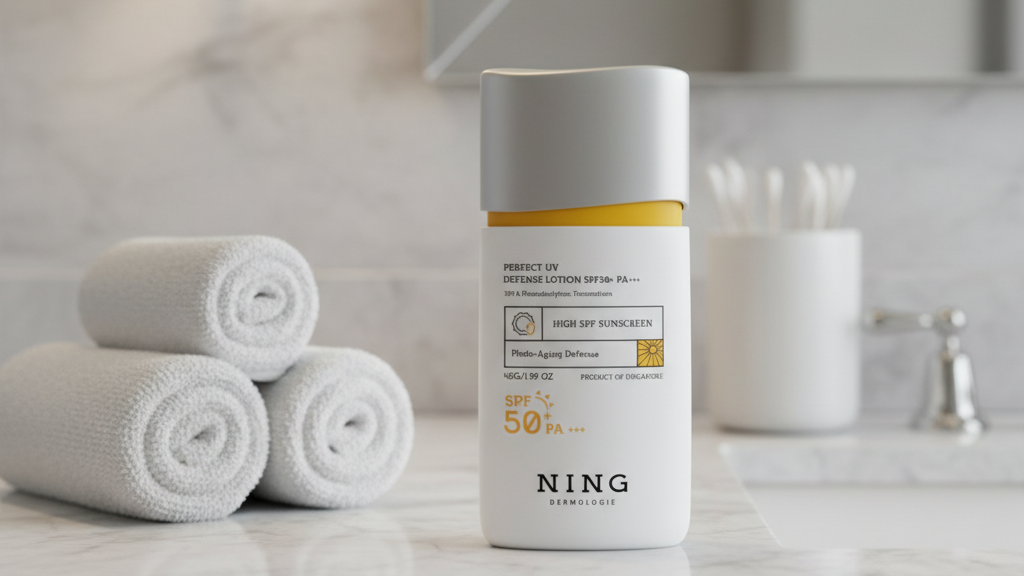
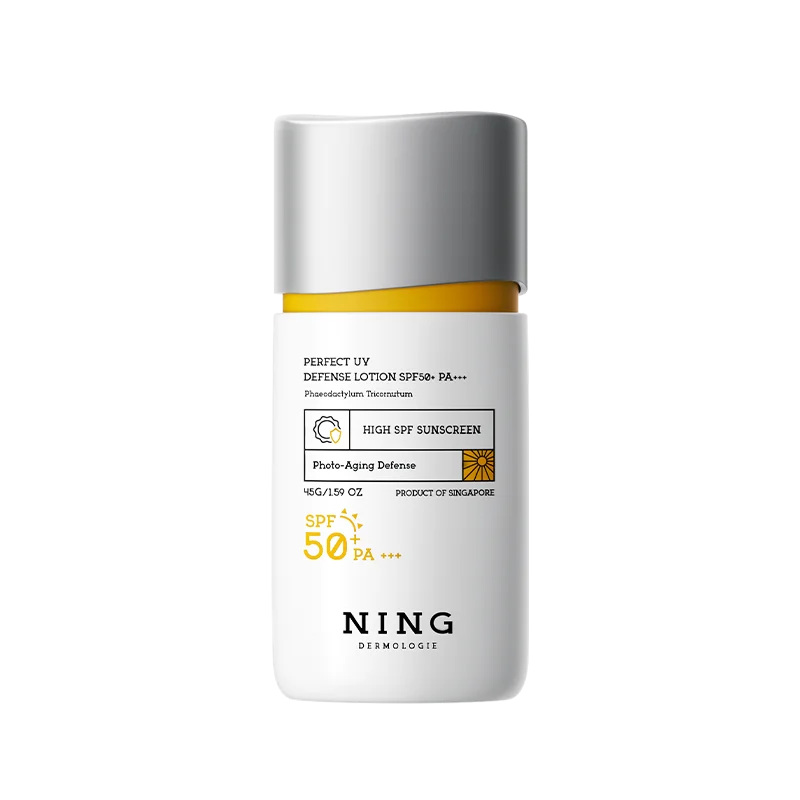
This is where the NING Dermologie SPF50+ Facial Sunscreen changes the game.
We developed this formula because we were exhausted by the current options. It is engineered specifically for hyper-sensitive, reactive skin that needs maximum protection without the penalty of irritation.
Why it stands out for sensitive skin:
- Zero Stinging: We bypassed the harsh, traditional UV filters that cause your eyes to water and your skin to burn.
- High-Level Defense: It delivers verified SPF 50 and broad-spectrum coverage, blocking harmful UVA and UVB rays effectively.
- Skincare First: It’s infused with barrier-loving ingredients like hyaluronic acid to prevent the tight, drying feeling common with high-SPF products. It applies smoothly, acting more like a calming lotion than a rigid sunblock.
- Everyday Wearability: Forget the heavy, greasy residue that ruins your makeup. It sinks in quickly, making it a perfect daily base.
If you are looking to upgrade your routine, don't wait for a random Micro Sales event or a holiday to Shop the Sale. Sun protection is a daily necessity. Grab a formula that actually works for you right now.
Beyond the Face: A Complete Sun Strategy
Protecting sensitive skin doesn't stop at the jawline.
- Cover Up: Invest in UPF clothing. A good UPF hat or shirt does the heavy lifting so your skin doesn't have to.
- Stay Prepared: Always keep Travel Size Sunscreens in your bag for your hands and neck.
- Ocean Rules: If you are swimming, ensure your body sunscreen is a true Reef Safe Sunscreen without oxybenzone or octinoxate to protect marine life.
Finding the right sunscreen for sensitive skin takes patience. Stop forcing your skin to tolerate aggressive chemicals. Switch to gentle, physical-heavy or thoughtfully formulated hybrid options, prioritize barrier repair, and listen to what your face is telling you.

Frequently Asked Questions (FAQ)
1. Do I really need sunscreen indoors?
Yes. While windows block most UVB rays (the ones that cause burns), UVA rays penetrate right through the glass. UVA rays cause premature aging and hyperpigmentation. If you sit near a window or work in a bright room, daily application is non-negotiable.
2. Why does sunscreen make my eyes water and sting?
This is usually caused by older chemical UV filters like Avobenzone migrating into your eyes as your face natural produces oil or sweat. Switching to a purely mineral formula (zinc oxide or titanium dioxide) around the eye area almost always solves this problem instantly.
3. How do I reapply sunscreen over makeup without ruining it?
Don't smear lotion over your foundation. Use a sunscreen powder applied with a brush, or gently press a sunscreen spray into the skin using a dry beauty sponge. This refreshes your SPF protection without lifting your carefully applied makeup base.
4. Is SPF 50 twice as good as SPF 30?
No. The math doesn't work like that. SPF 30 blocks about 97% of UVB rays, while SPF 50 blocks about 98%. The difference is minimal. What matters much more is applying a generous, even layer and remembering to reapply it every two hours.
5. How do I remove mineral sunscreen properly without scrubbing?
Mineral sunscreens are stubborn and designed to stick to your skin. Regular face wash isn't enough. You must double cleanse. Start with a cleansing balm or an oil cleanser to break down the physical filters, then follow up with a gentle, hydrating gel or cream cleanser.





Share:
Best Facial Sunscreen for Hyperpigmentation: What to Look For to Help Dark Spots
Best Facial Sunscreen for Acne-Prone Skin: Non-Greasy SPF That Won’t Trigger Breakouts