



We have all stood in front of the bathroom mirror, inches away from the glass, staring at those stubborn black dots scattered across our nose and chin. It’s the "strawberry nose" struggle. You squeeze one (we know you shouldn't, but we’re all human), and three days later, it’s back.
If you are tired of pore strips that rip your skin off but leave the gunk behind, it’s time to talk about the gold standard in chemical exfoliation: Salicylic Acid.
Specifically, we aren't talking about messy peels or sticky serums today. We are looking at the unsung hero of the skincare routine—the salicylic acid cleanser. It’s the easiest swap to make in your daily regimen, but most people use it wrong.
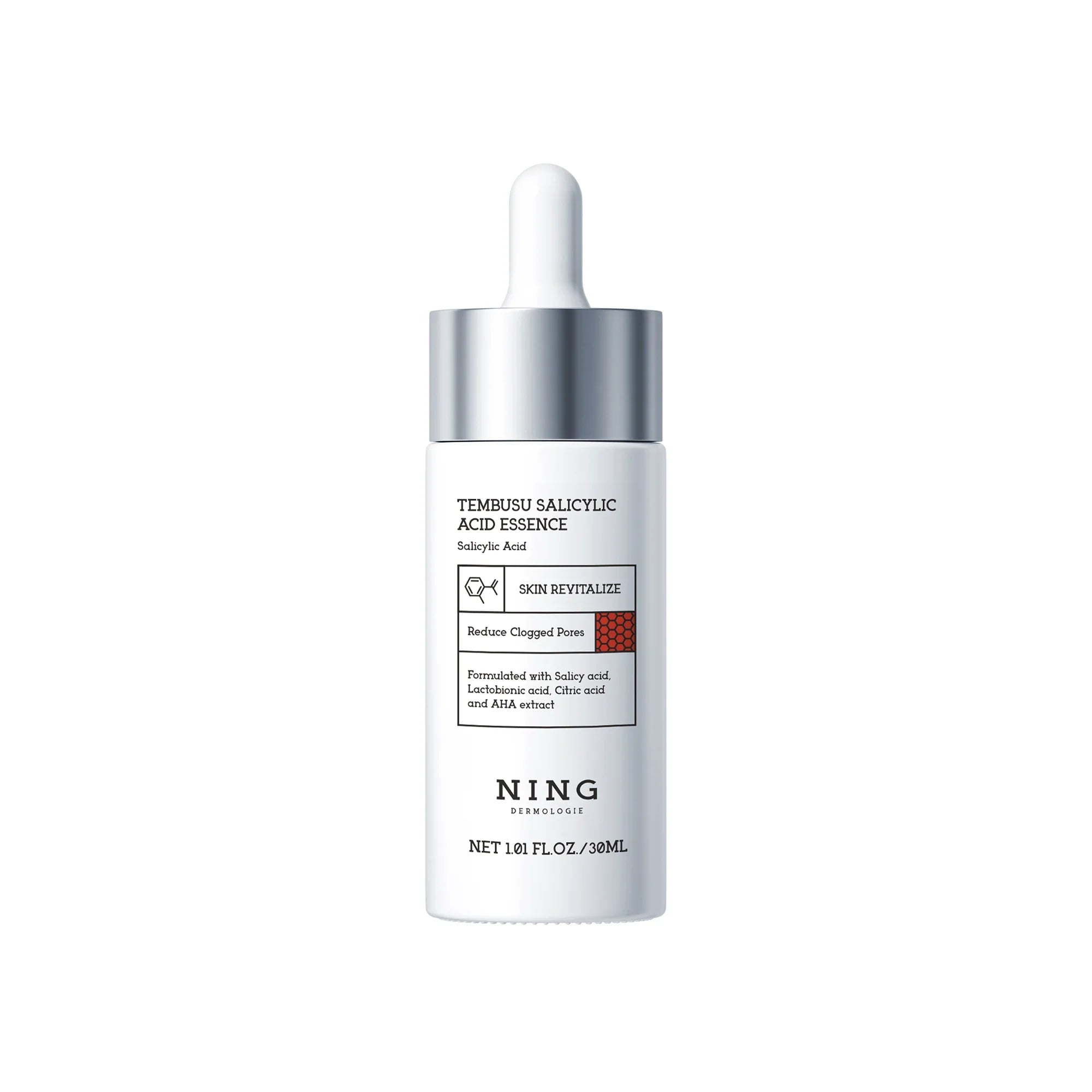
Here is the deep dive into why this ingredient is a game-changer for clogged pores, how to pick the right one (hello, NING Dermologie), and the exact method to use so you actually see results.

The Science: Why Water Can’t Wash Away Oil
To understand why your current face wash might be failing you, we have to look at the chemistry of a blackhead formation.
A blackhead isn't dirt. It is a plug made of excess sebum (oil) mixed with dead skin cells that have gotten trapped in your hair follicles. When this mixture hits the surface and oxidizes with air, it turns black.
Here is the problem: Most basic face washes and alpha hydroxy acids (like glycolic acid or lactic acid) are water-soluble. They work great on the surface of the skin, polishing away roughness. But oil and water don’t mix. If you have oily skin or a congested T-zone, water-soluble ingredients just sit on top of the oil plug. They can’t get inside.
Enter Beta-Hydroxy Acid (BHA)
Salicylic acid is a beta-hydroxy acid (BHA). The "beta" structure makes it lipophilic, meaning it loves oil. It doesn't just scrub the surface; it dives straight into the sebaceous gland.
Think of salicylic acid as a microscopic pac-man that can swim through oil. It travels down the pore lining and dissolves the "glue" holding the dead skin and sebum together. This process is called being a keratolytic agent. It breaks down the keratin plugs, allowing the oil to flow freely rather than hardening into a blackhead.
Why a Face Wash? (The Case for Short Contact Therapy)
You might be thinking, "Shouldn't I just use a strong salicylic acid serum or a leave-on toner?"
Not necessarily. While products like the PITERA™ Facial Treatment Clear Lotion or strong peel treatments have their place, leave-on BHAs can be notoriously drying. If you have sensitive skin or are prone to skin irritation, leaving an acid on your face all day can damage your skin barrier.
This is where face washes shine. Dermatologists often refer to this as "Short Contact Therapy." You get the active ingredient into the pores where it does the heavy lifting, but then you rinse it off before it can cause surface irritation or dehydration. It is the perfect balance for maintaining clear skin without turning your face into a flakey mess.
The Balancing Act: Finding the Right Formula
Not all salicylic acid cleansers are created equal. In the past, acne washes were harsh, stripping the skin so badly that your oil glands would panic and actually produce more oil to compensate (the rebound effect).
You need a product that balances the exfoliation of BHA with gentle cleansing agents. This is where the NING Dermologie philosophy comes in.
We developed the Amino Acid Facial Cleanser with Salicylic Acid to solve the "stripped skin" problem.
Here is why this formulation works differently:
- Amino Acid Base: Unlike harsh sulfate-based foaming face wash options that act like dish soap, amino acid surfactants are biocompatible. They clean without wrecking the skin's pH or microbiome.
- Optimized Salicylic Acid: We use a concentration that targets acne-prone skin and oil buildup effectively but is buffered enough for daily use.
- Hydration Support: We don't want you to feel tight after washing. Ingredients like Aloe vera or hyaluronic acid are often paired in these formulations to ensure surface hydration remains intact.
It’s a salicylic acid face wash that respects your barrier while evicting the gunk from your pores.
How to Use It: The "60-Second Rule"
This is the part where 90% of people fail.
If you buy the best skincare products in the world—whether it's our Amino Acid Facial Cleanser with Salicylic Acid, a fancy SK-II PITERA™ Facial Treatment Cleanser, or a drugstore Vitamin C Face Wash—it won't work on blackheads if you wash it off in 10 seconds.
Salicylic acid needs time to penetrate.
The Routine:
- Remove Makeup First: If you wear makeup or heavy sunscreen, use an oil balm or micellar water first. The BHA cleanser should be your second step.
- Lather and Wait: Apply the cleanser to damp skin. Massage it gently, focusing on the nose, chin, and forehead.
- The 60-Second Rule: Sing the alphabet song twice. You need the suds to sit on the blockage for at least a full minute. This gives the hydroxy acids time to break down the debris.
- Rinse with Lukewarm Water: Hot water inflames rosacea and sensitive spots. Keep it cool.
Beyond Blackheads: The Hidden Benefits
While we are focusing on clear pores, salicylic acid in lotions and washes has a resume of other benefits that dermatology professionals love:
- Fungal Acne & Seborrheic Dermatitis: Unlike bacterial acne, "fungal acne" (Malassezia folliculitis) is caused by yeast. Salicylic acid is antifungal and can help reduce the yeast population. It’s also excellent for seborrheic dermatitis (dandruff on the face/scalp).
- Rough Texture: If you have bumpy skin (not necessarily acne, just texture), the exfoliation smooths the surface.
- Body Acne: Have hyperkeratotic hand eczema or bumps on your arms (Keratosis Pilaris)? Using a salicylic wash on your body can help smooth those rough patches.
- Soothing Inflammation: Surprisingly, salicylic acid is related to aspirin (acetylsalicylic acid). It has anti-inflammatory properties, which can help calm the redness of active pimples better than benzoyl peroxide, which can sometimes cause more redness.
Building the Routine: What to Pair (and What to Avoid)
Incorporating active ingredients requires a strategy. You don't want to create a chemical war zone on your face.
1. The Moisturizer is Non-Negotiable Even with a gentle amino acid base, BHA removes oil. You must replace the hydration. Look for a non-comedogenic moisturizer (one that won't clog pores). Ingredients like ceramides or Sea Buckthorn Oil (rich in fatty acids) are great for repair, provided they are in a formulation that suits oily skin.
2. Sun Protection is Law Chemical exfoliants reveal fresh, new skin cells. These babies are sensitive to UV damage. If you are using NING Dermologie products to clear your skin, you must protect that progress with daily SPF. Sun protection prevents the dark spots left behind by old acne from becoming permanent.
3. Be Careful with other Actives
- Retinol Serum: Can you use SA and Retinol? Yes, but be careful. If you are new to this, use the SA wash in the morning and the retinol at night.
- Vitamin C: Generally safe to use Vitamin C serum in the morning after your SA wash.
- Benzoyl Peroxide: Using both at the same time can be extremely drying. Alternate days if you must use both.
- Physical Scrubs: Ditch the walnut scrub. Your salicylic acid cleanser is already exfoliating. You don't need to sandpaper your face.
Natural Alternatives?
You might see "White Willow Extract" or "Willow bark" on labels (like in some indulgeo essentials or "natural" beauty products). Willow extract contains salicin, which the body converts to salicylic acid. While gentle, the conversion rate is low. For true blackhead removal, standardized salicylic acid (or sodium salicylate in some formulas) is more reliable and consistent in OTC products.
When to see a Pro?
If you have been consistent with your skincare routine for 8-12 weeks and see no change, or if you are dealing with cystic acne rather than just blackheads, check with Minimalist Health Specialist or a dermatologist. They might recommend prescription-strength formulas, oral meds to control hormonal changes, or professional extractions.
But for the vast majority of us dealing with standard T-zone congestion, the solution isn't more squeezing; it's smarter washing.
By switching to a dedicated salicylic acid cleanser like the Amino Acid Facial Cleanser with Salicylic Acid, you are treating your pores to a daily deep clean that actually addresses the root cause of the clog.
Be patient. It took weeks for those blackheads to form; give your cleanser a few weeks to clear them out. Your smooth, strawberry-free nose is waiting.

Frequently Asked Questions (FAQ)
Q1: Can I use salicylic acid face wash every day?
A: Generally, yes. If you have oily skin, daily use is fine. However, if you are new to acids or have sensitive skin, start with 3 times a week and build up. If you feel tight or peel-y, dial it back. Listen to your skin barrier.
Q2: Will this cleanser purge my skin?
A: It’s possible. Since BHA speeds up cell turnover, clogs hiding deep down might surface faster as pimples before they clear up. This "purge" usually lasts 2-4 weeks. Keep going—it means the product is working to clean out the pipework.
Q3: Can I use this if I’m pregnant?
A: This is a gray area. While low concentrations (under 2%) in wash-off products are often considered low risk, most dermatological advice suggests sticking to lactic acid or glycolic acid during pregnancy. Always check with your OB-GYN before using BHA products.
Q4: Is it better than Benzoyl Peroxide?
A: They have different jobs. Benzoyl Peroxide kills bacteria (great for angry, red pustules). Salicylic Acid unclogs pores (great for blackheads, whiteheads, and texture). For blackheads specifically, Salicylic Acid is the clear winner because it is oil-soluble.
Q5: Can I use it on my body?
A: Absolutely. It’s fantastic for "bacne" (back acne) or bumpy skin on the back of your arms (Keratosis Pilaris). The skin on your body is thicker than your face, so it tolerates salicylic acid washes very well. Scrub away!





Share:
Are there salicylic acid face washes free of harsh chemicals?
Where can I find loyalty programs or rewards for frequent purchases of hyaluronic acid serums?