


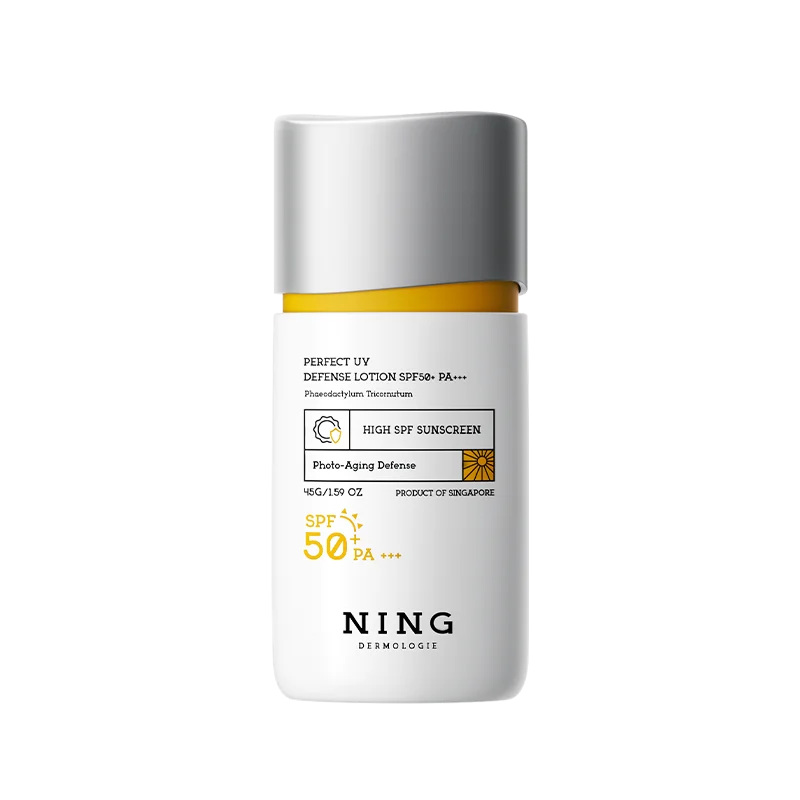
You buy a new sunscreen. The packaging promises it's gentle. You apply it. Five minutes later, your face is burning, tight, red, and angry.
If you have sensitive skin, finding daily sun protection that doesn't trigger a massive freak-out is exhausting. You need something that blocks UV radiation but treats your skin barrier with respect. Let’s skip the marketing fluff and get straight to it. When your face reacts to everything, a physical sunblock—specifically one powered by zinc oxide—is almost always your safest bet.
Here is exactly why that is, how the science works, and how to wear it daily without looking like a ghost.

The Problem with Chemical Sunscreens
Before we talk about why mineral filters win, we have to look at the alternative. Chemical-based sunscreens use synthetic active ingredients to provide UV protection. They work via absorption. Your skin absorbs the lotion, the chemicals absorb the ultraviolet radiation, convert it into heat, and release that heat from your body.
For a normal skin type, that’s fine. For an inflammatory skin condition like rosacea, eczema, or severe acne-prone skin, that trapped heat is a nightmare. It triggers flushing. It triggers stinging. It leads to the allergic reactions and skin irritations so many of us dread.
Chemical filters are also notorious for skin penetration. They seep past the stratum corneum (the outermost layer of human skin). That’s why you get that deep, unscratchable itch.
Enter Zinc Oxide: The Heavy Lifter
A mineral sunscreen works entirely differently. Instead of absorbing into the skin, mineral filters like zinc oxide and titanium dioxide sit right on the surface. They act like a physical shield, reflecting and scattering the UV rays before they can do damage.
But between the two, zinc oxide is the gold standard.
Why? Because it offers true broad-spectrum protection. It naturally blocks UVB rays (the ones that cause sunburn and play a huge role in skin cancer) and both short and long-UVA rays (the ones responsible for deep cellular aging). Titanium dioxide is great, but it falls a little short on the long UVA spectrum. Zinc covers it all.
Zinc is also incredibly soothing. There’s a reason it’s the primary ingredient in diaper rash creams. It has natural anti-inflammatory and non-irritating properties. It doesn't just protect your skin from UV exposure; it actively calms it down.
Making Sense of the Science (Without the Headache)
If you've spent any time reading up on sunscreen formula science, you’ve probably stumbled across some terrifying terms. Let's break them down.
A few years ago, the skincare world panicked over particle size. Older physical sunscreens used large particles, which resulted in a terrible, chalky white cast. To fix this, chemists introduced the zinc oxide nanoparticle and nano- and submicron-size TiO2particles. By making the particles microscopic, the white cast vanished.
But then came the safety questions. Could ZnO nanoparticles absorb into our bloodstream? Could they cause internal damage? The Environmental Working Group and various dermatological studies dug in.
The consensus today? When applied topically in a sunscreen emulsion, these particles do not penetrate healthy skin. They stay on the surface characteristics of your face.
However, context matters. You might have seen scary headlines referencing studies in journals like Toxicol Sci about intranasally instilled TiO(2) nanoparticles affecting the central nervous system in lab animals. That sounds terrifying. But read the fine print: that is about inhaling massive amounts of raw powder, not rubbing lotion on your face. This is exactly why many experts, including those at Dania Dermatology and Skinney Medspa, advise sticking to creams and lotions rather than aerosol sprays to avoid accidental inhalation.
There’s also the issue of photocatalytic activity. When UV hits certain raw minerals, it can trigger photocatalytic redox reactions. In plain English: the sun hits the mineral, and the mineral spits out reactive oxygen species (ROS). Think of ROS like tiny biological wrecking balls that damage collagen. To stop this, modern skincare products use smart environmental nanotechnology. Chemists apply sunscreen NP coatings (like aluminium oxide or specific liposome formulation ingredients) around the raw mineral. This coating acts like a straightjacket. It stops the reaction, ensures UV attenuation, and keeps your skin perfectly safe.
The Formulation Evolution
Finding a good mineral SPF used to feel like punishing yourself. The lotions were thick, greasy, and felt like a heavy hydrophobic basisgel.
Today, your cosmetic arsenal has better options. The industry has advanced rapidly. We now see complex formulations using a Microsponge Delivery System, Solid lipid nanoparticles, or nanostructured lipid carriers to make the lotions feel weightless. They blend in faster and sit better under makeup.
You might have experimented with various options on the market. Maybe you’ve tried the WonderLab Ageless Zinc Oxide Tone Up Sunscreen or WonderDewi Cica Niacinamide Sunscreen. Perhaps you've checked out LASPA SPF products. While many brands utilize mineral filters, the actual feel of the product comes down to the inactive ingredients.
A great formula will balance the sun blockers with hydrators. Look for ingredients like hyaluronic acid to draw in moisture, and Vitamin E for added antioxidant defense.
A Standout Solution for Daily Use
If you are tired of the trial and error—the breakouts, the stinging, the weird textures—you need a formula that gets the balance exactly right.
This is where the SPF50+ Facial Sunscreen from NING Dermologie absolutely shines.
Instead of relying on heavy, pore-clogging waxes, this formula is built specifically for sensitive and acne-prone faces. It utilizes non nano particles of zinc oxide to guarantee safety without compromising on aesthetics. You get the heavy-duty SPF 50+ PA++++ protection you need to prevent sun damage, but the texture is a revelation. It rubs in cleanly without leaving you looking heavily pasted. It’s exactly the kind of reliable, daily-wear SPF that makes protecting your skin a habit rather than a chore.
Protecting the Oceans (And Your Health)
We can't talk about sunscreens without talking about the environment. When you pack your bag with cookout essentials, sunscreen is obviously number one. But what happens when you jump in the water?
Chemical filters like oxybenzone and octinoxate are devastating to coral reefs. As they wash off our bodies, they enter the ocean ecosystem. Even in microscopic amounts, these chemicals can cause coral bleaching and disrupt the marine ecosystem. They act similarly to hydrogen peroxide on the reefs, stripping them of life.
Zinc oxide and titanium dioxide are widely considered reef safe. Because they are physical minerals, they don't cause the same biological disruption to marine life.
Furthermore, mineral sunscreens are broadly recognized as safe for human health. While the FDA is constantly reviewing UV filters, mineral options consistently hold the FDA GRASE Stamp (Generally Recognized as Safe and Effective). Dr. Stanley Skopit and countless other dermatologists repeatedly point patients with atopic dermatitis toward mineral options for this exact reason.
How to Apply Mineral SPF Without the White Cast
Even the best mineral formulations require a slightly different application technique than chemical ones. If you just slap it on and rub wildly, you will be disappointed. Here is how to make it work.
1. Hydrate heavily first.
Mineral powder is naturally astringent (it absorbs oil). If you have oily skin, great. If you have dry or sensitive skin, you need a barrier. Prep your skin with a rich moisturizer or a hydrating serum first. A hydrated base gives the zinc something to glide over.
2. The dotting method.
Do not squeeze a massive blob into your palms and rub your hands together. Instead, squeeze out your required amount (about two finger-lengths for the face and neck) and apply tiny dots all over your face.
3. Pat, don't rub.
Gently pat and press the dots into your skin. Rubbing causes friction, which can make the zinc pill up or look streaky. Patting helps it settle cleanly into the skin barrier.
4. Give it five minutes.
Mineral sunscreens need a moment to set up and melt into your body heat. Don't judge the white cast at second one. Wait five minutes. It will almost always sheer out beautifully.
5. Mind your other products.
If you use a self tanner, remember that heavy rubbing or using harsh chemical sunscreens can degrade the color. A gentle mineral pat-down will protect your skin and help maintain that faux glow.
The Bottom Line
Living with sensitive skin means reading every ingredient label and approaching new skincare products with suspicion. But sun protection isn't optional. Whether you are aiming for basic SPF 30 for a quick walk, or heavy-duty SPF 50+ for a beach day, protecting your skin from UV radiation is the only way to prevent premature aging and cellular damage.
Zinc oxide might require an extra 30 seconds of blending, but the trade-off—zero stinging, zero burning, and true broad spectrum safety—is entirely worth it. Check your shelf life, ditch the expired chemical tubes, and make the switch to a high-quality mineral formula. Your skin will finally breathe a sigh of relief.

Frequently Asked Questions (FAQ)
Does zinc oxide cause acne?
No. Zinc is naturally antimicrobial and non-comedogenic. It actually helps calm breakouts. If you get acne from a mineral SPF, it’s usually the heavy oils or silicones in the base formula clogging your pores, not the zinc itself. Always double-cleanse at night.
Will mineral sunscreen stop my body from making Vitamin D?
No sunscreen blocks 100% of UV rays. Even with diligent, daily use of an SPF 50+, enough sunlight reaches your skin to maintain normal, healthy Vitamin D synthesis. Don't skip sun protection out of fear of a vitamin deficiency.
What is the difference between SPF 30 and SPF 50?
SPF ratings measure UVB protection. SPF 30 blocks about 97% of UVB rays, while SPF 50 blocks roughly 98%. It seems like a small gap, but that extra 1% matters heavily if you have sensitive skin, melasma, or are spending hours outdoors.
How often do I actually need to reapply?
Every two hours of continuous, direct sun exposure. If you apply it at 8 AM, drive to work, and sit in a windowless office until 5 PM, you do not need to reapply just to walk back to your car.
Can I wear mineral sunscreen over my makeup?
Applying a cream over a full face of makeup will ruin your foundation. If you need to reapply over makeup during the day, look for a mineral SPF setting powder or a specific SPF setting spray to touch up your protection safely.





Share:
Best Fragrance-Free Facial Sunscreen for Sensitive Skin: What to Choose & What to Avoid
Dermatologist-Recommended Facial Sunscreens for Sensitive Skin: What Pros Actually Look For