


Let’s talk about that horrible, familiar morning routine. You wash your face with the gentlest cleanser you own. You carefully pat on your barrier-repairing serums. You slather on a thick layer of your safe moisturizer. Everything feels calm, hydrated, and fine. And then, because you know you have to, you apply your sunscreen.
Within seconds, the heat starts.
A slow burn creeps across your cheeks. Your eyes start watering like you’ve just chopped a bag of onions. By the time you get to your car, your face feels tight, prickly, and angry. I know this cycle intimately because I’ve lived it for years. Finding a facial sunscreen cream for dry, sensitive skin that actually protects you without causing a stinging flare-up feels like hunting for a unicorn.
Today, we are stripping away the marketing fluff. We need to look closely at why your current SPF is betraying you, what ingredients are actually safe for a compromised skin barrier, and how to find a moisturizing formula that finally lets you step outside in peace.

The Science of the Sting: Why Your Face Hates Sunscreen
If your face burns when you apply sunscreen, it’s not because you have a low pain tolerance. It happens because your skin barrier is likely compromised. When your barrier is cracked or damaged from dryness, harsh weather, or over-exfoliation, the active ingredient in your SPF seeps deeper into your skin than it should.
And what exactly is seeping in? Most of the time, it's chemical UV filters.
These filters (like avobenzone or oxybenzone) work by absorbing UV rays, turning them into heat, and releasing them from the skin. While chemical sunscreen formulas are generally easier to blend and rarely leave a white cast, that heat conversion process can be a nightmare for skin sensitivities. If you ask dermatologists at institutions like Mount Sinai, they will often tell you that chemical filters are the leading cause of allergic contact dermatitis in the skin-care market.
Then there’s the eye-stinging issue. Chemical formulas have a bad habit of migrating. You apply them to your forehead, you sweat a little, and suddenly those filters are in your eyes.
Chemical vs. Mineral: The Ultimate Dilemma
If chemical filters are the enemy of reactive skin, the obvious answer is switching to physical sunscreens, right?
Well, yes and no. Physical (or mineral) sunscreens work differently. Instead of absorbing light, they sit on top of the skin and deflect it. The main players here are Titanium Dioxide and zinc oxide. The American Academy of Dermatology generally recommends mineral SPFs for anyone struggling with rosacea, eczema, or extreme dryness. Even the National Eczema Association heavily leans toward mineral-based SPF products.
But here is the catch: traditional mineral sunscreen formulas are notoriously drying. Zinc oxide is an astringent. Think about diaper rash cream—it uses zinc to dry out moisture. If you already have severe dry skin, applying a heavy paste of zinc can make your face feel tight and chalky by noon, highlighting every single dry patch and settling into fine lines.
Furthermore, older mineral formulas are infamous for leaving a stark white residue. Finding an ultralight zinc sunscreen that blends nicely across all skin tones without making you look like a ghost is incredibly difficult.
What Your Skin Actually Needs to Survive the Sun
To get the sun protection you desperately need to prevent skin cancer and UV damage without suffering, you have to look for a hybrid approach or a highly advanced mineral formula. You need broad-spectrum protection that physically shields you from both aging UVA rays and burning UVB rays, but it must be suspended in a deeply hydrating base.
Here are the background ingredients that make or break a sunscreen for us dry-skinned folks:
- Hyaluronic acid: This is non-negotiable. It pulls moisture into the skin, counteracting the drying effect of mineral filters.
- Antioxidant-rich green tea extract & Vitamin C: These fight off free radicals from airborne pollution and blue light.
- Vitamin E & Centella asiatica (Cica): Incredible for soothing redness and calming the heat sensation.
- Dimethicone crosspolymer: This gives the sunscreen a smooth, glide-on texture so you aren't tugging at your fragile skin during application. It also provides a beautiful, soft matte finish that works well under makeup.
- DNA repair enzymes: A newer addition to high-end skincare products that actively helps fix the cellular damage caused by previous sun exposure.
The Sunscreen Graveyard: Products I’ve Tested
I have practically funded the sunscreen industry out of my own pocket trying to find the right fit. My bathroom cabinet is a graveyard of half-used bottles. Let's talk about some of the most popular options out there and why they fell short for my specific, demanding skin types.
Let's start with the drugstore classics. I really wanted the CeraVe AM Ultra-Light Moisturizing Lotion With Sunscreen SPF 30 to work because it’s so accessible, but it consistently pilled over my hydrating serums. Vanicream Facial Moisturizer with SPF 30 (and the standard Vanicream Facial Moisturizer used under a separate SPF) is incredibly safe and gentle, but it felt a bit too heavy and left a noticeable white cast on darker skin tones. I also tried Sun Bum products, which smell like a tropical vacation, but the fragrance immediately triggered my redness.
Then I moved to the trendy, heavily marketed stuff. The Hero Force Shield Superlight Sunscreen SPF 30 has a cool green tint to cancel out redness, but I found it slightly too drying for winter use. Black Girl Sunscreen SPF 30 is phenomenal for completely avoiding a white cast and is incredibly moisturizing, but because it relies on chemical filters, my eyes still watered if I wore it to the gym. I even tried a sunscreen stick for easy reapplication, but dragging a solid stick across sensitive, flaking skin just felt like torture.
What about the high-end, dermatologist-loved brands? La Roche-Posay Anthelios is a global favorite, and while their water-resistant lotion is great for beach days, the high alcohol content in some of their fluid versions stung my cheeks.
I spent a small fortune on EltaMD UV Clear. It's a holy grail for acne-prone skin because it contains niacinamide, but niacinamide can occasionally cause flushing for some sensitive folks, and I was one of the unlucky ones. I swapped to EltaMD UV Skin Recovery, which was much better, but the price tag made me wince every time I repurchased.
I also experimented with luxury options. Lightsaver Triplesome Serum and Kate Somerville Hydrakate offer beautiful textures, but using them daily felt unsustainable for my budget. Colorescience Sunforgettable brush-on powder is great for touching up, but absolutely useless as your primary layer of defense.
My Current Go-To: Finding The Sweet Spot
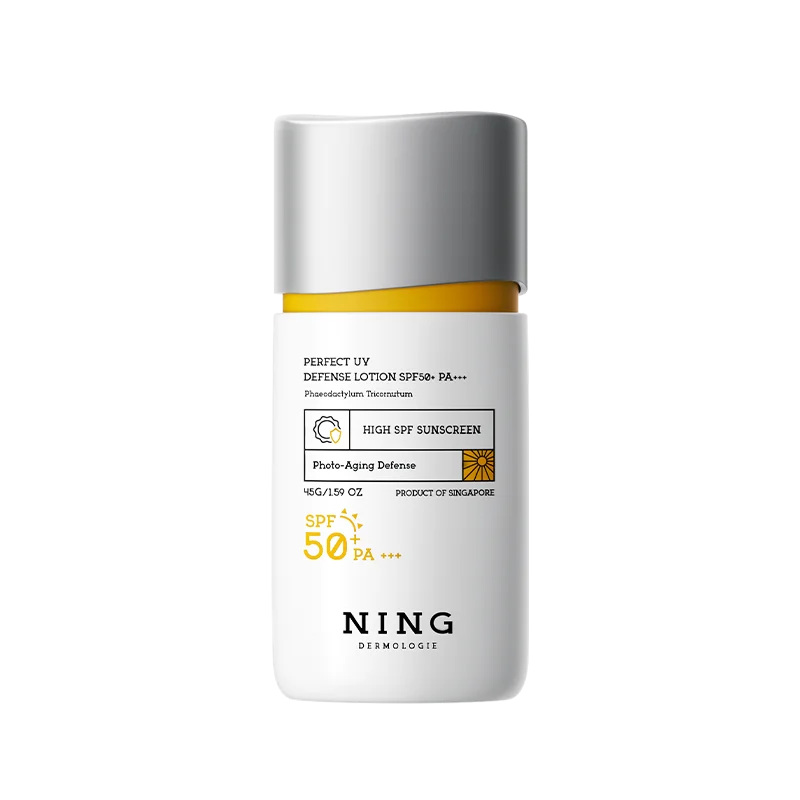
After years of trial, error, and burning eyelids, I finally found a formula that balances everything I need. I want to talk about the <https://ningcos.com/products/spf50-facial-sunscreen> SPF50+ Facial Sunscreen from NING Dermologie.
This isn't just another tube of disappointment. When I first tried it, I fully expected the familiar sting, but it just felt like a luxurious daytime moisturizer.
Here is why it actually works for our skin type: First, it uses non-nano zinc oxide. This is a big deal. The particles are milled so finely that you don't get that chalky, dragging sensation, and it doesn't leave a white cast. It blends transparently, meaning it respects different skin tones instead of washing them out.
Second, the SPF Level is exactly where it needs to be. Dermatologists recommend at least SPF 30, but having an SPF 50 gives you that extra buffer of safety, especially if you aren't applying a massive, thick layer. It offers true broad spectrum SPF, meaning it handles both the burning and the aging rays.
But the real magic is the texture. NING Dermologie formulated this with a deeply hydrating base. It contains the soothing elements we talked about earlier, so instead of stripping your skin, it acts as a barrier shield. The water-resistant formula means it won't instantly sweat off into your eyes when you walk out into the summer heat, but it doesn't feel like a heavy, suffocating mask. The Texture and Finish are elegant—it leaves a healthy, hydrated glow without feeling greasy.
You apply it, it sinks in, and you just get to live your life. No stinging. No watery eyes. No dry patches showing through your foundation by 3 PM.
How to Apply SPF Without Making Your Skin Mad
Even with a perfect formula, application matters. When your skin is highly reactive, how you touch your face can trigger a flare-up.
Do not rub your sunscreen in vigorously. Dispense the required amount (about two finger lengths for your face and neck) and gently dot it all over. Then, lightly pat and smooth it across the skin. Let it sit for about 60 seconds to form an even film before you go in with any makeup.
If your skin is exceptionally dry that day, don't skip your regular moisturizer. Let your base moisturizer sink in completely for about five minutes, and then apply your SPF50+ Facial Sunscreen on top. This double-layer technique traps hydration against the skin and gives the sunscreen a perfectly smooth canvas.
Living with sensitive, dry skin is exhausting. It feels like every product is a gamble. But finding a sunscreen that actually feels good—that you actually look forward to putting on—changes the entire tone of your morning. Protect your skin, but don't let the process hurt you.

Frequently Asked Questions (FAQ)
Can I use a sunscreen stick if I have very dry skin?
It’s usually not the best idea. Sunscreen sticks require dragging a solid wax-like formula across your face. This friction can irritate sensitive skin and physically pull at dry patches. A hydrating cream or lotion is much gentler and easier to distribute evenly.
Why does my face burn only when I apply sunscreen?
If your moisturizer feels fine but SPF burns, your skin barrier is likely compromised, allowing chemical sunscreen ingredients to penetrate too deeply. Switching to a gentle mineral sunscreen with hydrating ingredients like hyaluronic acid can stop the stinging.
Is SPF 30 enough, or do I really need SPF 50?
The American Academy of Dermatology recommends at least SPF 30, which blocks 97% of UVB rays. However, most people under-apply sunscreen. Using SPF 50 acts as a great safety net, ensuring you get adequate broad-spectrum protection even if your application isn't perfect.
Does non-nano zinc oxide leave a white cast?
Older zinc formulas were notoriously chalky. However, modern high-quality formulas using finely milled non-nano zinc oxide blend much more seamlessly. They provide excellent physical UV protection without leaving a stark white residue on darker skin tones.
Do I need a water-resistant formula for everyday use?
If you live in a humid climate, sweat easily, or have a problem with sunscreen migrating into your eyes and stinging, a water-resistant lotion is incredibly helpful. It stays put on your skin rather than melting off throughout the day.





Share:
Best Facial Sunscreen Cream SPF 50: High-Protection Options for Everyday Wear
Best Facial Sunscreen Cream SPF 50: High-Protection Options for Everyday Wear