

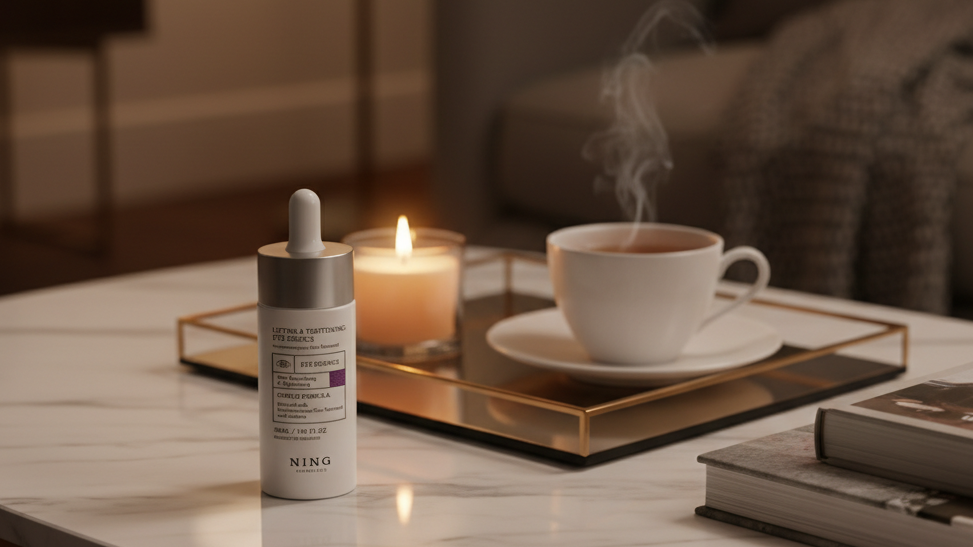

If you wear contact lenses every day, you already know the morning struggle. You apply your skincare, carefully put in your lenses, and within minutes, your vision is blurry. Or worse, a heavy cream migrates into your eye, causing a stinging sensation that leaves you tearing up and ruins your makeup before you have even left the house.
Treating the eye area shouldn't mean sacrificing your comfort or your vision. For those of us with sensitive eyes or conditions like dry eyes and ocular rosacea, finding the right skincare routine is an absolute necessity.
Let's talk about why your current eye products might be failing you, how to choose a hydrating formula that actually stays put, and the exact steps you need to take to keep your eyes clear and comfortable all day long.

Why Contact Lens Wearers Need Different Eye Care
The skin around your eyes is the thinnest on your face. It is incredibly fragile, making these delicate parts prone to issues like fine lines, under-eye bags, and a crepey texture. As we age, collagen breakdown accelerates, leading to a loss of skin elasticity and the hollowing of the tear trough. Because the skin is so thin, underlying blood vessels become more visible, which is a major contributor to dark circles.
To fight these issues, people often reach for thick, heavy eye creams. This is a massive mistake for contact lens wearers. Heavy creams melt at body temperature. Throughout the day, they slowly travel up your cheeks and down your eyelids, eventually seeping right into your tear film. When oils and heavy waxes hit your contact lenses, they create a cloudy smear that is nearly impossible to blink away.
You need lightweight eye serums or a Japanese gel-cream texture instead. These formats absorb quickly into the skin barrier rather than sitting on top of it, delivering hydrating ingredients exactly where they are needed without migrating into your eyes.
The INCI List: Ingredients to Look For (and Avoid)
When you flip a product over to read the INCI list (the official ingredient list), you need to be highly selective. Ophthalmologist tested products are always a safe bet, but knowing your ingredients gives you the ultimate control.
What to Avoid:
- Heavy Waxes and Mineral Oils: These are the primary culprits behind cloudy contact lenses.
- Volatile Alcohols and Strong Fragrances: These will cause immediate stinging and tearing, aggravating sensitive skin.
- Harsh Acids: High concentrations can irritate the skin right near the lash line.
What to Look For:
- Hyaluronic acid: A humectant that draws moisture into the skin without adding oiliness.
- Vitamin C: Excellent for brightening without needing heavy, occlusive bases.
- Advanced Peptides: Look for ingredients like nutmeg acyl pentapeptide-4 and acetyl tripeptide-1. These help stimulate collagen production and firm the skin without irritation.
- Plant-based nutrients: Soothing extracts are your best friend. Ingredients like horse chestnut, colloidal oat, and sweetscented oleander leaf extract (often listed simply as oleander leaf extract) are fantastic for calming inflammation and reducing puffiness.
The Ideal Solution for Lens Wearers
If you are tired of playing guessing games with your morning routine, you need a targeted solution. We specifically formulated the NING Dermologie Lifting & Tightening Eye Essence with contact lens wearers in mind.
It is a remarkably light essence that absorbs instantly. It targets crow's feet and fatigue while fortifying the skin barrier. Because it leaves zero greasy residue behind, you can confidently apply it, knowing it won't drift into your eyes and ruin your lenses. Plus, it comes in hygienic airless pumps to keep the active ingredients stable and free from contamination.
The Foolproof Application Technique
Even the best Eye Care products will cause problems if you apply them incorrectly. The most common question we get is: Should I put my contacts in before or after my eye serum?
Here is the professional, step-by-step method:
- Wash your hands thoroughly. This is non-negotiable before touching your lenses or your face.
- Apply your skincare first. Take a tiny amount of your lightweight serum (like the NING Dermologie Essence). Tap it gently along the orbital bone—the hard bone you feel around your eye socket. Do not bring the product right up to your lash line or tear duct; the product will naturally travel upward as it absorbs.
- Wait two full minutes. Let the serum completely sink in.
- Wash your hands again. Rinse off any skincare residue from your fingertips.
- Insert your contact lenses. By letting the product absorb first and ensuring your fingers are clean, you completely eliminate the risk of transferring oils onto your lenses.
Navigating Makeup and Serums with Contacts
Skincare is only half the equation. If you are doing a full face of makeup or spending hours staring at blue light from your screens, your eyes are under constant stress. Board-certified dermatologists and eye experts like Diane Hilal-Campo, Teresa Song, Hadley King, Kristina Collins, and Adrian Clark frequently warn about the combination of poor makeup habits and contact lenses.
If you are creating a smoky eye, avoid loose, dusty powders that easily fall into the eye. Opt for hypoallergenic shadows, a tightly packed eyeshadow palette, or magnetic eye color that stays put.
Eyeliner is notoriously tricky. Tightlining (applying liner to the inner waterline) is generally a bad idea for lens wearers because the pigment transfers directly onto the lens. If you must wear liner, look for a solid long-wearing formula or a smudge-proof cake liner.
The market is full of highly-rated options that tend to stay put better than traditional kohl. Popular choices among makeup artists include:
- Ilia Clean Line Gel Liner
- Kosas Soulgazer Intensifying Gel Eyeliner
- Nars Climax Liquid Eyeliner
- Laura Mercier Caviar Tightline Eyeliner
- Westman Atelier Eye Love You Pencil
- Clinique Quickliner For Eyes Intense Eyeliner
- R.E.M. Beauty At The Borderline Kohl Eyeliner Pencil
Pair these with a good volumizing mascara that doesn't flake, and always use clean eyelash curlers.
A Warning on Lash and Brow Serums
Lash serums are hugely popular right now. Whether you are looking at an Eyelash Growth Serum, an Eyebrow Growth serum, or viral products like Serum EELHOE Natural Eye Lash Serum, proceed with extreme caution if you wear contacts. Many of these contain prostaglandin analogues, which can cause severe dry eye, irritation, and even changes to your eye color. Always apply them at night, after you have taken your lenses out.
Comparing the Market
We know you have choices. Publications like British GQ and top clinics (from Harley Street Dermal to the Dr David Jack Clinic and Dr. Dennis Gross) frequently review high-end eye care.
You might have seen heavier creams like the Sunday Riley Auto Correct Eye Cream, the Aesop Parsley Seed Anti-Oxidant Eye Cream, or the Clinique Anti-Age Eye Cream. While these are deeply moisturizing, their rich textures often make them better suited for nighttime use for lens wearers.
If you need a quick fix before an event, under-eye masks like the Horace Anti-Fatigue Under Eye Patches can be great. Brands like Physicians Formula and Ilia Beauty also offer solid, sensitive-friendly options.
However, for a daily morning routine where you need to apply makeup and contacts immediately, a fast-absorbing liquid or gel essence remains the superior choice.
Don't Forget the Sun Protection
Finally, remember that UV exposure aggressively accelerates aging around the eyes. You need SPF. Chemical sunscreens often cause severe stinging when they melt into the eyes. Switch to mineral sunscreens (using zinc oxide or titanium dioxide) around the eye area. An SPF 40 mineral formula will protect that fragile skin without making you cry behind your sunglasses.
Taking care of the skin around your eyes doesn't have to be a miserable, tear-filled experience. By swapping heavy creams for smart, fast-absorbing serums and adjusting the order of your morning routine, you can treat fine lines, reduce puffiness, and keep your vision perfectly clear all day long.

Frequently Asked Questions (FAQ)
Q: Should I put my contacts in before or after applying eye serum?
Apply your serum first, let it absorb completely for about two minutes, wash your hands to remove any oily residue, and then insert your contacts. This prevents you from accidentally smudging skincare products directly onto your lenses.
Q: Why do my eyes sting when I use certain eye creams?
Stinging is usually caused by volatile alcohols, strong artificial fragrances, or chemical sunscreens migrating into your tear film. Switch to an ophthalmologist-tested, lightweight essence free from heavy waxes that stays exactly where you put it.
Q: Can I use lash growth serums while wearing contacts?
Never apply lash serums while wearing your lenses. Many growth serums contain ingredients that can severely irritate the eyes. Apply them strictly at night, right before bed, long after you have taken your contacts out.
Q: What is the best way to apply eyeliner if I wear lenses?
Avoid tightlining (applying liner on the inner waterline). Instead, apply a smudge-proof gel or liquid liner strictly to the upper lash line. This stops pigment particles from floating into your eye and sticking to your lens.
Q: Do I really need a separate eye product, or can I use my face moisturizer?
Face moisturizers are often too thick and contain creeping oils that easily enter the eye. A dedicated, lightweight eye serum is formulated to absorb quickly into thinner skin without migrating, making it much safer for lens wearers.





Share:
Eye Serum for Sleep-Deprived Eyes: De-Puff and Brighten in the Morning
Niacinamide Eye Serum: Brighten + Strengthen the Under-Eye Barrier