

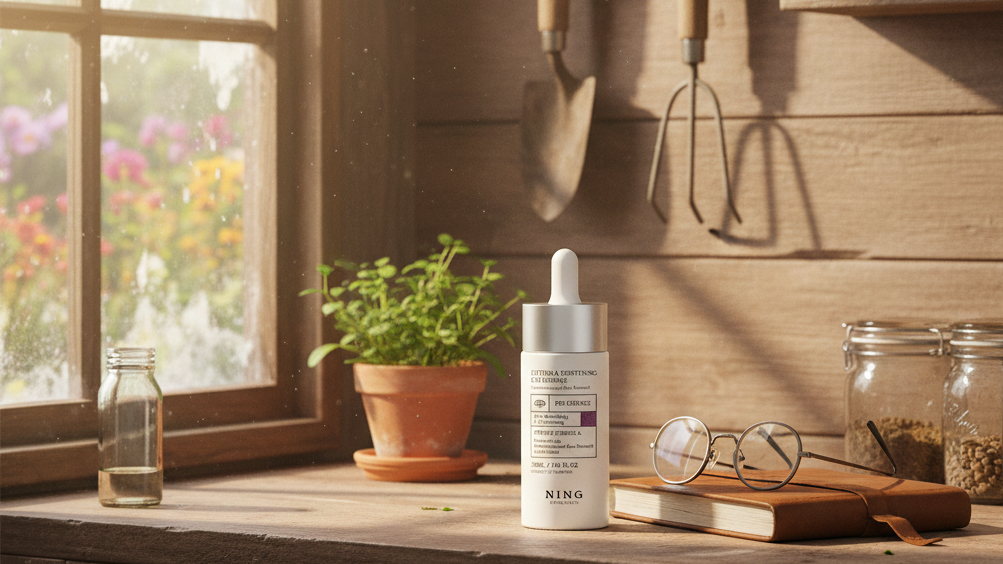

Waking up to red, flaky, and stinging eyelids isn’t just a cosmetic annoyance; it’s a physical battle. When the periorbital region—that incredibly thin skin around your eyes—flares up, your entire day feels heavy. You can’t hide it with mineral-based makeup, and most standard eye creams only seem to make the burning worse.
If you’ve been struggling with eyelid eczema, you’re not alone. The eye area is uniquely vulnerable because the skin there is about four times thinner than the rest of your face. It has fewer oil glands and a much more delicate skin barrier, making it the first place to react when your immune system decides to go on the offensive.
At NING Dermologie, we believe that managing eczema-prone skin shouldn’t mean giving up on antiaging therapy or effective eye care. It just means changing the rules of the game.

Understanding the Flare: Is it Eczema or Something Else?
Before you reach for an Atopic Cream or a DIY fix, you need to know what you’re actually dealing with. Eczema-related eczema in the eye area usually falls into one of four categories:
- Atopic Dermatitis: This is the "classic" eczema linked to genetics and a hay-fever/asthma history. It’s often chronic and leaves the skin feeling like parchment paper.
- Allergic Contact Dermatitis: This happens when your skin touches something it hates—think of a new mascara, a fragrance in your cleanser, or even nickel in your eyelash curler.
- Irritant Contact Dermatitis: This isn't an allergy; it's just damage. Over-washing, harsh glycolic acid treatments, or even rubbing your eyes too hard can trigger this.
- Seborrheic Dermatitis: Often looking more greasy and yellow-flaked than dry, this is linked to yeast on the skin and can creep into the eyebrows and lash line.
Knowing the difference is vital because a treatment for seborrheic dermatitis might be too harsh for someone with atopic dermatitis. If you're unsure, consulting professionals like Hadley King or Teresa Song can help narrow down the trigger.
The Red Flags: Ingredients to Bench During a Flare
When your eyes are red and puffy, your instinct is to fix the fine lines or dark circles that the inflammation is causing. However, using high-performance active ingredients on a broken barrier is like pouring lemon juice on a paper cut.
- Vitamin A (Retinoids): While the gold standard for crow's feet, retinoids accelerate cell turnover in a way that can be catastrophic for eyelid dermatitis.
- High-Dose Vitamin C: Often formulated at a low pH to be effective, Vitamin C can cause intense stinging on sensitive skin.
- Glycolic Acid & Harsh Exfoliants: If you see these in your eye serum, put it away until your skin is calm. They strip the lipids your skin barrier desperately needs to heal.
- Fragrances and Essential Oils: Even "natural" scents can trigger allergic contact dermatitis.
The Soothing Checklist: What Your Eyes Actually Need
To heal dry skin around the eyes, you need to think about "sealants" and "soothers." You aren't just looking for moisture; you're looking for barrier reconstruction.
1. Colloidal Oatmeal & Shea Butter
Colloidal oatmeal is a powerhouse for sensitive eyes. It creates a biological film that protects the skin while dampening the itch. Pair this with Shea Butter, which is rich in fatty acids, to provide the "occlusive" layer that prevents water from evaporating from your skin.
2. Hyaluronic Acid & Zinc Oxide
Hyaluronic acid is great for immediate hydration, but in a dry environment, it can actually pull moisture out of your skin if not topped with a cream. For those with "weeping" eczema, a touch of zinc oxide (often found in mineral sunscreens or a specialized Eczema Cream) can help calm periorbital inflammation.
3. Natural Oils: Coconut and Rosehip
While some people find coconut oil too heavy, it has natural antimicrobial properties that can help if your eczema is prone to minor infections. Rosehip oil is better for those worried about fine lines, as it possesses skin regenerative properties without the irritation of synthetic vitamin A.
4. The pH Factor
Healthy skin lives at a pH of 4.6 to 5.5. Most soaps are alkaline, which destroys the "acid mantle." For eye-related eczema, you must use preservative-free cleansers that respect this delicate balance.
Integrating Treatment: The NING Dermologie Approach
At NING Dermologie, we realized that many people with sensitive skin feel forced to choose between "medical-grade blandness" and "luxury anti-aging." We don't think you should have to choose.
Our Lifting & Tightening Eye Essence was designed with the skin barrier in mind. While it targets crow's feet and eye bags, it does so through a lens of deep hydration and calming botanicals. We’ve included Apple Extract and green tea to provide antioxidants (like vitamins C and E) in a stabilized, non-irritating form.
Instead of harsh synthetics, this eye serum focuses on collagen synthesis through soothing pathways. It’s about giving the skin the tools to repair itself rather than forcing it into a state of irritation. For those with eczema-prone skin, it provides that much-needed "slip" for a gentle gua sha routine without dragging the skin.
Beyond the Bottle: Lifestyle and Lid Hygiene
Skincare is only half the battle. If your immune system is reactive, your environment matters just as much as your eye serum.
- Lid Hygiene: If you suffer from dry eyes alongside eczema, your oil glands (meibomian glands) might be blocked. Using products like ocusoft hypochlor spray or specialized lid wipes can keep the lash line clean without the irritation of standard soap.
- The Histamine Connection: Some experts, including Diane Hilal-Campo, point out that histamine intolerance can manifest as puffy, itchy eyes. If your flares happen after certain foods, it’s worth investigating.
- UV Exposure: The sun is a major trigger for ocular inflammation. Always wear broad-spectrum SPF or polarized sunglasses. Even the best Atopic Cream can’t undo the damage of a sunburn on top of an eczema flare.
- Hypoallergenic Makeup: If you must wear makeup, stick to hypoallergenic makeup brands and mineral-based makeup. Avoid anything with heavy dyes or glitters.
Advanced Solutions: When to See a Doctor
If you’ve tried Calendula Eczema Cream, Eczema Honey Multi Peptide Eye Cream, and every beauty store remedy without luck, it’s time for professional intervention.
Sometimes, eyelid eczema requires prescription eye drops or topical calcineurin inhibitors (like Protopic or Elidel). These are non-steroidal creams that calm the immune system without thinning the skin—a major risk with long-term steroid use in the periorbital region.
For immediate, at-home relief, you can try coffee ice cubes wrapped in a soft cloth to constrict blood vessels and reduce eye bags, or use artificial tears if you're experiencing dry eyes as a side effect of the inflammation.
Building a Safe Routine for Sensitive Eyes
If you're currently in a flare, keep it simple. This isn't the time for a 10-step routine.
- Cleanse: Use a preservative-free cleanser and lukewarm water. Never hot.
- Hydrate: Apply a hyaluronic acid serum to damp skin.
- Treat & Lift: Apply a pea-sized amount of NING Dermologie Lifting & Tightening Eye Essence. Pat it in with your ring finger; never rub.
- Seal: Follow up with a thin layer of Shea Butter or a fragrance-free Eczema Cream to lock everything in.
- Protect: During the day, use a mineral sunscreen. At night, let the skin regenerative properties of your serum work while you sleep.
Always perform a Patch Test on your inner arm for 48 hours before trying any new product near your eyes. Your skin barrier is your first line of defense; treat it with the respect it deserves.
Healing eyelid eczema is a journey of patience. By focusing on soothing ingredients and avoiding known irritants, you can reclaim the comfort of your eye area and wake up looking as bright as you feel.

Frequently Asked Questions (FAQ)
Q1: Can I use my regular face moisturizer on my eczema-prone eyelids?
It’s risky. Face creams often contain higher concentrations of actives or fragrances that are fine for your cheeks but brutal for the thin periorbital region. Stick to products labeled for sensitive eyes or specific eye care to avoid triggering allergic contact dermatitis.
Q2: Why does my eye serum sting even if it’s "natural"?
"Natural" doesn't always mean safe. Ingredients like essential oils or high-acidity plant extracts can disrupt a damaged skin barrier. If you’re flaring, your skin's pH of 4.6 is likely compromised, making almost anything feel like a burn. Switch to a formula focused on skin regenerative properties.
Q3: Is it okay to use makeup during an eyelid eczema flare?
Ideally, no. Give your skin a "fast." If you absolutely must, use mineral-based makeup and hypoallergenic makeup. Avoid waterproof formulas, as the harsh preservative-free cleansers required to remove them will only further irritate your eyelid dermatitis and worsen dry skin.
Q4: How can I tell the difference between eczema and an allergy?
Irritant contact dermatitis usually stings immediately, while allergic contact dermatitis might take a day or two to show up after exposure. If you notice a pattern after using a specific eye serum or visiting a beauty store, that’s a huge clue. A Patch Test is essential.
Q5: Can I use NING Dermologie Eye Essence if my skin is currently flaking?
Yes, but be gentle. Our Lifting & Tightening Eye Essence is formulated to support the skin barrier. However, if your skin is cracked or "weeping," consult a doctor first. Once the initial raw phase passes, it’s excellent for restoring hydration and smoothing fine lines caused by dryness.





Share:
Vitamin C Eye Serum: Brightening Benefits and How to Avoid Irritation
Eye Serum for Sensitive Skin Low-Irritant Choices and How to Patch Test