


Let’s just get the ugly truth out of the way first. If you have sensitive skin or rosacea, shopping for sunscreen is basically a high-stakes guessing game where the losing prize is a face that feels like it’s literally on fire.
I know the drill all too well. You buy a new tube, hoping this time will be different. You carefully dab it onto your cheeks, and within thirty seconds, the familiar stinging hits. Your skin turns a vibrant shade of tomato red, the facial flushing kicks into high gear, and you're frantically splashing cold water on your face over the bathroom sink. It is exhausting, painful, and incredibly unfair.
Every dermatologist, the Skin Cancer Foundation, and the Environmental Working Group all stress that daily sun care is absolutely non-negotiable. But how exactly are we supposed to maintain a consistent skin care routine when the very sun protection products meant to shield us from UV radiation actually trigger massive rosacea flares?
Today, we are skipping the complicated medical jargon and the useless textbook advice. I want to talk to you directly about what actually works, what ingredients to strictly avoid, and how to put your SPF on without waking up your angry blood vessels.

The Culprits: Why Your Face Hates Most Sunscreens
To understand the intense burn, you have to look at your skin barrier. When you have a chronic skin condition like rosacea, your barrier is fundamentally compromised. It has microscopic cracks in it, meaning irritants get in easily, and moisture escapes just as fast.
When you apply a traditional chemical sunscreen, those chemical filters (like avobenzone, oxybenzone, or octinoxate) absorb straight into your skin tissue. Their entire job is to absorb UV rays and convert them into heat. For someone with a normal complexion, this slight temperature increase is completely imperceptible. For us? It creates intense infrared stress. That heat signals our hyper-reactive blood vessels to dilate immediately. Cue the burning and the redness.
You need to become a ruthless label reader starting today. Stop putting chemical filters on your face. They offer great broad-spectrum protection for normal skin, but they are an absolute nightmare for reactive types. Also, if denatured alcohol, essential oils, or synthetic fragrances are anywhere near the top of the ingredient list, put the bottle right back on the shelf. These strip your already fragile barrier, guaranteeing a stinging sensation.
The Saviors: Going Strictly Mineral
Your safest, most reliable bet is always a physical sunscreen. Often referred to as mineral sunscreens, these formulas rely on two specific hero ingredients: zinc oxide and titanium dioxide.
Instead of absorbing into your skin and causing a heat-generating chemical reaction, these crushed minerals sit directly on the surface. They act like a literal shield, reflecting the sun's rays away from your face. Zinc oxide is especially magical for us because it is naturally anti-inflammatory. It doesn't just block the sun; it actively calms angry skin. There is a reason it’s the primary ingredient in baby rash creams!
I hear your objections already. Historically, mineral formulas are notorious for leaving a chalky, horrible white cast. In the past, you had to choose between looking like a pale ghost or dealing with a burning face. Luckily, modern SPF products have evolved dramatically. Formulators have figured out how to make mineral creams milky, fluid, and much easier to spread.
While an SPF 30 is generally considered the baseline for decent daily coverage, I always push for a solid SPF 50 when dealing with rosacea. Our skin is simply too vulnerable to risk lower protection. Some folks try to rely on light makeup, like Age Defy+ SPF15 Tinted Moisturisers, but honestly, SPF 15 will not cut it if you are spending any real time outdoors or sitting near a sunny window.
A Quick Tangent: The Absolute Nightmare of Skincare Shopping
Finding the right fluid texture can be a journey, and sometimes, even just trying to buy the stuff is a massive headache. Let me take a quick detour and tell you a ridiculously frustrating story that happened to me just last Tuesday.
I was sitting on my couch, trying to buy some new skin products online. I had my eye on a few promising ultra-gentle sun creams. I added them to my cart, checked my Estimated Total, and noticed I was just a few dollars short of free shipping. Naturally, I decided to look for a Bundled Item because I figured I might as well Spend more on something I’d actually use rather than wasting money on shipping fees.
I clicked 'proceed to checkout', and out of nowhere, the screen went completely blank. A glaring red warning popped up from some third-party security service or security solution the website was using. The prompt claimed my browser was sending malformed data. It literally accused me of trying to hack the site, stating I was launching online attacks using an illegal SQL command! It slapped a massive Cloudflare Ray ID error code on the screen and blocked my IP address entirely. I guess the site owner had their firewall settings cranked up to maximum paranoia.
Dealing with that tech glitch was infuriating. But sitting there locked out of a website was still significantly less painful than applying the wrong chemical formula and dealing with a breakout. Our skin acts exactly like that overzealous firewall—it detects a chemical filter it doesn't like, assumes it's an attack, and completely shuts down, sounding the alarm via severe flushing.
The Ingredients Your Skin Actually Craves
When you are buying sunscreen, you want the formula to work alongside your soothing routine, not against it. Look for hydrating, calming additions.
Hyaluronic acid is fantastic because it draws water into the skin without feeling heavy or greasy, keeping the texture fluid and easy to apply. Aloe Vera is a classic for a reason, providing a beautiful, immediate cooling sensation. But for serious rosacea management, you want heavy hitters like Green tea extract and centella asiatica (often labeled as cica). These drastically reduce baseline inflammation.
Some of the most innovative new formulas are incorporating advanced botanical extracts. Ingredients like Sea Fennel Stem Cells and Spanish Needle are showing incredible promise in helping repair the skin at a cellular level and defending against environmental triggers.
A great prep hack: hypochlorous acid. Spraying a gentle hypochlorous acid mist onto clean skin before applying anything else instantly soothes the face and kills off bad bacteria. Let that dry, apply a light moisturizer, and then go in with your SPF. And at night? You must wash the zinc off thoroughly and follow up with a deeply repairing night cream. If you use an azelaic acid serum to manage bumps and redness, apply that underneath your moisturizer to let it work while you sleep.
The Clinic Side: Lasers, Prescriptions, and Protection
If your flushing has reached a point where over-the-counter creams aren't cutting it, you might be consulting a medical doctor. Let’s say you visit a highly rated clinic—maybe somewhere local like Village Dermatology down on Ravenswood Ave. Your dermatologist will likely build a customized treatment plan tailored to your exact needs.
This plan often starts with prescription-strength topical medications or even a short course of oral antibiotics to rapidly get a severe flare under control. Once things stabilize, they might suggest advanced in-office procedures.
Treatments such as a pulsed dye laser or an Intense Pulsed Light (IPL) session can do absolute wonders for zapping those stubborn, broken vessels that linger on your nose and cheeks. But here is the critical catch: any kind of laser therapy makes your skin intensely photosensitive. And I mean any laser. Even if you're getting something completely unrelated to your face, like a laser tattoo removal session on your arm, your body's overall inflammatory response is heightened.
During the weeks following a facial laser procedure, Sunscreen use isn't just a suggestion; it is a strict medical requirement. If you get an IPL session and then walk outside without a thick layer of zinc protecting your face, you risk undoing all the expensive work your doctor just did, and you exponentially increase your risk of severe hyperpigmentation.
Application Hacks: Stop Rubbing Your Face
Even the best mineral product can cause a flare if you apply it incorrectly. Here is the ultimate secret: stop rubbing.
When you rub a cream vigorously into your cheeks, the physical friction alone is enough to cause a reaction. Instead, dispense the fluid onto your fingertips and gently rub your fingers together to warm the product up. This makes a thick mineral cream much more spreadable.
Then, gently pat and press the product into your skin. Work in small sections. Pat, pat, press. Do not drag your fingers aggressively across your cheeks. This gentle pressing motion ensures even, broad-spectrum protection without the mechanical exfoliation that makes your face freak out.
My Top Recommendation for Guaranteed Comfort
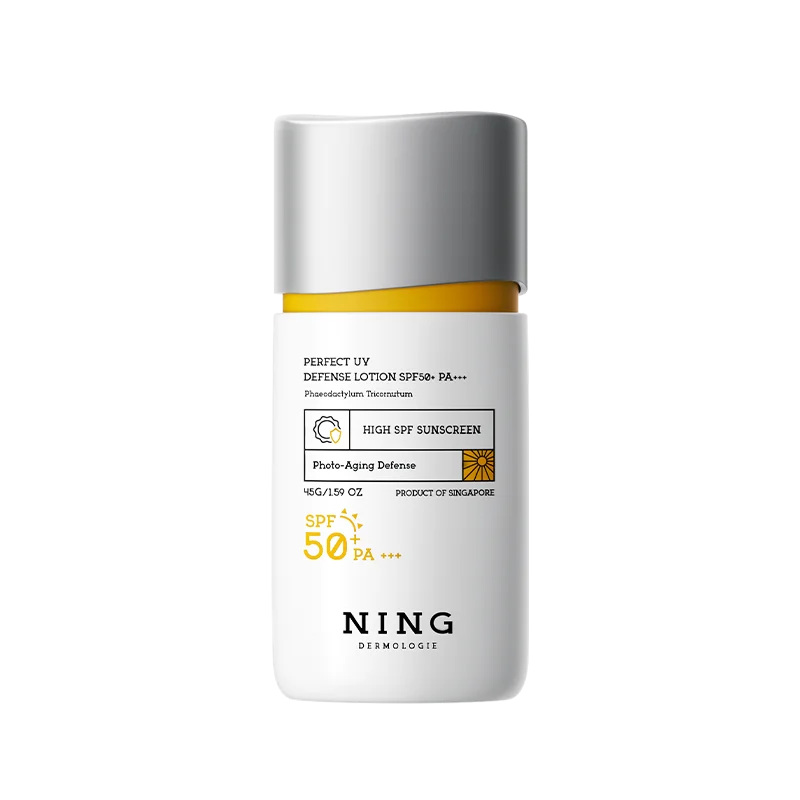
If you are tired of the endless trial and error, I want to point you toward a specific brand that I genuinely trust for our reactive skin type. You need to look into NING Dermologie.
Specifically, their SPF50+ Facial Sunscreen is an absolute game-changer.
You can check out the exact formula I use right here: https://ningcos.com/products/spf50-facial-sunscreen
Why does this one work when so many others fail? It entirely skips the irritating chemical filters and utilizes high-quality, finely milled minerals to give you robust protection without the burn. The chemists behind NING Dermologie managed to formulate it in a way that minimizes the dreaded white cast while maintaining a milky, easily spreadable texture. It glides on with just a gentle patting motion, wears flawlessly under makeup, and most importantly, it lets you step outside and live your life without constantly worrying that your face is turning purple.
Having highly reactive skin is a lifelong journey, but you do not have to suffer through the burn every morning. Switch to high-quality minerals, press your products in gently, and give your face the calm, soothing protection it actually deserves today.

Frequently Asked Questions (FAQ)
Q: Can chemical filters permanently damage my sensitive skin barrier?
A: They rarely cause permanent damage, but chemical sunscreen absorbs UV rays and releases heat, triggering severe facial flushing and rosacea flares. Switch to a physical sunscreen with zinc oxide for a cooler, safer defense.
Q: How do I wash off an SPF 50 without causing redness?
A: Use a gentle cleansing balm to melt the mineral sunscreens first, avoiding mechanical friction. Follow with a hydrating cleanser, pat dry, and apply a rich night cream to restore your skin condition.
Q: Does azelaic acid make me more sensitive to UV radiation?
A: Azelaic acid doesn't drastically increase sun sensitivity like strong retinoids do. However, treating a compromised barrier means daily sun protection products and proper Sunscreen use remain mandatory to prevent further damage.
Q: Why does my face sting even with ultra-gentle sun creams?
A: The issue is often friction! Vigorous rubbing causes mechanical irritation. Always warm your SPF products between your fingertips first, then gently pat and press them into your skin instead of dragging.
Q: Do I really need daily SPF after an Intense Pulsed Light treatment?
A: Absolutely. Any laser treatment, including a pulsed dye laser or general laser therapy, leaves your face highly vulnerable. A medical doctor will strictly require broad-spectrum protection to protect healing blood vessels.





Share:
Non-Comedogenic Facial Sunscreen for Sensitive Skin: Breakout-Safe Options That Still Protect
Facial Sunscreen for Sensitive, Acne-Prone Skin: Lightweight Formulas That Won’t Clog Pores