



Stop Fearing Vitamin C: A Science-Backed Guide for Sensitive Skin Hyperpigmentation
You buy a highly-rated, expensive vitamin c serum because you’re tired of the stubborn dark spots left behind by last month’s breakout. You apply it with high hopes, but within twenty minutes, your face feels like it’s being poked by a thousand tiny needles. Your sensitive skin flares up, turning a patchy shade of red that’s actually worse than the pigmentation you were trying to fix.
For people with sensitive skin, the "holy grail" of skincare often feels more like a poison ivy patch. The irony is that vitamin c is arguably the most effective active ingredient for brightening and protecting your skin, yet its most common form—l-ascorbic acid—is notoriously aggressive.
At NING Dermologie, we believe you shouldn’t have to choose between an even skin tone and a healthy skin barrier. If you’ve previously written off this antioxidant because of irritation, this guide to vitamin c is for you. Let’s break down how vitamin c works, why your skin may have reacted poorly in the past, and how to finally reduce hyperpigmentation without the burn.

Why Does Hyperpigmentation Hit Sensitive Skin Harder?
To understand how to fade dark spots, we first have to look at what’s happening beneath the surface. Hyperpigmentation occurs when your skin produces excess melanin in response to a trigger. While sun damage from uv rays is the primary culprit, for those with reactive skin, post-inflammatory hyperpigmentation (PIH) is the real villain.
When sensitive skin types experience irritation—whether from a harsh product, acne, or environmental stress—the skin’s natural response is inflammation. This inflammation signals the melanocytes to go into overdrive, leaving behind those frustrating dark spots long after the initial irritation has healed. This is particularly common in melanin-rich skin and deeper skin tones, where the pigment response is more intense.
Common causes hyperpigmentation include:
- UV Exposure: Even five minutes of unprotected sun can trigger melasma.
- Hormonal Shifts: Often manifesting as symmetrical patches on the cheeks or forehead.
- Physical Trauma: Picking at a blemish or using a scrub that’s too abrasive.
The challenge is that most products designed to reduce pigmentation are themselves inflammatory. This creates a vicious cycle: you apply a harsh serum to brighten the skin, it causes redness, and that redness eventually turns into new pigmentation.
The Vitamin C Paradox: Potency vs. Peace
When you search for the best vitamin c, most "experts" will point you toward l-ascorbic acid. There’s a reason for this: it’s the pure vitamin c that your skin cells recognize immediately. However, for it to penetrate the skin, it must be formulated at an extremely low pH (usually around 2.5 to 3.5).
For a skin care enthusiast with "tough" skin, that acidity is fine. For people with sensitive skin, that low pH is an assault on the skin barrier. It strips the natural oils and causes the stinging sensation many of us know too well.
Exploring Modern Forms of Vitamin C
The skincare world has evolved. You no longer need to use a caustic acid to see brightening effects. Several forms of vitamin c have emerged that are "pro-drugs," meaning they stay stable in the bottle at a skin-friendly pH and only convert to active vitamin c once they are absorbed into the skin.
-
Magnesium Ascorbyl Phosphate (MAP): A water-soluble form of vitamin that is much more stable than L-AA. It’s significantly gentler, though often less potent in its brightening capabilities.
-
Tetrahexyldecyl Ascorbate (THD): An oil-soluble derivative that can penetrate deeper into the dermis.
-
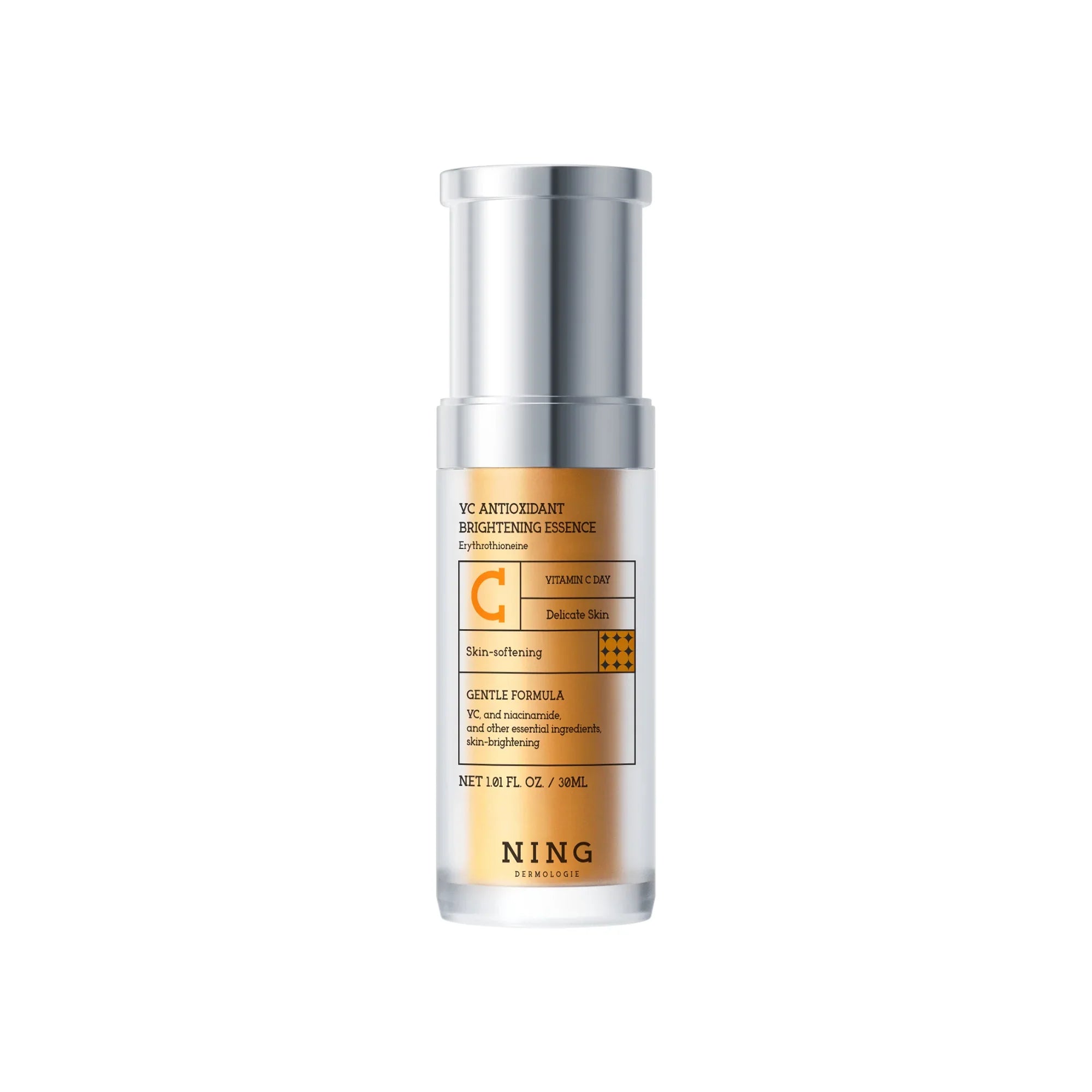
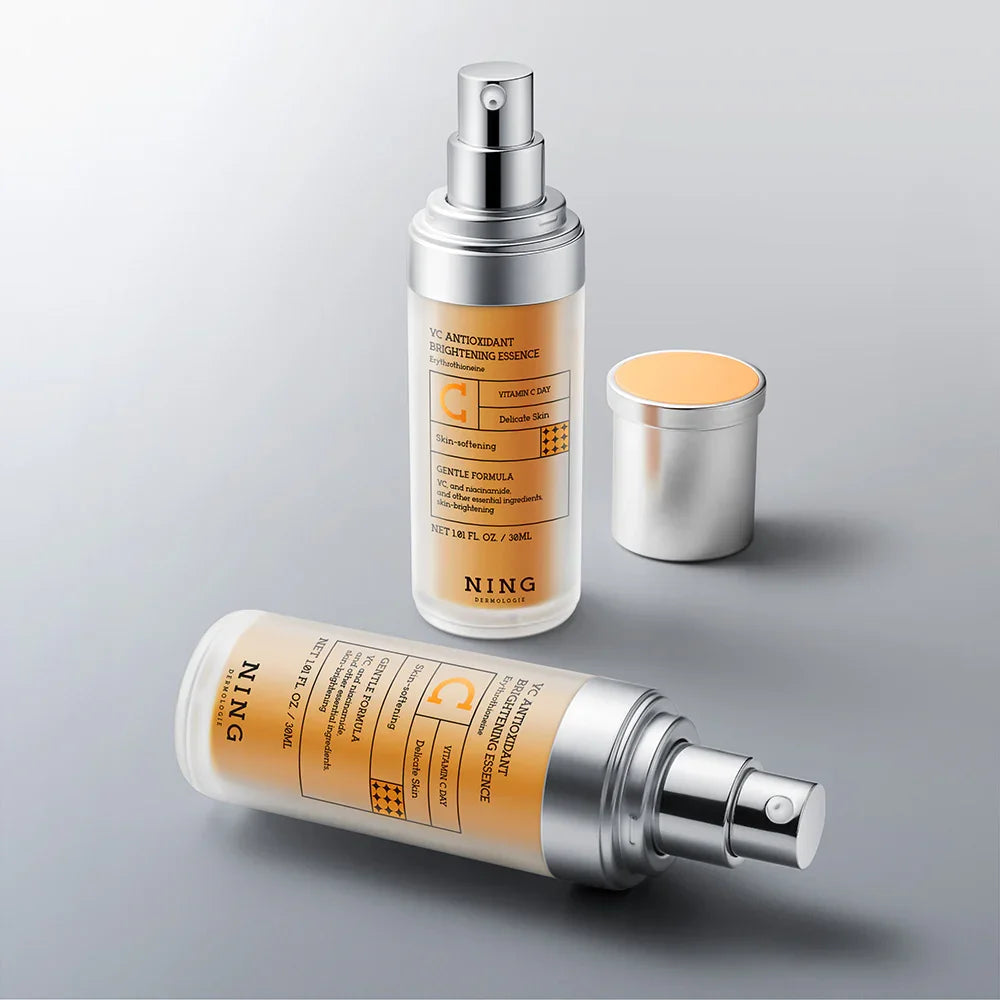
3-O-Ethyl Ascorbic Acid: This is the type of vitamin c we swear by at NING Dermologie. It is a next-generation derivative that offers the high potency of pure vitamin c but remains stable at a neutral pH. It’s the star of our Vitamin C Serum, specifically because it allows sensitive skin to reap the benefits of vitamin c without the inflammatory fallout.
How Vitamin C Serum Works on Dark Spots (Without the Sting)
So, how does vitamin c helps actually even out skin tone? It’s not just a bleach for your face; it’s a sophisticated biological inhibitor.
1. Inhibiting Tyrosinase
The primary way vitamin c for hyperpigmentation works is by interfering with an enzyme called tyrosinase. This enzyme is the "on switch" for melanin production. By blocking this switch, a vitamin c product prevents the overproduction of pigment before it even starts.
2. Powerful Antioxidant Protection
Every day, uv light and pollution create free radical damage in your skin. These unstable molecules break down collagen and trigger dark pigmentation. As a potent antioxidant, vitamin c plays the role of a shield, neutralizing these free radicals. When you apply vitamin c in the morning, you’re essentially giving your sunscreen a massive power boost.
3. Fading Existing Pigmentation
Beyond prevention, vitamin c can help accelerate the cell turnover process. While it’s not an exfoliant like an AHA, it helps skin looking more radiant by ensuring that the dead skin cells on the surface are shed more efficiently, revealing the even skin tone underneath.
The NING Dermologie Difference: Why Formulation Matters
If you’ve struggled to incorporate vitamin c into your skincare routine, the problem might not be the vitamin c itself, but what it’s paired with.
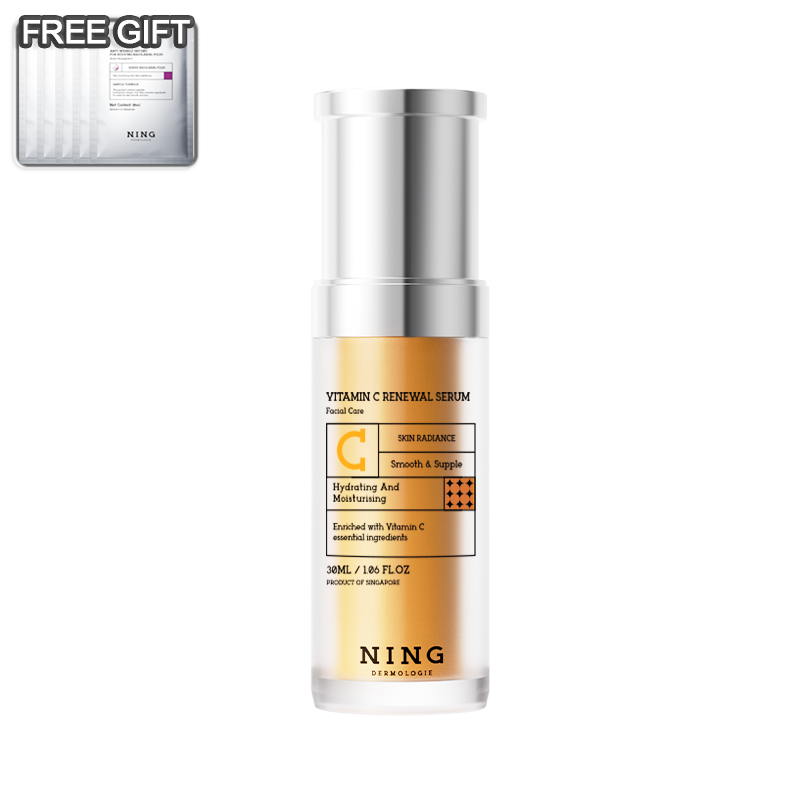
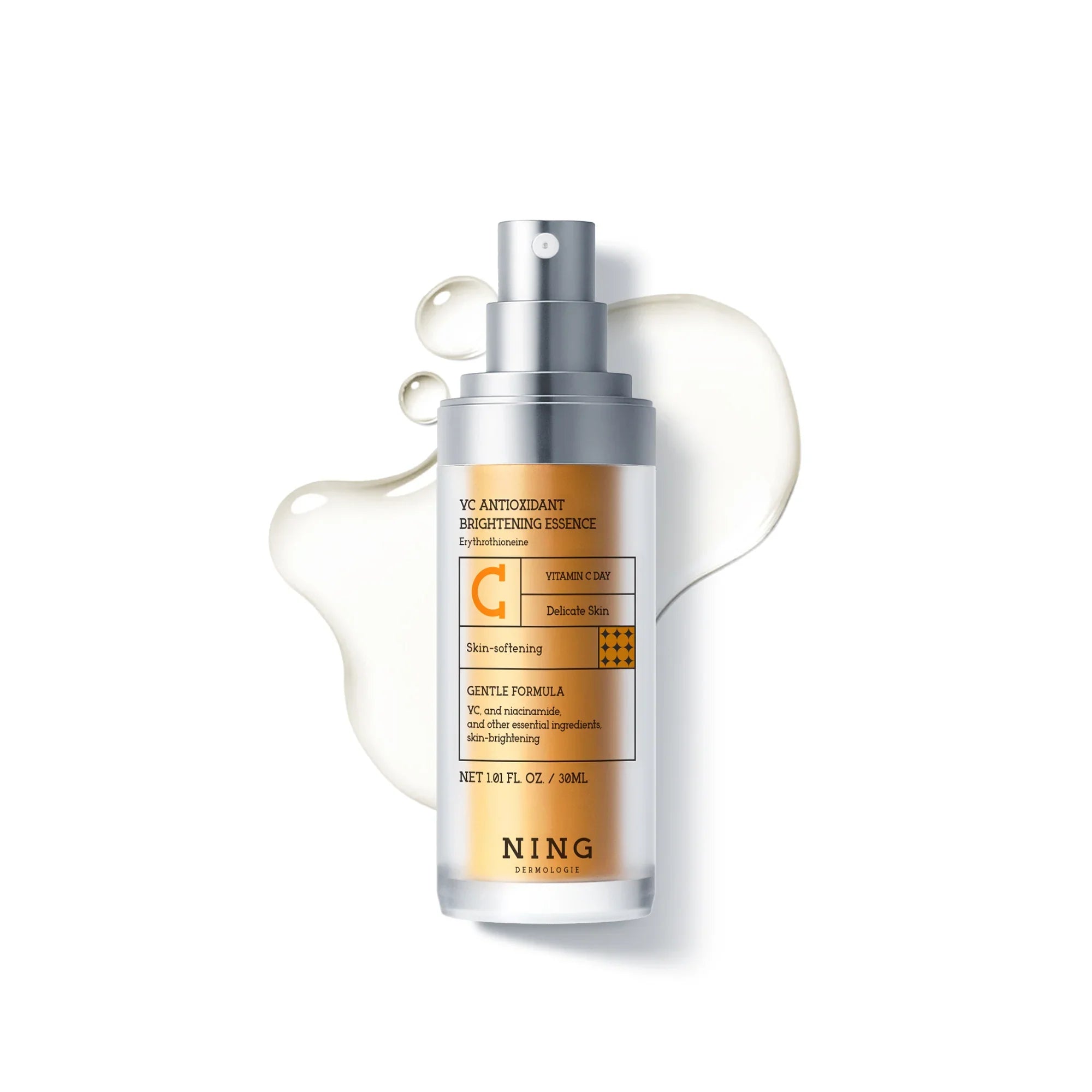
In our Vitamin C Serum with Niacinamide & Ethyl Ascorbic Acid, we’ve engineered a formula specifically for sensitive skin. We combined 3-O-Ethyl Ascorbic Acid with Niacinamide (Vitamin B3).
Why this duo? Niacinamide is a powerhouse for the skin barrier. It helps soothe redness and regulates oil, while the Ethyl Ascorbic Acid focuses on fading hyperpigmentation. When vitamin c is combined with Niacinamide, they tackle pigmentation from two different angles: one stops the pigment production, and the other stops the pigment from being transferred to the skin cells. It’s a synergistic approach that produces best results without the irritation associated with pure vitamin c.
How to Safely Incorporate Vitamin C into Your Routine
If you have sensitive skin, you can’t just dive into the deep end. You need a strategy to transform your skin without causing a flare-up.
Step 1: The Patch Test
This is non-negotiable for people with sensitive skin. Apply a small amount of the serum to your inner forearm or behind the ear. Wait 24 hours. If there’s no redness or itching, you’re good to go.
Step 2: Cleanse and Prep
Cleanse your skin in the morning with a pH-balanced, gentle cleanser. Pat dry—never rub. Vitamin c works best on slightly damp (but not soaking wet) skin, as this can sometimes increase penetration too quickly for sensitive types.
Step 3: Less is More
Start by using a vitamin c serum every other morning. Once your skin feels comfortable, you can move to daily use. You only need 2-3 drops for your entire face.
Step 4: Layering with Antioxidants
vitamin c’s efficacy is skyrocketed when it’s paired with vitamin e and ferulic acid. These antioxidants like vitamin e stabilize the vitamin c and provide a second layer of defense against sun damage. Our formula includes these stabilizing co-factors to ensure you get the most out of every drop.
Step 5: Seal the Deal
Always, always follow up with a broad-spectrum sunscreen. Vitamin c helps reduce the appearance of dark spots, but if you skip SPF, the uv rays will undo all that hard work in a matter of minutes.
Realistic Expectations: Fading Hyperpigmentation Takes Time
One of the biggest mistakes people make when they use vitamin c is giving up too soon. Skin cells take about 28 to 40 days to renew. To truly fade pigmentation and see a visible difference in melasma or post-inflammatory pigmentation, you need consistent use for at least 8 to 12 weeks.
In the first two weeks, you’ll likely notice a "glow"—this is the brightening effects of the antioxidant working on the skin's surface. By week eight, the deeper skin tones will start to look more uniform, and those stubborn dark spots will begin to soften at the edges.

Common Mistakes to Avoid with Vitamin C
- Using Oxidized Products: If your vitamin c serum has turned dark orange or brown, it has oxidized. Not only is it useless for fading hyperpigmentation, but it can actually cause free radical damage. Our use of Ethyl Ascorbic Acid ensures a much longer shelf life than traditional l-ascorbic acid.
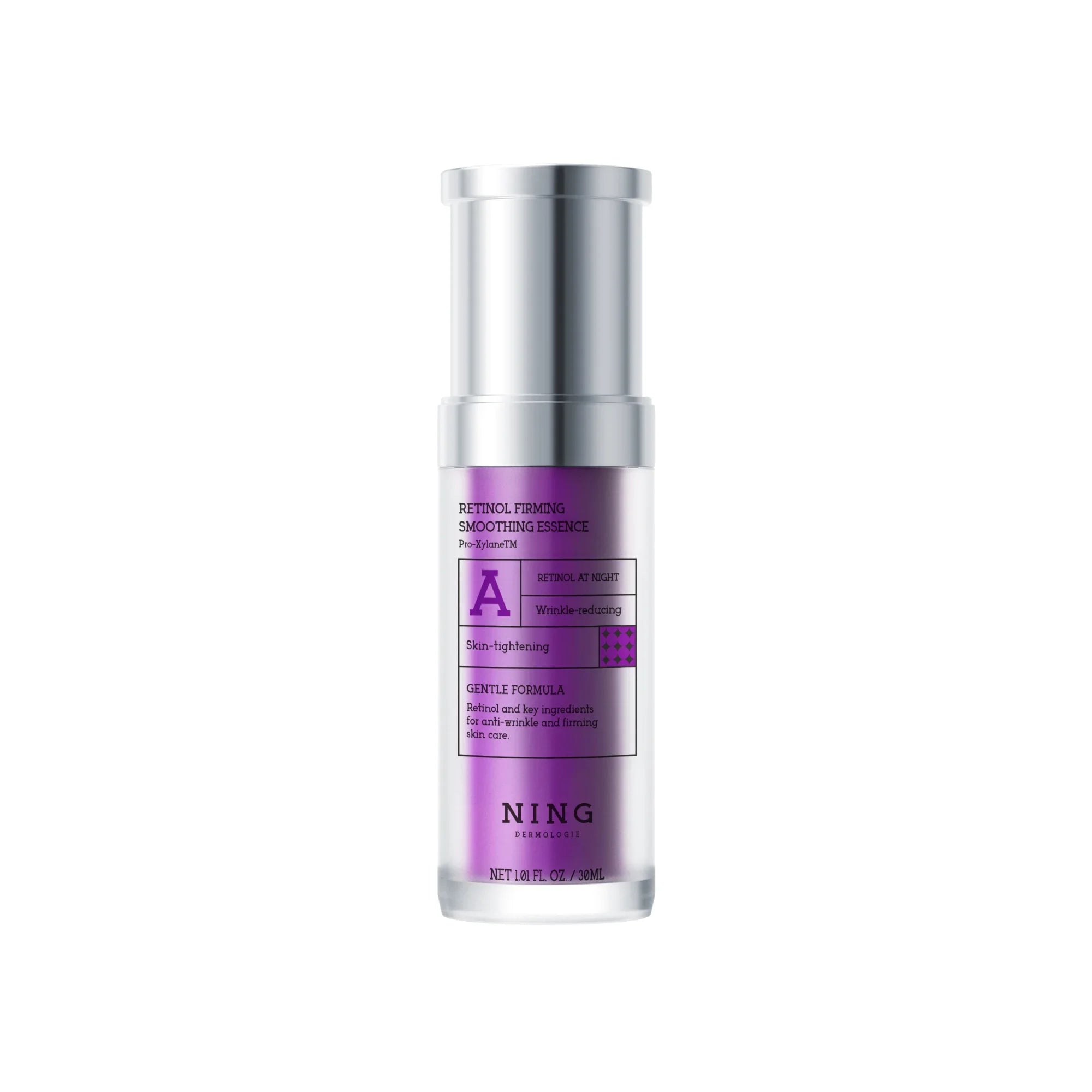
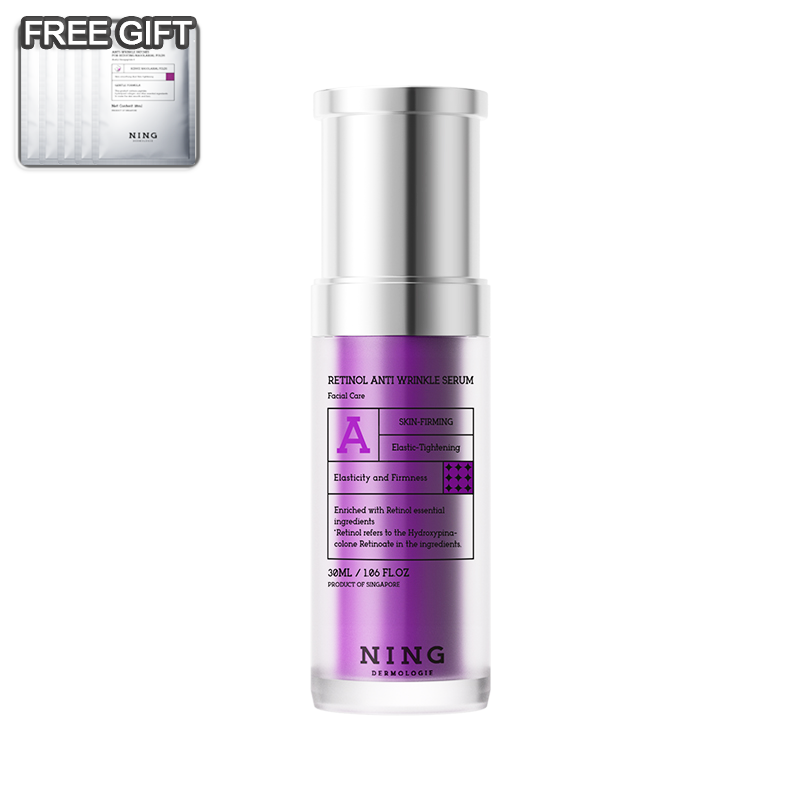
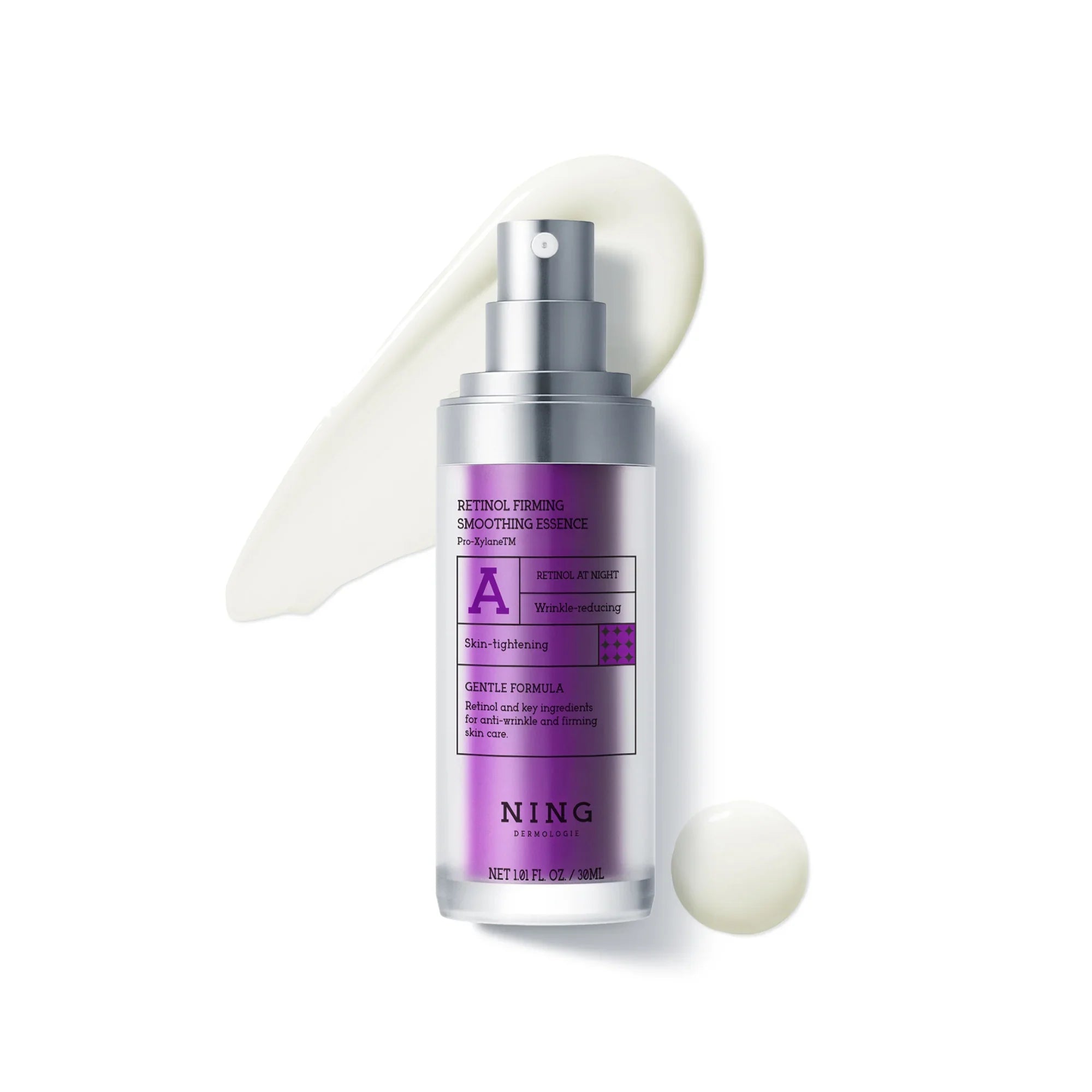
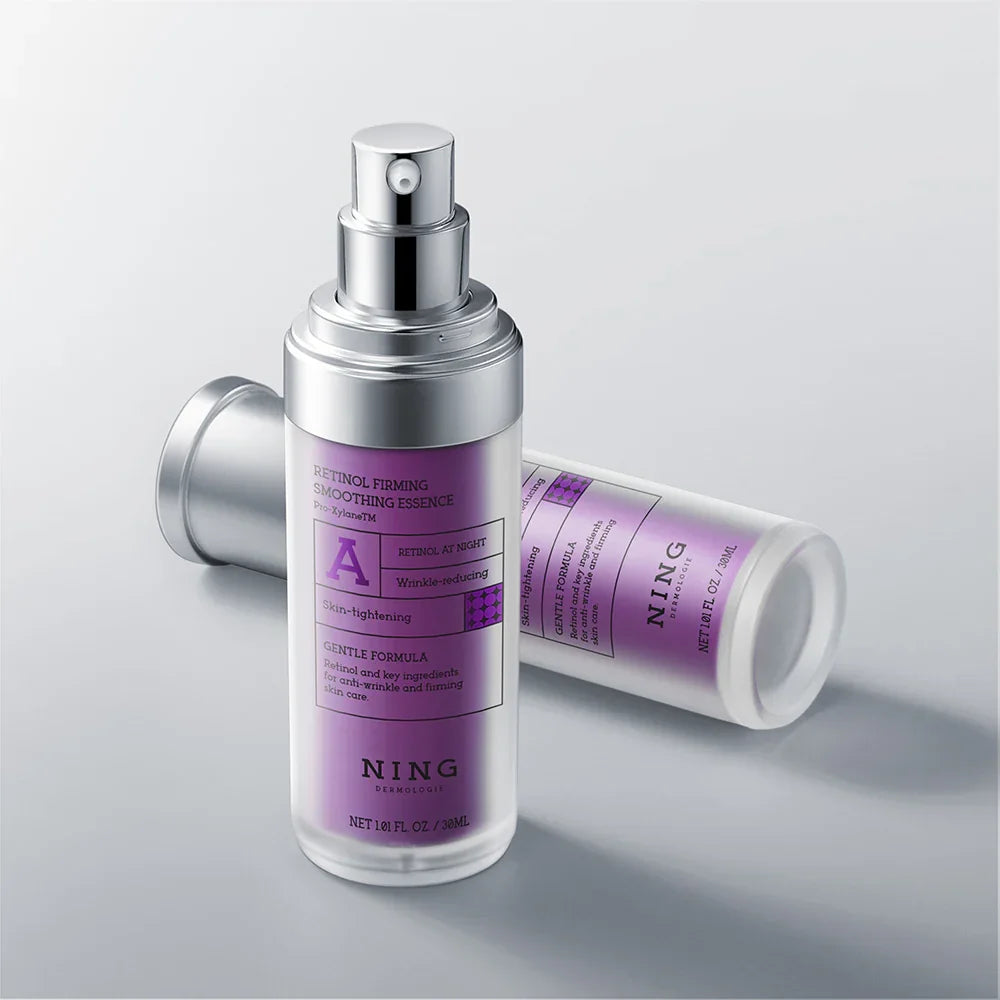
- Mixing with Retinol: Don’t use vitamin c at the same time as your Retinol. Use your vitamin c for pigmentation in the morning and save the Retinol for your nighttime skincare routine. This prevents overloading your skin barrier.
- Storing it in the Sun: Even the best vitamin c serums will degrade if left in direct sunlight. Keep your bottle in a cool, dark place (or even the fridge!) to maintain the levels of vitamin c potency.
Conclusion: A More Radiant You
Is vitamin c serum effective for pigmentation on sensitive skin? Absolutely—provided you choose the right form of vitamin.
You don't need to tolerate stinging, peeling, or redness to achieve a brighten complexion. By switching to a stable, pH-appropriate derivative like the one found in NING Dermologie’s Vitamin C Serum, you can finally protect the skin, prevent hyperpigmentation, and enjoy the skin benefits you’ve been reading about for years.
Your sensitive skin isn't a barrier to a glowing complexion; it's just a sign that your skin deserves a higher standard of care.
Frequently Asked Questions (FAQ)
1. Can I use Vitamin C serum if I have rosacea or extreme sensitivity?
Definitely, but don't just grab any random bottle. Most "pure" serums are far too acidic for rosacea-prone skin. You should look for stable derivatives like Ethyl Ascorbic Acid—they work at a pH that won't make your face scream. Start slow: patch test on your neck, use it twice a week, and if your skin stays calm, gradually ramp up. If persistent redness kicks in, your barrier is telling you to back off.
2. Why does my Vitamin C serum smell like "metallic" or "hot dog water"?
Ah, the infamous "deli meat" scent. That’s usually the Ferulic acid reacting with L-ascorbic acid. It’s weird, but harmless. However, if your serum looks like dark maple syrup, it’s oxidized and belongs in the bin. Using oxidized C is a recipe for major irritation. Our NING Dermologie formula uses more stable tech, so you get the glow without smelling like a hot dog stand all day.
3. Should I apply Vitamin C in the morning or at night for the best results?
Morning is the winner, hands down. Think of Vitamin C as a secondary shield under your SPF. It neutralizes the UV-induced junk and pollution you'll encounter the second you walk outside. If you’re a night-time Retinol user, sticking to C in the AM also keeps your skin from getting overwhelmed. Just make sure you’re applying it to clean, dry skin so it actually absorbs properly.
4. Is it normal to feel a slight tingle when I use vitamin c serum?
There's a fine line between a "working" tingle and a "get this off me" burn. A quick, 30-second zing is often fine. But if you’re looking like a lobster for twenty minutes, that’s a fail. High-acid formulas are usually the culprit here. We opted for a neutral pH in our NING formula specifically to skip the sting while still hammering those dark spots. Your skin shouldn't have to suffer for beauty.
5. Can I use Vitamin C and Niacinamide together in the same routine?
Forget the old rumors—they’re a total myth. These two are a genuine power couple for dull skin. While Vitamin C stops the pigment from forming, Niacinamide helps keep it from spreading. It’s a double-whammy for hyperpigmentation. Plus, Niacinamide is naturally soothing, which helps buffer any potential sensitivity from the C. We put them both in one bottle because, frankly, they just work better together.





Share:
Top-rated vitamin C serums for evening skin tone
Vitamin C serum reviews for hyperpigmentation treatment