

We all know the 2 PM mirror check. You applied your skincare routine at 8 AM, and by early afternoon, your T-zone is reflecting the overhead lights. If you have oily skin, finding the right SPF protection feels less like self-care and more like damage control.
Most traditional formulas leave a greasy residue, cause your makeup to slide off, or worse, trap sweat and sebum under a heavy film. But skipping sun protection isn't an option. Without it, you are fast-tracking dark spots, worsening post-acne pigmentation, and inviting premature fine lines.
You need a matte sunscreen. Not a chalky paste that leaves a white cast, but a modern formula designed to control shine without feeling heavy. Let’s break down exactly what makes a sunscreen work for oily skin, what ingredients to hunt for, and how to stop the midday grease trap for good.

The Science of Shine: Why Your Sunscreen Feels Heavy
Oily skin naturally has a higher rate of sebum production. This isn't inherently bad—sebum helps keep your moisture barrier intact and fends off environmental stressors. The problem starts when you layer heavy, pore-clogging oils on top of your natural oils.
When UV rays hit your skin, particularly UVB rays (the ones responsible for sunburn), they cause inflammation. Heat and UV radiation trigger your pores to produce even more oil. If your sunscreen is thick and occlusive, it traps that oil. The result? Clogged pores, skin irritation, and eventual breakouts.
According to research published in the Indian Journal of Dermatology, individuals with active sebum glands need formulas that provide a physical barrier against pollution and UV damage, but without the suffocating side effects of traditional oil-based bases. You want broad-spectrum protection that breathes.
Decoding the Filters: Chemical vs. Mineral Protection
When shopping for SPF, you generally have two routes: chemical sunscreens or physical sunscreens. Understanding the difference is your first step to a shine-free face.
The Chemical Approach
Chemical sunscreens use active ingredients (like avobenzone or octinoxate) that act as chemical UV filters. They absorb into the skin, soak up UV rays like a sponge, convert them into heat, and release them.
- The Pros: They blend seamlessly into dark skin tones and usually avoid the dreaded white cast. Gel-based sunscreens and clear formulas usually rely on chemical filters.
- The Cons: Converting UV to heat can sometimes exacerbate oiliness or trigger sweating in sensitive individuals.
The Mineral Approach
Physical (or mineral) sunscreens sit on the surface of your skin and act like a shield, deflecting the sun's rays.
- The Pros: Mineral protection is widely recommended for sensitive, acne-prone skin because the active ingredients—zinc oxide and Titanium Dioxide—are inherently anti-inflammatory. They don't heat up the skin.
- The Cons: Older mineral-based sunscreens were notorious for being heavy and chalky.
Today, the landscape has changed. Dermatologists at Mount Sinai and Spring Street Dermatology frequently recommend modern mineral or hybrid formulas for oily types. Thanks to advancements like non-nano zinc oxide, you can now get robust broad-spectrum SPF without looking like you’re wearing a mask.
The Blueprint of a Truly Matte Finish
A high-quality matte facial sunscreen does more than just omit heavy oils. It actively works to manage your skin's environment throughout the day. Here is what you should be looking for on the ingredient list:
1. Mattifying Ingredients and Powders To achieve that soft-focus, shine-free look, formulators use oil-absorbing powders. Ingredients like silica or specialized starches act like microscopic sponges, soaking up excess sebum before it ruins your makeup.
2. Smart Silicones for Texture If you want a primer-like finish that blurs pores, look for dimethicone crosspolymer. It creates a smooth, velvety canvas that prevents pilling when you apply foundation over your SPF.
3. Weightless Hydration Oily skin still needs hydration. If you strip it, your skin will panic and produce more oil. Look for Hyaluronic Acid to plump the skin and protect the skin barrier without adding grease. Cutting-edge derma cosmetic products are also utilizing marine extracts like red algae and Glacial Glycoprotein to retain moisture while keeping the texture incredibly light.
4. Oil-Free and Non-Comedogenic Formulas This is non-negotiable. If the label doesn't say "non-comedogenic," put it back. You cannot afford to risk your pore clarity on heavy waxes.
Finding Your Match: The NING Dermologie Solution
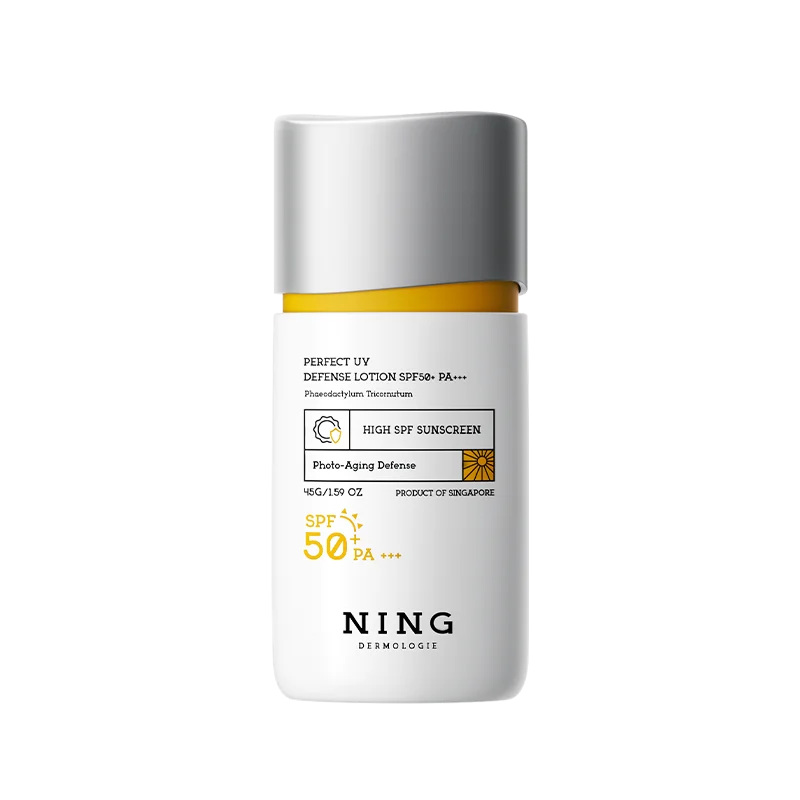
Balancing high-level protection with an elegant, weightless finish is difficult, but it is exactly what we focused on at NING Dermologie.
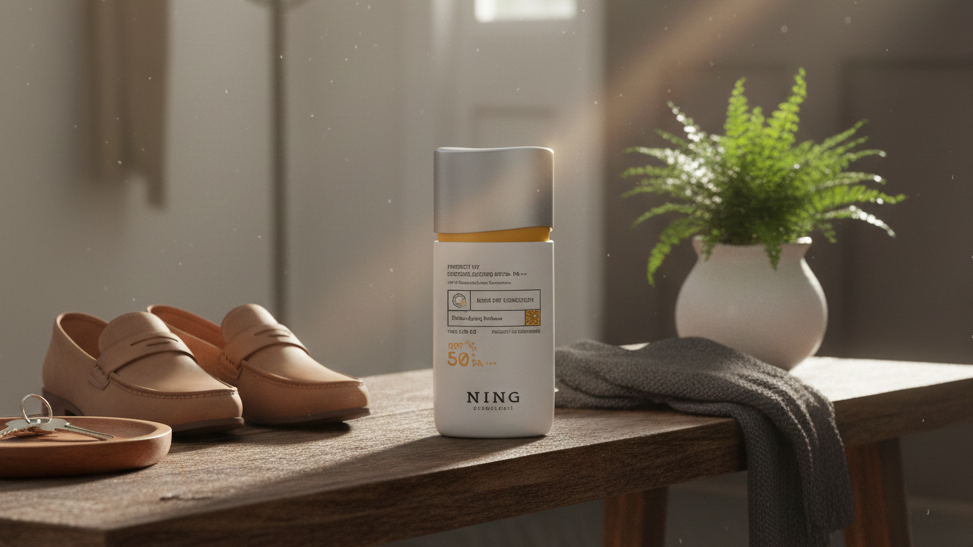
We know the frustration of applying an SPF 50 cream only to feel like your face is melting an hour later. That’s why we engineered our SPF50+ Facial Sunscreen. It is meticulously formulated to give you maximum broad spectrum defense without the heavy, suffocating aftermath.
Instead of relying on heavy emollients, this formula glides on smoothly, absorbs instantly, and sets to a natural, comfortable matte finish. It respects your skin barrier, refuses to clog pores, and layers flawlessly under makeup or wears beautifully on its own. It's the high-performance protection your oily skin has been asking for.
The Evolution of Sunscreen Textures: What’s Out There?
The skincare industry has finally realized that oily skin needs variety. A quick flip through Nylon magazine or the Journal of Cosmetic Dermatology will show you just how many formats are currently dominating the market.
The Gel Revolution Gel-based Lotions have become incredibly popular for those who absolutely hate the feeling of cream. Products like Trader Joe's Invisible Gel Body Sunscreen SPF 40 or Unseen Sunscreen SPF 50 offer a completely clear, silicone-heavy slip. While great for avoiding a white cast, some find these clear gels can sometimes feel a bit slick by the end of the day, depending on your oil output. For those wanting a glowing, dewy finish, things like Glowscreen SPF 40 are highly rated, but usually, oily skin types want to run the other direction.
The Drugstore Staples If you need accessible, everyday options, the aisles are packed with dual-action products. A standard Face Moisturizer built with SPF protection is a common starting point.
- CeraVe AM Ultra-Light Moisturizing Lotion With Sunscreen SPF 30 is a classic choice for barrier repair.
- Olay lotion, specifically the Olay Complete Daily Moisturizer With Sunscreen SPF 30, is a nostalgic, simple formula.
- Vanicream Facial Moisturizer with SPF 30 offers a stripped-down ingredient list for highly reactive skin.
The Indie and Niche Innovators Brands are getting highly specific with their chemical filters and mineral blends. Hero Force Shield Superlight Sunscreen SPF 30 uses a green tint to combat redness alongside its sun protection. Black Girl Sunscreen SPF 30 changed the game for eliminating white cast on deeper skin tones, though it leans moisturizing rather than strictly matte.
If you are specifically chasing serious matte powers, formulas like Mineral Mattescreen SPF 40 use heavy blurring properties, while active-focused brands are formulating products like Deconstruct's Invivo to blend sun protection with skincare actives. Even big players like PLAY Everyday Lotion SPF 50 are constantly tweaking their water-resistant bases to feel lighter.
The consensus from the American Academy of Dermatology and researchers at the University of Arizona Cancer Center remains the same: the best sunscreen is the one you will actually apply every single day.
How to Apply Matte Sunscreen Without Pilling
Having the right matte sunscreen is only half the battle. How you prep your skin dictates how well it wears.
- Lighten Up Your Skincare Routine: If you use a thick cream in the morning, your matte SPF will struggle to absorb. Swap to a lightweight hydrating serum instead.
- Wait It Out: Give your serum a full 60 seconds to sink in before applying your sunscreen.
- The Two-Finger Rule: You need broad-spectrum protection, which means you need to apply enough of it. Squeeze a line of sunscreen down your index and middle fingers. That is the amount needed for your face and neck.
- Pat, Don’t Rub: Aggressive rubbing disrupts the formula and causes the dreaded "pilling" (those little white balls of product rolling off your skin). Smooth it over your face, then gently pat it in to set the physical barrier in place.
Stop fighting your skin's natural oil production and start using products that work with it. A true matte SPF protects your long-term skin health without compromising your daily comfort. Protect your face, control the shine, and get on with your day.

Frequently Asked Questions (FAQ)
Do I still need moisturizer under my sunscreen if I have oily skin?
Skip it if you want to. Honestly, layering too much stuff is exactly what causes that 2 PM oil slick. Most matte SPFs already pack enough hyaluronic acid to keep your skin happy. Wash your face, slap on the sunscreen, and you’re good to go.
Does matte sunscreen cause breakouts?
Not if you buy the right stuff. Check the bottle—if it doesn’t explicitly say "non-comedogenic" or "oil-free," don't buy it. Matte sunscreens use powders to soak up grease, but you must double-cleanse at night. Otherwise, trapped filters will definitely clog your pores.
How do I reapply sunscreen over makeup without getting greasy?
Do not smear cream over your foundation. It’s going to turn into a muddy mess. Grab a translucent SPF powder or a mattifying setting spray instead. You get to kill the midday shine and bump up your sun protection without ruining your hard work.
Are chemical or mineral sunscreens better for acne-prone oily skin?
Go mineral. Zinc oxide is basically the holy grail for angry, breakout-prone skin because it naturally calms inflammation. Chemical filters trap UV rays and turn them into heat. That trapped heat is exactly what triggers more redness and oil. Keep it cool with minerals.
Will a high SPF like 50 make my face oilier than SPF 30?
Not anymore. Ten years ago, yeah, an SPF 50 felt like diaper rash cream. But modern formulations are completely different. The greasy feeling comes from the base formula, not the actual SPF number. A featherlight SPF 50 can control shine way better than a cheap SPF 30.





Share:
Best Eye Serum for Sensitive Eyes: Gentle Formulas That Won’t Sting
Best Eye Serum: How to Choose the Right One for Your Top Concern