


We know the drill. You buy a highly rated sunscreen, slather it on, and within five minutes, your face is burning, stinging, or breaking out in angry red bumps. Finding the right sun protection when you have reactive skin feels like a never-ending, expensive science experiment.
The truth is, for those of us with skin sensitivities, standard sunscreens often do more harm than good. A product designed to protect you from skin cancer and Skin Aging shouldn't leave you looking like a tomato before you even step outside.
If you want to protect your skin from harmful UV radiation without the fiery backlash, going fragrance-free is your absolute non-negotiable first step. But it doesn't stop there. Let’s break down exactly what your sensitive face needs, the hidden traps in popular product formulations, and how to finally find a daily SPF that feels like skincare, not punishment.

The Red Flags: What You Must Avoid
When your skin barrier is already compromised, you cannot afford to play roulette with your active ingredient list. Here is exactly what you need to dodge.
1. Fragrance Additives and Essential Oils
Whether it’s artificial perfume or "natural" essential oils, fragrance is the number one cause of allergic contact dermatitis in the skin-care market. Even worse, some fragrances cause photoallergic contact dermatitis—meaning they only cause a severe allergic reaction when exposed to UV rays. If a bottle smells like a tropical vacation, put it back on the shelf.
2. Harsh Chemical UV Filters
Not all chemical sunscreen is bad, but older filters are notorious for irritating sensitive skin. Benzophenone derivatives (like Oxybenzone) and Avobenzone actually generate heat as they absorb UVA rays and UVB rays, which can trigger redness and rosacea flare-ups.
There are also growing concerns in the medical community. Publications like Molecular Medicine and experts from institutions like the University of Arizona Cancer Center have raised eyebrows at how certain chemical UV filters absorb into the bloodstream. There are even discussions around how some small-molecule chemicals might cross the blood-brain barrier. While the FDA still approves them, if you have sensitive skin or autoimmune diseases, why take the risk?
3. Hidden Irritants and "Sunscreen Doping"
Watch out for formaldehyde-releasing preservatives. They are cheap, effective at killing bacteria, and absolutely brutal on delicate skin. Also, be wary of "sunscreen doping"—a shady industry practice where brands sneak in unlisted anti-inflammatory ingredients to mask the irritation caused by their harsh chemical filters. Finally, skip anything with retinyl palmitate (a vitamin A derivative) for daytime use, as it can make your skin more sensitive to the sun.
The Green Flags: What to Actually Choose
So, what can you put on your face? You want ingredients that calm the skin while acting as an impenetrable shield against the entire UV spectrum.
1. Physical (or Mineral) Sunscreens
For reactive skin, physical sunscreen is the gold standard. Instead of absorbing UV energy and converting it to heat, mineral sunscreen sits on top of your skin and physically bounces the light away.
You are looking for two heroes: Zinc Oxide and Titanium Dioxide. Zinc Oxide is incredibly soothing—it’s literally the main ingredient in diaper rash cream. For maximum safety and environmental consciousness, look for non-nano zinc oxide, which is less likely to penetrate the skin and is generally safer for coral reefs.
2. Calming, Hydrating Additives
The best sunscreens double as skincare. Look for natural ingredients that repair your barrier while you wear them. A complex of chamomile-derived bisabolol, licorice root, or Centella asiatica will visibly reduce redness. For moisture, hyaluronic acid and vitamin E are fantastic for keeping the skin plump and hydrated all day.
3. The Right Certifications and Ratings
Don't just look at the SPF number. The American Academy of Dermatology recommends using SPF 30-50 for daily use. But you also need Broad-spectrum protection to ensure you are shielded from both burning UVB rays and aging UVA rays. If you want to be incredibly thorough, look for the Protection Grade of UVA on the label, listed as PA+++ or PA++++. If you are extremely cautious about toxins, check if the product is EWG Verified.
The Standout Solution: NING Dermologie
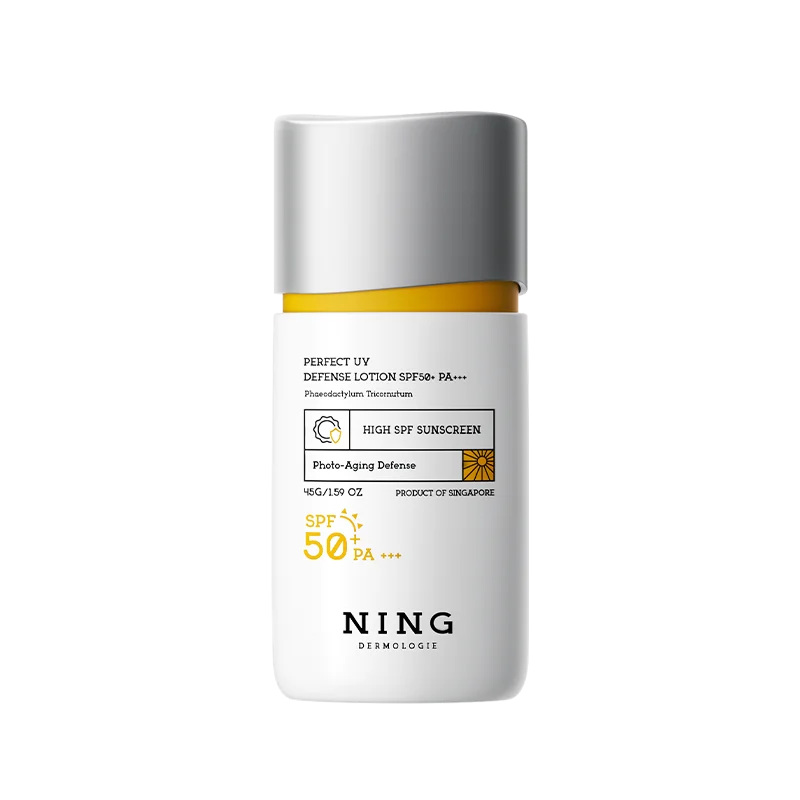
I review a lot of products, and the hardest balance to strike is high protection, zero irritation, and zero white cast. This brings me to a brand that actually gets it right: NING Dermologie.
Their SPF50+ Facial Sunscreen is a masterclass in formulating for sensitive, problem-prone skin. It delivers robust broad-spectrum UVA/UVB protection without relying on the harsh chemical filters that make your eyes water.
What makes it a staple is how it feels. It packs high-performance Sun Protection into a deeply hydrating base that doesn't feel heavy or greasy. They’ve skipped the fragrance additives completely, focusing instead on keeping the skin calm and shielded. If you are tired of playing guessing games with drugstore aisles, this is the reliable, daily-wear SPF 50 you want in your rotation.
The Market Landscape: Where Everyone Else Fits In
The sun protection aisle is overwhelming. Let's look at how other popular options stack up when you are trying to SHOP SMARTER.
The Drugstore Staples:
If you need basic, no-frills protection, the Vanicream line is famous for being bare-bones. The Vanicream Facial Moisturizer with SPF 30, Vanicream Sunblock, and basic Vanicream Facial Moisturizer are ultra-safe, though they can feel a bit heavy. Similarly, CeraVe AM Ultra-Light Moisturizing Lotion With Sunscreen SPF 30 and Olay Complete Daily Moisturizer With Sunscreen SPF 30 (or standard Olay lotion with SPF) are solid, accessible choices for mild sensitivities.
The Dermatologist Darlings:
Dermatologists at clinics like Mount Sinai and Spring Street Dermatology constantly recommend EltaMD. Products like EltaMD UV Clear (great for acne), EltaMD UV Physical, and EltaMD UV Skin Recovery use high-quality minerals, though some contain niacinamide which occasionally stings highly broken barriers. La Roche-Posay Anthelios is another massive clinic favorite, offering exceptional UV filters, though you must carefully read the labels to ensure you grab their fragrance free sunscreen versions.
The Trendy & Cosmetic Options:
Brands heavily featured in magazines like Nylon often focus on texture. Supergoop’s Unseen Sunscreen SPF 50 and Play Everyday Lotion SPF 50 are massively popular. Unseen uses dimethicone crosspolymer for a clear, primer-like feel, but it is a pure chemical sunscreen. Trader Joe's Invisible Gel Body Sunscreen SPF 40 is a known dupe for this texture. For a glowing, dewy finish, Black Girl Sunscreen SPF 30 is fantastic and moisturizing, leaving absolutely zero White cast on deeper skin tones. Hero Force Shield Superlight Sunscreen SPF 30 is a great mineral option with a green tint to cancel out redness.
Tints and Hybrids:
If you hate white cast, modern tinted mineral and hybrid sunscreens are a lifesaver. Protec(tint) Daily Skin Tint SPF 50, Colorescience Sunforgettable, and Dr. Few Tinted Mineral Sunscreen offer great coverage while acting as physical (or mineral) sunscreens. High-end skincare hybrids like Lightsaver Triplesome Serum and Kate Somerville Hydrakate blend serious anti-aging actives with SPF, though they come at a premium price point.
For Kids & Family, always stick to pure mineral formulas—if it's safe enough for a baby, it's safe enough for your reactive face. Writers like Dr. Axe frequently advocate for these simple, earth-derived formulas for whole-family use.
How to Apply and Test Like a Pro
Finding the right bottle is only half the battle. How you use it dictates whether you break out or stay protected.
First, always patch test. Do not buy a new SPF and immediately rub it all over your face. Apply a small amount behind your ear or along your jawline for three consecutive days. If you survive patch testing without redness or bumps, you are clear to use it.
Second, apply enough. You need about two finger-lengths of product for your face and neck to actually get the SPF 30 or SPF 50 advertised on the bottle. If you are using a thick mineral paste and only applying a pea-sized amount to avoid a white cast, you are likely only getting an SPF of 10.
Find a formula you actually enjoy wearing. Your sensitive skin has been through enough. Treat it to a soothing, protective layer that feels like a hug, not a chemical burn.

Frequently Asked Questions (FAQ)
Why does my face still burn with mineral sunscreens?
You might be reacting to inactive ingredients, not the UV filters. Check for hidden botanical extracts, drying alcohols, or heavy silicones that trap sweat. Also, ensure your skin barrier isn't already severely damaged; if it is, even plain water can sting. Focus on barrier repair first.
Does NING Dermologie leave a white cast on dark skin?
No. NING Dermologie’s SPF50+ Facial Sunscreen is specifically formulated to blend seamlessly across all skin tones. It provides the high-level protection of a premium formula without the chalky, ashy residue commonly associated with high-SPF products. It leaves a natural, invisible finish.
Do I really need SPF 50 if I just sit in an office?
Yes. UVA rays—the ones responsible for skin aging and deep tissue damage—easily penetrate standard glass windows. Even if you aren't getting a sunburn (caused by UVB rays), your skin is sustaining daily damage. A comfortable, daily SPF is non-negotiable for long-term skin health.
What does PA++++ actually mean?
While SPF measures protection against burning UVB rays, the PA system measures protection against aging UVA rays. PA++++ is the highest possible rating, meaning it offers extremely high UVA protection. If you want to prevent wrinkles, dark spots, and collagen breakdown, always look for high PA ratings.
Is a patch test really necessary if a product says "hypoallergenic"?
Absolutely. "Hypoallergenic" is an unregulated marketing term, not a medical guarantee. Every person's sensitivities are entirely unique. What is perfectly safe for 99% of people might still trigger your specific immune response. Taking three days to test behind your ear saves weeks of recovering from a breakout.





Share:
Facial Sunscreen for Sensitive Skin (No White Cast): 10 Picks That Don’t Irritate
Mineral Facial Sunscreen for Sensitive Skin: Why Zinc Oxide Is Usually the Safest Bet