


You stay up until 2 AM finishing a project or doom-scrolling, and your alarm violently goes off at 6 AM. You drag yourself to the mirror, and the dark under-eye circles staring back at you are aggressively loud.
Panic sets in. You grab that highly concentrated Vitamin C serum you use on your face, slap a thick layer right under your eyes, and hope for a miracle. Instead, you get fire. Pure, stinging regret, followed by redness and flaky skin for a week. Sound familiar?
I’m a beauty editor who has spent the last decade testing virtually every skincare product out there. I also happen to have notoriously sensitive skin. Trust me, I have wrecked my own skin barrier more times than I care to admit in the pursuit of looking awake.
The truth is, a dedicated eye serum is non-negotiable, and Vitamin C is the gold standard for brightening. But the skin under our eyes is incredibly thin—about a tenth of the thickness of the rest of our face. You can’t just treat it like the rest of your face skincare routine.
Let’s break down how to actually get those brightening benefits without burning your face off.

Why Bother with Vitamin C Under the Eyes?
Why do skin experts and dermatologists constantly rave about this ingredient? Because when formulated correctly, it is essentially a magic eraser for exhaustion and environmental damage.
Every single day, your skin is under attack from environmental stressors. We’re talking pollution, blue light from screens, and brutal UV rays. This UV exposure triggers the creation of free radicals—unstable molecules that essentially scavenge your skin, breaking down your natural collagen and accelerating aging.
Here is what a solid Vitamin C eye serum actually does for you:
- Fades the shadows: It actively blocks excess melanin production. This is crucial if your dark spots or dark circles are caused by hyperpigmentation rather than just genetics or hollow tear troughs.
- Boosts the bounce: It is mandatory for collagen production. By stimulating collagen synthesis, it thickens that delicate under-eye skin, which naturally blurs the appearance of blood vessels underneath.
- The ultimate shield: It offers heavy-duty antioxidant protection. Think of it as an invisible shield that neutralizes those free radicals before they can cause fine lines or crow's feet.
As dermatologist Melissa Piliang often points out in clinical discussions, antioxidants are your first line of defense against daily UV radiation and UV light rays. Sun protection from SPF is vital, but antioxidants catch the damage the sunscreen misses.
Decoding the Labels: Not All Vitamin C is Created Equal
This is where people usually mess up. If you look at the back of your skin care products, the ingredient list can look like a foreign language. Sometimes, it literally is. Because beauty is a global market, you might see international INCI lists using terms like ácido ascórbico instead of ascorbic acid.
If you want true rejuvenecimiento de la piel (skin rejuvenation) without the irritation, you have to know what you're buying. Here is your cheat sheet to the alphabet soup of Vitamin C:
1. The Heavy Hitter: L-ascorbic acid
This is the pure, most potent form of Vitamin C (sometimes misspelled on cheap knockoffs as asorbic acid). It acts fast to improve skin tone. The catch? It is notoriously unstable and highly acidic. If you put a high concentration of pure L-ascorbic acid under your eyes, you are begging for a chemical burn.
2. The Gentle Giants: The Derivatives
For the eye area, derivatives are your best friends. They are stable, less irritating, and convert to active Vitamin C once they absorb into your skin.
- Sodium ascorbyl phosphate (often seen globally as ácido ascórbilo de sodio): Fantastic for sensitive skin and has genuine anti-inflammatory properties.
- Magnesium ascorbyl phosphate (ácido magnesio ascorbilo de fosfato): Excellent for boosting moisture retention alongside brightening.
- Tetrahexyldecyl ascorbate: An oil-soluble form that penetrates deeply without requiring a low, burning pH level.
- Ascorbyl palmitate & Ascorbyl glucoside: Very stable, highly tolerable, and great for gradual brightening.
3. The Nature-Derived Boosters
Some brands use botanical extracts rich in natural Vitamin C. A prime example is Kakadu Plum, which has insanely high antioxidant properties. Brands like KORA Organics use this heavily.
How to Avoid Irritation: The Ultimate Survival Guide
Okay, you’ve picked a gentle derivative. You are still not entirely out of the woods. The way you apply your eye serum and what you mix it with matters just as much as the formula itself.
Rule 1: Mind Your Mixology (Don't Cocktail These!)
Your skin regimen needs to be strategically layered. Never, ever mix your Vitamin C eye serum with exfoliating acids at the same time. If you use a glycolic peel mask, glycolic acid toners, or any strong hydroxy acids, keep them far away from your eye area. Layering these will obliterate your skin barrier. Similarly, keep it away from acne treatments containing benzoyl peroxide, which can actually oxidize the Vitamin C and render it useless.
Rule 2: Check the Packaging
Vitamin C hates light, heat, and air. These elements destroy product stability (estabilidad del producto). If you buy a pure Vitamin C serum in a clear bottle, you are wasting your money. Always look for an airless pump bottle or a completely opaque, dark glass dropper bottle. If your serum smells like hot dog water or has turned dark brown, it has oxidized. Throw it away.
Rule 3: Always Patch Test
I cannot stress this enough. Before slathering a new product under your eyes, do a patch test. Dab a tiny bit behind your ear or on your inner wrist. Wait 24 hours. If it gets red or itchy, it’s not for you.
Rule 4: Hydration is the Buffer
Vitamin C does the brightening, but it needs a supporting cast. Look for formulas that include Hyaluronic Acid to plump the skin and draw in water. Botanical extracts like Chamomile Extract and white peony extract (or general peony extract) are incredible for soothing the skin and offsetting any potential sting. Ferulic acid is also a brilliant addition, as it stabilizes the Vitamin C and doubles its efficacy.
The Right Way to Target Círculos Oscuros and Líneas Finas
If you work in or follow the beauty industry, you know that the actual procesos de producción (production processes) dictate whether a product is a holy grail or a dud. You need a formula that balances active ingredients with soothing buffers.
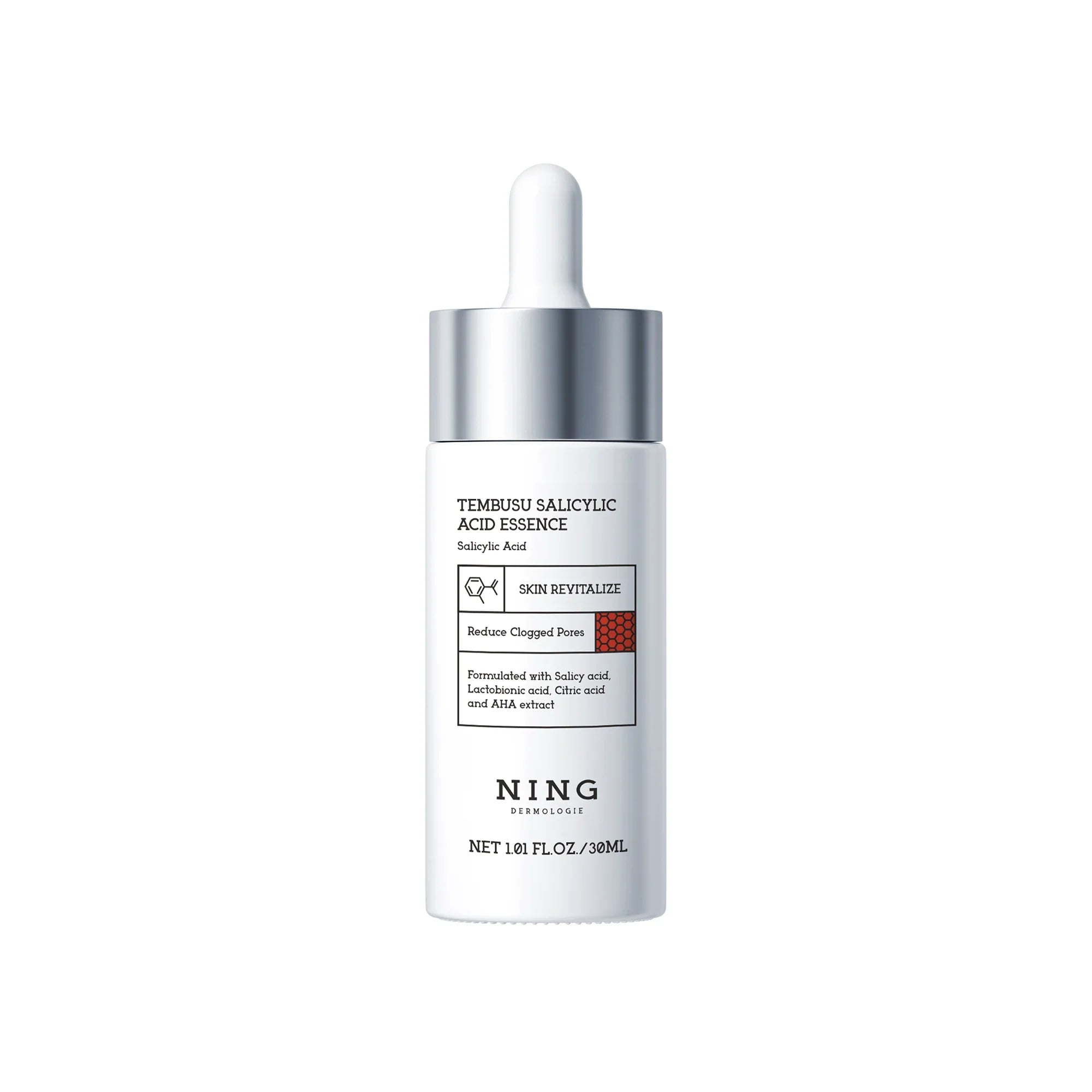
If you are looking for a masterclass in how an eye serum should be formulated for maximum results and zero irritation, you need to look at the NING Dermologie Lifting & Tightening Eye Essence.
Here is why this specific product works when so many others fail:
First, it completely understands the assignment when it comes to the eye area. Instead of just dumping raw acid onto your skin, it utilizes advanced anti-wrinkle peptide technology. Specifically, it features Matrixyl 3000+, which is clinically proven to rebuild the skin matrix from the inside out. Peptides are the building blocks of proteins like collagen and elastin. When you combine them with brightening agents, you get the ultimate one-two punch against fatigue.
Second, the texture. A lot of cult-favorite serums (like certain ones from The Ordinary or the Vinoperfect Radiance Serum, though the latter is great for the face) can feel a bit tacky or too heavy for the delicate eye contour, sometimes causing párpados hinchados (puffy eyelids) if they migrate into the eye overnight. NING Dermologie's essence has a lightweight, instantly absorbing texture that sits beautifully under makeup without pilling.
It improves overall skin texture while keeping the moisture barrier completely intact. It’s a beautifully engineered piece of cuidado de la piel (skincare) that respects the fragility of the eye area while delivering clinical-level results.
The Daily Application Ritual
Buying a great serum is only step one. How you apply it dictates 50% of your results.
- Cleanse gently: Start with a clean, dry face. Never apply active serums to damp skin under the eyes, as water can pull the active ingredients down too fast and cause stinging.
- The rice grain rule: You only need an amount the size of a grain of rice for both eyes. More product does not equal faster results; it just equals irritation.
- The ring finger tap: Dispense the serum onto your ring finger (it has the weakest muscle and applies the least pressure).
- Tap, don't rub: Gently tap the serum along your orbital bone. Start from the outer corner and tap inward toward your nose. Do not drag the skin.
- Seal it in: Wait about 60 seconds for the serum to fully absorb, then lock it in with a basic, unfragranced moisturizer.
- Sun protection: If you are applying this in the morning, you absolutely must follow up with sunscreen. Vitamin C makes your skin slightly more vulnerable to sun exposure right after application, even though it protects against free radicals overall.
Consistency is the secret here. You won't wake up tomorrow looking like you slept for 12 hours. But if you stick with a high-quality formula like NING Dermologie's essence, use gentle tapping motions, and respect your skin's boundaries, you will look in the mirror a month from now and realize you don't look so tired anymore.

Frequently Asked Questions (FAQ)
Can I use Vitamin C eye serum every day?
Yes, but start slow. Use it every other morning for the first week to let your skin adjust. If you experience no redness or stinging, you can move to daily morning use. Always follow up with sunscreen.
Why did my eye serum turn dark orange or brown?
It oxidized. When exposed to light, heat, or air, pure Vitamin C degrades quickly. Once it turns dark brown or smells metallic (like hot dog water), it’s no longer effective and might actually irritate your skin. Toss it.
Should I put the serum directly on my eyelids?
No! Never apply active serums directly on your upper eyelids or right up to the lash line. The product will naturally migrate as it warms to your body temperature. Stick to the orbital bone (the hard bone under your eye).
Can I use it at the same time as my retinol?
Keep them separated. Using Vitamin C and retinol at the exact same time under the eyes is a recipe for a ruined skin barrier. Use your Vitamin C serum in the morning for environmental protection, and your retinol at night.
How long will it take to see my dark circles fade?
Skincare requires patience. You might notice instant hydration, but true brightening and collagen building take time. Expect to see a noticeable difference in skin tone and fine lines after 4 to 6 weeks of consistent daily use.





Share:
Peptide Eye Serum What Peptides Do for Under-Eye Firmness and Lines
Eye Serum for Sensitive Skin Low-Irritant Choices and How to Patch Test