

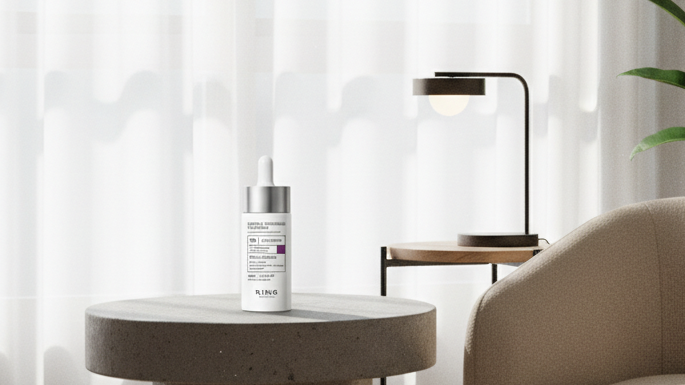

It’s 7:15 AM. The alarm has been screaming for fifteen minutes, and your brain feels like it’s been wrapped in damp cotton wool. You stumble into the bathroom, catch a glimpse of yourself in the mirror, and—oof. There they are. The "bags" under your eyes aren't just bags; they’re full-sized carry-ons.
Sleep deprivation is a cruel storyteller. It broadcasts your late-night deadline, your 3 AM doom-scrolling, or that extra glass of wine to anyone you meet before noon. Your undereye area looks like it’s sinking, the dark circles are veering into purple territory, and the puffy eyes make you look like you’ve been mourning a lost pet.
But here’s the reality check: you don’t have time for a two-hour spa treatment. You have a meeting in forty minutes. You need to de-puff and brighten, and you need to do it before the coffee even kicks in.

The Anatomy of the Morning Meltdown: Why Your Eyes "Leak" Your Secrets
Before we reach for the bottles, let’s talk about why the skin around the eyes is such a snitch. This skin is the thinnest on your entire body. It lacks the robust oil glands found on your forehead or cheeks, making it the first place to show Periocular Aging and Dermal and Subcutaneous Aging.
When you lack sleep, your body’s cortisol levels spike. This isn't just a "stress" thing; it physically alters your blood flow. The blood vessels under that paper-thin skin dilate, creating those haunting dark shadows. Simultaneously, your lymphatic system gets sluggish. Instead of draining away, fluid pools in the soft tissue, leading to that classic eye puffiness.
Top it off with Screen Time—the blue light that keeps you awake and strains the delicate muscles—and you’ve got a recipe for crow’s feet and fine lines that seem to appear overnight. This is Oxidative Stress in real-time, and your skin barrier is screaming for help.
The Ingredient Cheat Sheet: What Actually Works (and What’s Just Marketing)
If you walk into a beauty store, you’ll see thousands of skin care products claiming to be the "miracle cure." But let’s cut through the noise. As dermatologist Marina Peredo often highlights, the efficacy of a Topical Formulation depends entirely on the active ingredients and their ability to penetrate.
1. The Morning Energizers: Caffeine & Vitamin C
If your eyes are swollen, you need a vasoconstrictor. Caffeine (found in cult favorites like the Inkey List Caffeine Eye Cream) works by shrinking those dilated blood vessels. Think of it as a shot of espresso for your face. To tackle the "dullness," you need Vitamin C. It suppresses Facial Hyperpigmentation and jumpstarts collagen production. The Dermalogica Biolumin-C Eye Serum is a solid contender here, but you have to be careful about stability—Vitamin C hates light and air.
2. The Plumpers: Hyaluronic Acid & Matrixyl 3000
If you see fine lines that look like parched earth, you need hydration. Hyaluronic acid can hold 1,000 times its weight in water, pulling moisture into the undereye area. But for long-term structural repair, look for Matrixyl 3000. This peptide complex acts as a messenger, telling your skin to stop sagging and start producing more structural proteins.
3. The "Secret" Weapons: Vitamin K & Salmon DNA
You might hear cosmetic surgeons talk about Vitamin K for bruising. It’s fantastic for dark circles caused by leaky capillaries. Meanwhile, newer innovations like Salmon DNA (PDRN) and Marine Plankton are making waves for their ability to repair damaged cellular structures.
The NING Dermologie Approach: Beyond the Surface
While many basic serums provide a temporary "tight" feeling, we wanted something that addressed the underlying Dermal and Subcutaneous Aging. This is where the Lifting & Tightening Eye Essence from NING Dermologie steps in.
Instead of just layering one or two actives, this formula targets the "Morning Eye" on three levels:
- Immediate De-Puffing: Utilizing ginseng root extract and algae-derived bio-retinol, it stimulates local circulation. It doesn't just sit on the skin; it encourages the fluid to move along.
- Deep Hydration: Using a Peptides Complex alongside Hyaluronic Sea Serum tech, it fills in those micro-cracks (the ones where your concealer usually settles).
- Brightening: It targets Advanced Glycation End-Products (AGEs)—the stuff that makes your skin look yellow and "leathery" over time.
While brands like The Ordinary (specifically The Ordinary Multi-Peptide Eye Serum) offer great entry-level options, NING Dermologie focuses on a more sophisticated "synergy" of ingredients. It’s the difference between taking a Vitamin C pill and eating a perfectly balanced, nutrient-dense meal.
The 3-Minute Morning Protocol: How to Use Your Serum
Possessing the best eye serum in the world won’t help if you’re rubbing it in like you’re trying to scrub a stain out of a carpet. The skin around the eyes requires a "feather-touch."
- The Temperature Hack: Keep your Lifting & Tightening Eye Essence in the fridge. The cold constricts blood vessels instantly, doubling the de-puffing power of the active ingredients.
- The Orbital Bone Rule: Never apply product directly to your lash line. Use your ring finger—the weakest finger—to tap the serum along the orbital bone (the hard ridge around your eye socket). The product will naturally "creep" toward the eye without getting in it.
- The Drain Massage: Start at the inner corner and gently sweep outward toward the temples. This mimics lymphatic drainage, pushing the "puff" toward the lymph nodes near your ears.
- Seal the Deal: If you have exceptionally dry skin, layer a thin eye cream or the Advanced Repair Eye Cream over the serum. This "traps" the actives. Finally, never forget your SPF product. Dermatologist Rachel Nazarian warns that UV damage is the #1 cause of thinning skin, which makes circles look worse.
When Topical Serums Aren't Enough: The Professional Perspective
Let’s be honest: sometimes a serum can’t fix what a cosmetic surgeon or plastic surgeons would handle with a syringe or a laser. If your under-eye puffiness is caused by actual fat pads shifting (a sign of significant aging), you might look into Pulsed Dye Laser for redness or CO2 laser and Erbium laser for resurfacing deep wrinkles.
Experts at the Center for Dermatology, Cosmetic, and Laser Surgery or Chicago Cosmetic Surgery and Dermatology often recommend platelet-rich plasma (PRP) or platelet-derived growth factor injections to "re-stuff" the hollows. However, for 90% of us dealing with the fallout of a bad night’s sleep, a high-quality Topical Formulation like NING Dermologie is the most practical, non-invasive first line of defense.
Lifestyle Adjustments: The "No-Cost" Upgrades
You can spend a fortune on Kiehl's Since 1851 or La Roche-Posay, but if you’re eating a salt-shaker’s worth of sodium for dinner, you’re fighting a losing battle.
- Watch the Sodium Intake: Salt holds water. If you have a sushi dinner with lots of soy sauce, expect puffy eyes the next morning.
- Elevate Your Head: Use an extra pillow. Gravity is a free lymphatic drainage tool.
- Manage Screen Time: Give your eyes a break. The constant flickering of LED screens increases Myeloperoxidase Activities, a marker for inflammation.
- The Persian Silk Tree Effect: This ingredient is gaining fame for its "anti-fatigue" properties, often found in high-end formulations like Ocean Eyes® Age-Defying Eye Serum or This Works Morning Expert Open Eyes.
The Final Verdict
The "perfect" morning eye routine isn't about finding a magic wand. It’s about consistency and using the right tools for the job. Whether you’re reaching for The Ordinary, Pixi DetoxifEYE Serum, or the GOLD AWARD winning textures of NING Dermologie, the goal remains the same: protect the skin barrier, fight Oxidative Stress, and fake that 8-hour glow.
Your eyes might be the windows to your soul, but they shouldn't be a roadmap of your exhaustion. With a bit of Ginseng, a dash of Vitamin E, and the right tapping technique, you can face the world looking rested—even if you’re secretly dreaming of a nap.

Frequently Asked Questions (FAQ)
Q: Can I just use my regular face moisturizer instead of a dedicated eye serum?
You could, but it’s not ideal. Face creams are often too heavy, leading to milia (those tiny white bumps) or stinging. A dedicated eye serum like NING Dermologie is specifically pH-balanced and light enough to penetrate the thin skin without causing "baggy" fluid retention.
Q: Why do my eyes look darker after I started using a brightening serum?
It’s likely temporary irritation or "purging" if the serum contains high-strength Vitamin A or Vitamin C. However, sometimes thinning skin makes the underlying muscle more visible. Ensure you’re using an SPF product daily, as UV damage can darken the pigment further, making serums look ineffective.
Q: Is it better to apply my eye treatment in the morning or at night?
Both. At night, your skin is in "repair mode," making it the best time for Retinoic Acid or Peptides. In the morning, you need protection and de-puffing. Using the Lifting & Tightening Eye Essence AM and PM ensures you’re both preventing damage and fixing the "morning-after" puff.
Q: Will caffeine-based eye creams permanently fix my dark circles?
Sadly, no. Caffeine is a temporary fix—it constricts vessels for a few hours. For permanent results, you need ingredients that build collagen production over time, like Matrixyl 3000 or Salmon DNA. Think of caffeine as your morning coffee and peptides as your daily workout for your skin.
Q: At what age should I start using specialized products for the eye area?
Prevention is easier than correction. Most dermatologists, including David E. Bank, suggest starting in your early 20s. You don't need heavy hitters yet, but a simple Hyaluronic acid or Vitamin E serum can delay the onset of fine lines and crow’s feet significantly.





Share:
Eye Serum for Contact Lens Wearers: Gentle Formulas That Don’t Cause Tearing
Niacinamide Eye Serum: Brighten + Strengthen the Under-Eye Barrier