



The marketing world is obsessed with bigger numbers. If 2% is good, 10% must be five times better, right?
When it comes to hyaluronic acid serum, that logic falls apart fast.
As a formulation chemist who has spent years looking at raw material datasheets, I need to let you in on a secret: if a brand sold you a genuine 10% Hyaluronic Acid (HA) solution, you wouldn't be able to get it out of the dropper. It would be a solid, rubbery brick.
If you are hunting for the "highest concentration available" to fix fine lines, skin texture, or chronic dry skin, you are asking the wrong question. The question isn't "how much," but "what size" and "how is it delivered?"
Let’s dismantle the percentage myth, review the heavy hitters (from The Ordinary to La Roche-Posay), and look at how to actually hydrate your skin’s barrier without turning your face into a sticky mess.

The "Concentration" Trap: Reading the Label Like a Pro
When you see a bottle screaming "75% Hyaluronic Complex," your skepticism radar should go off. This usually refers to the percentage of the solution that contains HA, not the solid percentage of the ingredient itself.
In reality, the "sweet spot" for a hyaluronic serum is typically between 1% and 2%.
Why? Because HA is a humectant magnet. It holds 1,000 times its weight in water. Go much higher than 2%, and two things happen:
- The Texture Failure: It becomes incredibly tacky, like glue. It pills under makeup (goodbye, Westman Atelier foundation).
- ** The Reverse Osmosis Effect:** In dry climates, a massive concentration of HA can actually draw moisture out of the deep skin layers instead of from the air, dehydrating you further.
The Real Power: Molecular Weights
Instead of chasing a fake 10%, look for "multi-molecular" formulas.
- High Molecular Weight: Sits on the surface to stop transepidermal water loss (TEWL).
- Low Molecular Weight (Hydrolyzed Hyaluronic Acid): Penetrates deeper to plump skin elasticity.
The Heavy Hitters: A Chemist’s Review of Top Concentrated Serums
Let's break down the most popular options by skin type and formulation philosophy.
1. The "Raw Power" Approach: The Ordinary & COSRX
If you want bang for your buck, The Ordinary Hyaluronic Acid 2% + B5 Hydration Support Formula has been the reigning champion of budget skincare. They recently updated this to the The Ordinary Hyaluronic Acid 2% + B5 Hydrating Serum (lighter texture), but it remains a thick, viscous product. It uses sodium hyaluronate crosspolymers to maximize surface hydration.
- Pros: Cheap, high concentration (2% is scientifically high).
- Cons: Can be sticky. Requires a damp base to work (we will get to that).
Similarly, COSRX The Hyaluronic Acid 3 Serum pushes the limit to 3%. This is arguably the highest functional concentration you can find before the texture becomes unusable. It’s a beast for skin barrier repair but requires immediate sealing with a moisturizer.
2. The French Pharmacy Icons: La Roche-Posay & Vichy
Board-certified dermatologists love these because they balance efficacy with tolerability for sensitive skin.
La Roche-Posay Hyalu B5 Hyaluronic Serum is a cult classic. It pairs two types of pure hyaluronic acid with vitamin B5 (Madecassoside). It’s heavily fragranced, which some purists dislike, but the texture is elegant.
- Note: If you are strictly sensitive, look at their La Roche-Posay HyaluB5 Hyaluronic Acid Serum specifically, or the Vichy Mineral 89 Hyaluronic Acid Face Serum. The Vichy is less of a serum and more of a "booster"—it’s 89% volcanic water with HA. It’s lighter, making it ideal for oily skin or acne-prone teenagers.
3. The "Barrier Builders": CeraVe & Medik8
CeraVe Hydrating Hyaluronic Acid Serum takes a different route. It uses MVE technology (Multivesicular Emulsion) to release hydration over time. It’s not just water; it’s ceramides. This is the choice if your barrier is wrecked.
On the luxury end, Medik8 Hydr8 B5 Intense is a beauty editor favorite. It’s not just HA; it’s a "purple power" serum using saskatoon berry (a super antioxidant) to preserve the HA levels in your skin by blocking the enzyme that breaks HA down. It’s marketed as Medik8 Hydr8 B5 Liquid Rehydration Serum on steroids.
4. The Plant-Based & Exotic: Innisfree, 111SKIN, & Mimetique
- Innisfree Green Tea Seed Hyaluronic Serum: Uses "Nano-capsulized" HA. Great if you want antioxidant protection from green tea alongside hydration.
- 111SKIN Hyaluronic Acid Aqua Booster: High-end, often found in luxury skincare routines.
- Mimetique Skin Revive Serum: A newer player focusing on biomimetic ingredients to mimic the skin's natural structure.
- Caudalie Vinohydra S.O.S Hyaluronic Serum: A polyphenol-infused skin saviour. Caudalie uses grape water and HA, making it antioxidant-rich.
The Missing Link: Why Your Serum Isn't Working
Here is the problem most people face: They buy the Medik8 Hydr8 B5 Intense or the Dr. Barbara Sturm serum, apply it to a dry face, and wonder why their skin feels tight 20 minutes later.
Hyaluronic acid needs water to work. If you apply it to dry skin, it has no water to grab.
This is where the NING Dermologie philosophy changes the game. We don't believe in just slapping on a high-percentage serum; we believe in priming the canvas.
Before you drop $50+ on a serum, you need a hydration vehicle.
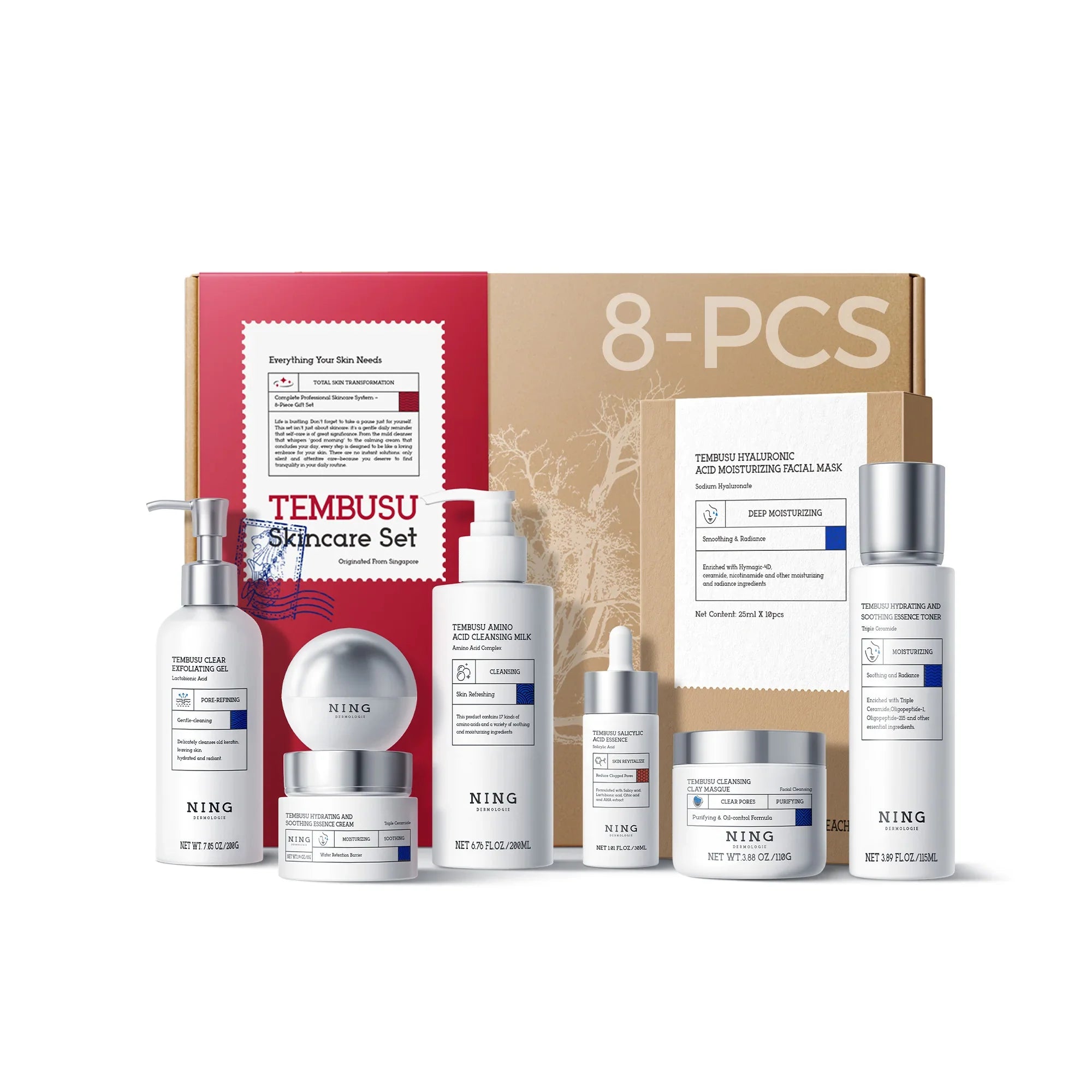
The NING Dermologie Method: Instead of relying solely on a thick serum that might sit on top of your pores, you use the Hydrating & Soothing Essence Toner as your "activation layer."
This toner isn't just scented water. It is formulated to lower the surface tension of your skin. When you apply this first, your skin becomes like a damp sponge rather than a dry brick.
Why this combination works:
- Cleanse: Start with a DERMA E Hydrating Gentle Cleanser or TATCHA The Rice Wash Skin-Softening Cleanser.
- ACTIVATE: Apply the NING Dermologie Hydrating & Soothing Essence Toner while your face is still damp. Do not let it dry.
- Treat: Immediately apply your high-concentration serum (like The Ordinary or OLE HENRIKSEN Truth Serum with Vitamin C) over the damp NING toner.
- Result: The HA molecules in the serum grab the moisture from the NING toner and pull it deep into the epidermis. No stickiness, just plump skin tone.
Building the Ultimate "High-Hydration" Routine
If you want to maximize these high-concentration serums, your surrounding skincare products matter. You cannot use a stripping cleanser and expect a serum to save you.
The Morning Routine (Focus: Protection & Glow)
- Cleanser: Light cleanse. PEACH & LILY Power Calm Hydrating Gel Cleanser or NUDESTIX NUDESKIN Gentle Hydra-Gel Face Cleanser.
- Toner: NING Dermologie Hydrating & Soothing Essence Toner (Generous layer).
- Serum: OLE HENRIKSEN Truth Serum (Vitamin C + hydration) or Vichy Mineral 89.
- Moisturizer: Clinique Moisture Surge 100H Auto-Replenishing Hydrator (Gel texture locks in HA well).
- SPF: Non-negotiable. La Roche-Posay Anthelios UV Hydra Sunscreen SPF 50 or Kopari Beauty Antioxidant Face Shield Mineral SPF 30. If you skip this, the UV damage undoes the collagen support the HA is trying to provide.
The Evening Routine (Focus: Repair & Barrier)
- Double Cleanse: Remove makeup with Garnier Makeup Removing Cleansing Balm. Follow with IT Cosmetics Confidence in a Cleanser or Charlotte Tilbury Charlotte's Magic Hydration Revival Cleanser.
- Toner: NING Dermologie Hydrating & Soothing Essence Toner.
- Treatment Serum: This is where you use the heavyweights. COSRX The Hyaluronic Acid 3 Serum or Medik8 Hydr8 B5 Intense.
- Targeted Care: Need more? Layer a sheet mask over the serum to force-feed the hydration.
- Occlusive: Seal it in. Neutrogena Hydro Boost (for oily skin) or a heavier cream containing provitamin B5.
A Note on Complex Ingredients
You will see brands throwing around exotic terms. Tatcha loves their Okinawa algae blend. Caudalie loves grape water. CeraVe loves ceramides.
Are these marketing fluff? Not entirely. A pure HA serum (just water + sodium hyaluronate) is boring and often sticky. The best "high concentration" serums are actually the ones that blend HA with:
- Vitamin B5 (Panthenol): Soothes inflammation (found in La Roche-Posay Hyalu B5).
- Salicylic Acid: Keeps pores clear while hydrating (good for congestion).
- Peptides: 111SKIN and Dr. Barbara Sturm are famous for this. They signal collagen production while the HA hydrates.
Expert Verdict: Which is Actually the "Strongest"?
If we are talking purely about the sensation of hydration and concentration of active humectants:
- For pure, raw HA percentage: COSRX The Hyaluronic Acid 3 Serum. It is thick, effective, and pulls no punches.
- For biological effectiveness: Medik8 Hydr8 B5 Intense. The addition of antioxidants to stop HA breakdown makes it "stronger" in the long run than a simple high-percentage gel.
- For skin barrier support: CeraVe Hydrating Hyaluronic Acid Serum. It repairs while it hydrates.
But remember, the strongest serum in the world is useless if your delivery system is flawed.
A $300 bottle of Dr. Barbara Sturm applied to dry, un-prepped skin will perform worse than a $15 bottle of The Ordinary applied over NING Dermologie Hydrating & Soothing Essence Toner.
Hydration is about layers, not just percentages.

Frequently Asked Questions (FAQ)
Q1: Can I use Hyaluronic Acid with Vitamin C and Retinol?
Yes, absolutely. HA is a team player. Apply your Vitamin C (like Ole Henriksen) first in the morning, then your HA. At night, apply Retinol, then HA. Hyaluronic acid helps buffer the irritation caused by strong actives like retinol or salicylic acid.
Q2: Is a higher percentage of Hyaluronic Acid always better?
No. Concentrations above 2-3% can actually draw moisture out of your skin (reverse osmosis) if the air is dry. High concentrations also tend to be sticky and pill under makeup. A multi-molecular weight formula at 1-2% is the dermatological gold standard.
Q3: Why does my serum pill (ball up) when I apply makeup?
This happens when the water in the serum evaporates before the HA absorbs, leaving a film. To fix this: Use less product, apply it over a damp toner (like NING Dermologie), and wait 60 seconds before applying moisturizer or SPF.
Q4: Do I really need a toner before a Hyaluronic Acid serum?
Technically no, but functionally yes. HA acts like a sponge. If you put a dry sponge on a spill, it takes time to absorb. If you wet the sponge first, it absorbs instantly. A hydrating toner provides the "free water" for the serum to grab onto.
Q5: How often should I use Hyaluronic Acid serums?
You can use them twice daily, morning and night. Unlike exfoliating acids, HA creates no sun sensitivity. In fact, using it under your SPF 30 or SPF 50 helps keep your skin hydrated against the drying effects of UV filters.





Share:
Step-by-step guide to ordering hyaluronic acid serum online safely
The Morning Rush: Why Hyaluronic Acid Serums with SPF Are the Multitasking Heroes We Deserve