

Navigating Organic Certification for Hyaluronic Acid in the USA
When brand owners ask, "Can I order hyaluronic acid serums with organic certification from US-based suppliers?" the answer is a nuanced "Yes, but with conditions." Unlike a bottle of cold-pressed rosehip oil, a Hyaluronic Acid Serum is a complex formulation. To carry the USDA Organic Certification seal, the product must meet the National Organic Program (NOP) standards, which are far more stringent than general "clean beauty" claims.

The Science of "Organic" Hyaluronic Acid
First, let’s clear up a common misconception. Hyaluronic Acid itself is not "grown" in a field like organic Aloe Barbadensis Leaf. It is typically produced through microbial fermentation, specifically using Streptococcus zooepidemicus. Because it is a product of fermentation, it is classified as a non-agricultural ingredient.
To achieve a high-level organic claim, U.S.-based manufacturers in hubs like Los Angeles or the San Francisco Bay Area focus on the base of the serum. Instead of using deionized water, they use whole plant organic material or hydrosols. This ensures the natural formulation remains compliant while delivering high purity levels.
Why the Supplier’s Location Matters
Working with a U.S.-based manufacturer offers distinct advantages in regulatory compliance and product quality. Facilities in the States often hold ISO 9001:2008 or the updated ISO 9001 certifications, alongside ISO 22716:2007 for cosmetic Good Manufacturing Practices (GMP). This ensures that from Formulation design to Cleanroom production, every step is documented.
For brands looking to scale, companies like RainShadow Labs or Biocrown Biotechnology (which operates globally) provide the infrastructure for private label expansion. They offer batch-specific test results, including the LAL assay to ensure the absence of endotoxins, which is vital for skin care products intended for sensitive areas like crow's feet or dark circles.
Technical Specifications: Molecular Weight and Efficacy
In the world of skin care, not all serums are created equal. When discussing formulation development with your supplier, the molecular weight of the Hyaluronic Serum is the most important technical factor.
- High Molecular Weight: Sits on the surface to create a moisture lock.
- Low Molecular Weight: Penetrates deeper to support cell turnover and long-term skin hydration.
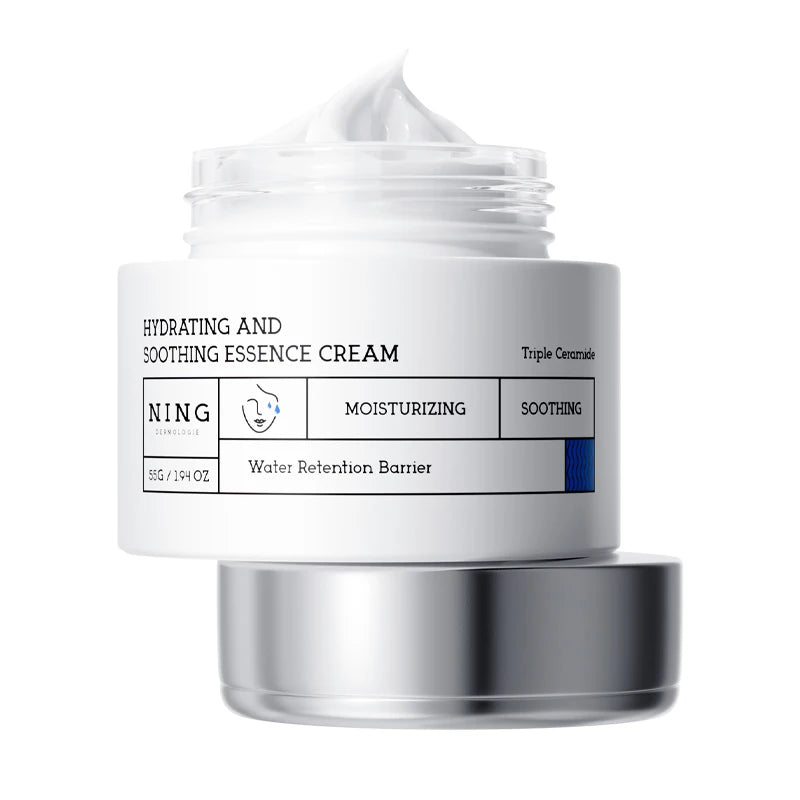
A professional Hyaluronic Acid Serum often utilizes a multi-weight approach. U.S. labs frequently pair this with Vitamin C, Vitamin E, and coenzyme Q10 to protect against environmental stressors. At NING Dermologie, we believe in a holistic approach to skin health. While you wait for your serum to arrive, our Hydrating & Soothing Essence Cream [https://ningcos.com/products/hydrating-soothing-essence-cream] acts as the perfect secondary barrier, rich in fatty acids and shear butter (shea butter) to soothe the skin.
Identifying a Truly Certified Supplier
Don't just take a salesperson's word for it. To ensure your supply chain is robust, you must verify their certification systems.
- USDA Organic Certification: The gold standard in the US.
- COSMOS Organic / Soil Association: Often used if the supplier exports to Europe and follows REACH regulations.
- Credo Clean Standard: A private standard that focuses on Radical Fragrance transparency and the exclusion of chemical solvents or sodium sulfate.
When evaluating a certified supplier, ask for their ISO 14001 (environmental management) documentation. Truly sustainable U.S. suppliers are moving toward regenerative and organic or biodynamic practices, focusing on recyclable materials in their Packaging design to reduce the carbon footprint.
The Logistics of Private Labeling
If you are ready to start a private label line, you need to prepare for the business side of organic skincare.
- Minimum Order Quantities (MOQs): Organic formulations often have higher MOQs because the raw botanical hyaluronic acid and Geranium Essential Oil must be sourced fresh.
- Lead Time: Expect a lead time of 8–12 weeks for custom organic skin care formulations. This accounts for stability testing and FDA Compliance checks.
- Samples for Testing: Never skip this. Request samples to check the texture. Does it pilling? Is the Organic Pomegranate extract stable?
For those supporting someone through medical recoveries, such as cancer treatment, purity is non-negotiable. Using natural processes and cold processing preserves the bio-activity of ingredients, ensuring the product meets the body's needs without irritation.
Conclusion: Building a Global Brand
Sourcing from the US allows your global brand to claim high standards of ingredient traceability. Whether you are part of an inner glow club of indie beauty or a large-scale distributor, the transparency provided by a U.S.-based manufacturer is an asset.
By combining high-performance ingredients like Hyaluronic Acid with the soothing power of nature, you create a support system for the skin. For a complete routine, remember that a serum provides the hydration, but a cream, like our Hydrating & Soothing Essence Cream, locks it in.

Frequently Asked Questions (FAQ)
1. Is "natural" the same as USDA Organic for HA serums?
Actually, "natural" means very little in a regulatory sense. It’s mostly marketing fluff. USDA Organic is the real deal—it requires a paper trail and third-party audits. If you want that seal on an HA serum, almost every drop, from the extracts to the preservatives, must hit strict federal benchmarks.
2. Why do U.S. suppliers have higher MOQs for organic lines?
It comes down to the production line. Running a batch of organic Aloe or Geranium oil requires a total system teardown and deep clean to avoid cross-contamination. Labs won't stop their standard runs for a tiny order; they need larger volumes to justify the specialized cleanroom labor and material costs.
3. How do I verify a supplier's ISO 22716:2007 status?
Don't just take a PDF at face value. Ask for the certificate and look up the accreditation body that signed off on it. Legitimate Los Angeles or Bay Area labs will have an FDA registration number you can cross-reference. If they hesitate to show the paperwork, keep moving.
4. Can Hyaluronic Acid itself be certified organic?
Not in the way a carrot is. Since it’s a fermentation product, it’s labeled as a non-agricultural ingredient. However, it is "organic-compliant." As long as the manufacturer avoids harsh chemical solvents and uses non-GMO microbial fermentation, it’s allowed in certified organic formulations without breaking the rules.
5. What should I look for in a serum's batch-specific test results?
Look closely at the COA for purity and the LAL assay—this checks for endotoxins that cause skin reactions. You also want to see stable pH levels and microbial counts. Real traceability means the lab can link that specific bottle back to the exact day the ingredients were tested





Share:
Are there online platforms providing custom-blended hyaluronic acid serums tailored to individual skin concerns?
The Hunt for "The One": Where to Find Hyaluronic Acid Serums That Actually Do More (Peptides & Antioxidants Edition)