

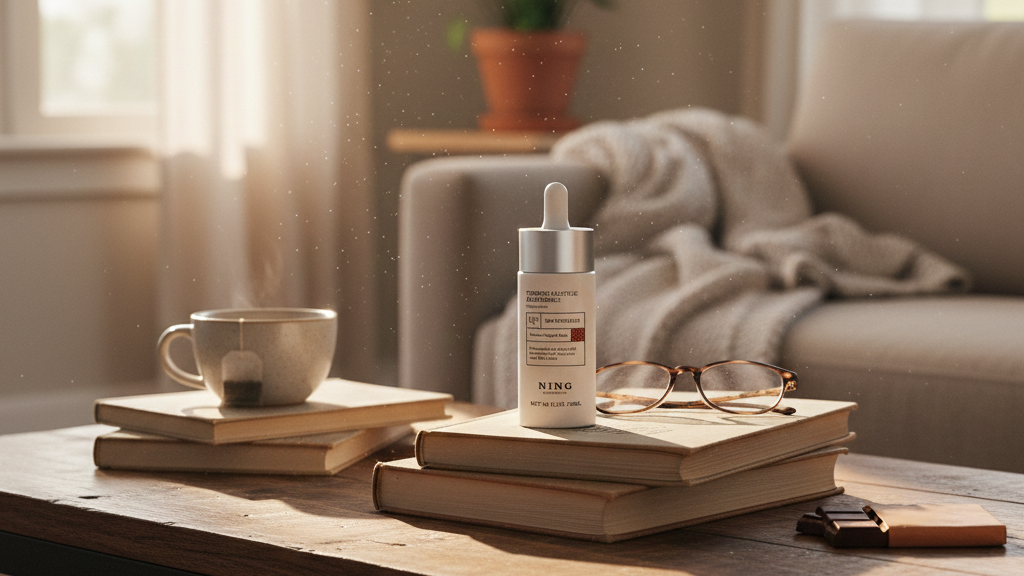

The Honest Truth: How to Use Salicylic Acid on Sensitive Skin Without Losing Your Mind (or Your Barrier)
If you have sensitive skin, the mere mention of the word "acid" probably makes you want to reach for a bottle of thick, fragrance-free cream and hide. I’ve seen it a thousand times: someone with acne-prone skin tries a viral salicylic acid product, wakes up with a face as red as a tomato, and swears off chemical exfoliants forever.
It’s a skincare nightmare. But here’s the thing—using salicylic acid on sensitive skin isn't just possible; it can be a total game-changer for your skin texture and breakouts if you stop treating your face like a science experiment and start treating it like the delicate ecosystem it is.
At NING Dermologie, we’ve spent years obsessing over this exact balance. We know that many people with sensitive skin struggle to find that "Goldilocks" zone—where the benefits of salicylic acid actually show up without the dreaded skin irritation. This guide isn't a textbook. It’s a roadmap for those of you who want clearer skin but are tired of the burning sensation.

Is Salicylic Acid Good for Sensitive Skin? (The Short Answer: Yes, But...)
The question "is salicylic acid good for sensitive skin?" usually gets a hesitant "maybe" from dermatologists. But let’s look at the chemistry. Salicylic acid is a beta-hydroxy acid (BHA). Unlike glycolic acid (an AHA), which is water-soluble and can "flash-exfoliate" the surface, salicylic acid is oil-soluble.
This means salicylic acid works by traveling into the pores to break down sebum and dead skin. Because it has anti-inflammatory properties, it can actually be calmer than harsh physical scrubs or high-percentage lactic acid for certain sensitive skin types. The catch? It’s all about the delivery system and the percentage of salicylic acid you’re using.
Understanding Your Skin Type and Its Limits
Before you even touch a bottle of salicylic acid in your skincare routine, you need to be honest about your skin type. Are you oily skin and sensitive? Or are you dry skin and sensitive?
- Oily or acne-prone skin usually thrives with a BHA because it clears excess oil and dead skin.
- Dry skin with sensitivity needs to be much more careful, as salicylic acid can increase dryness if not combined with salicylic acid-friendly hydrators.
The "Secret Sauce" to Using Salicylic Acid Safely
If you’re going to incorporate salicylic acid into your life, you need a strategy. You can’t just splash it on and hope for the best.
1. Respect the Skin Barrier
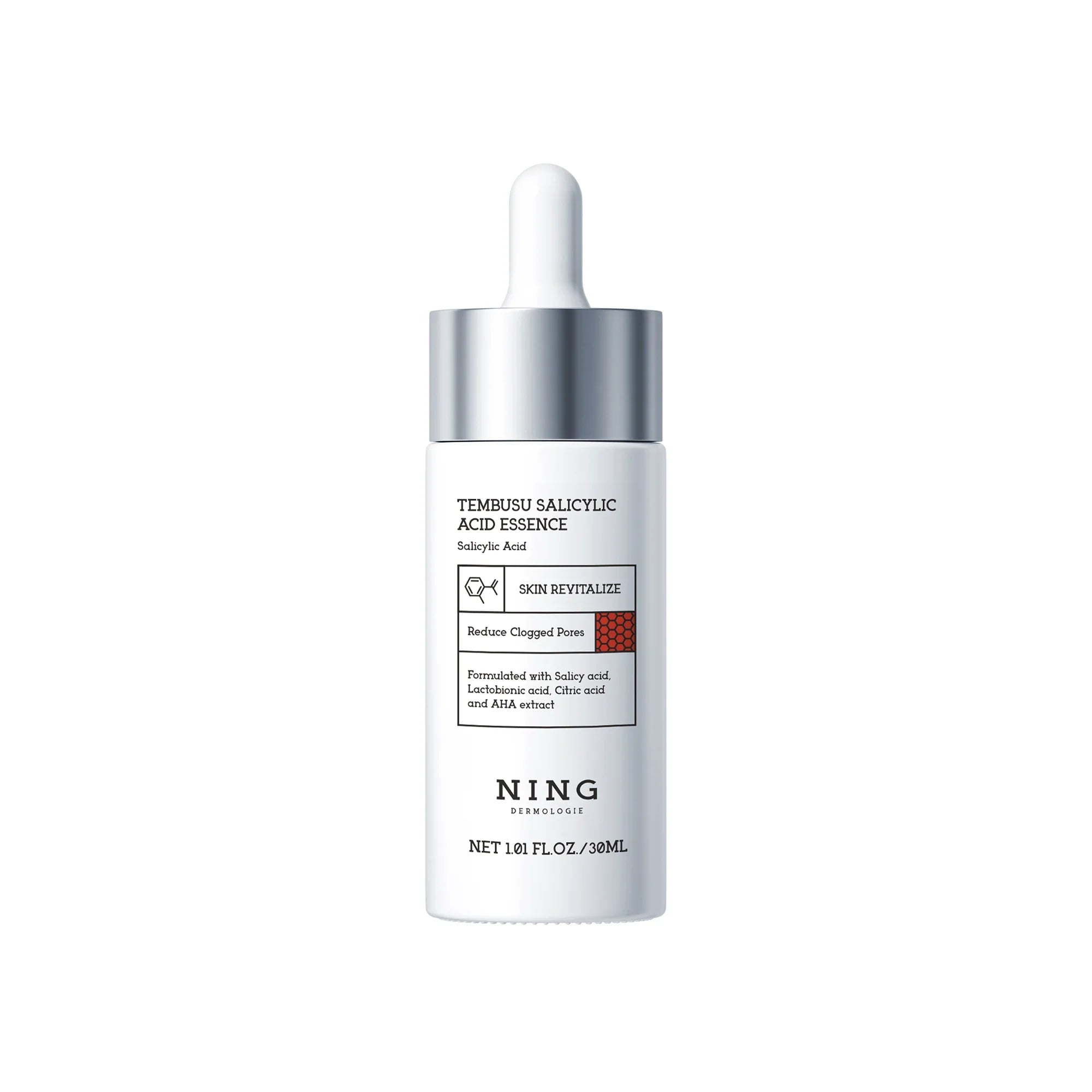
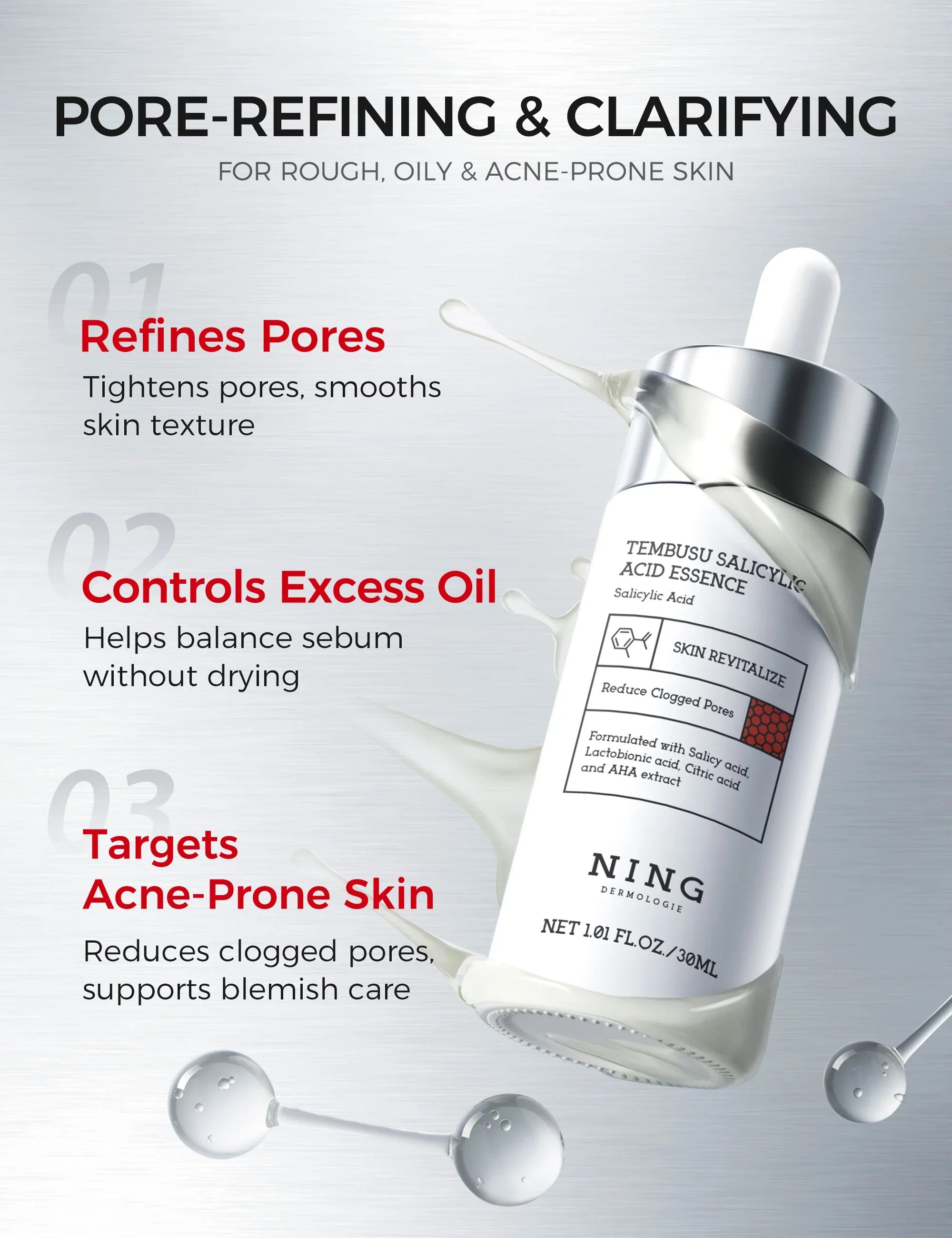
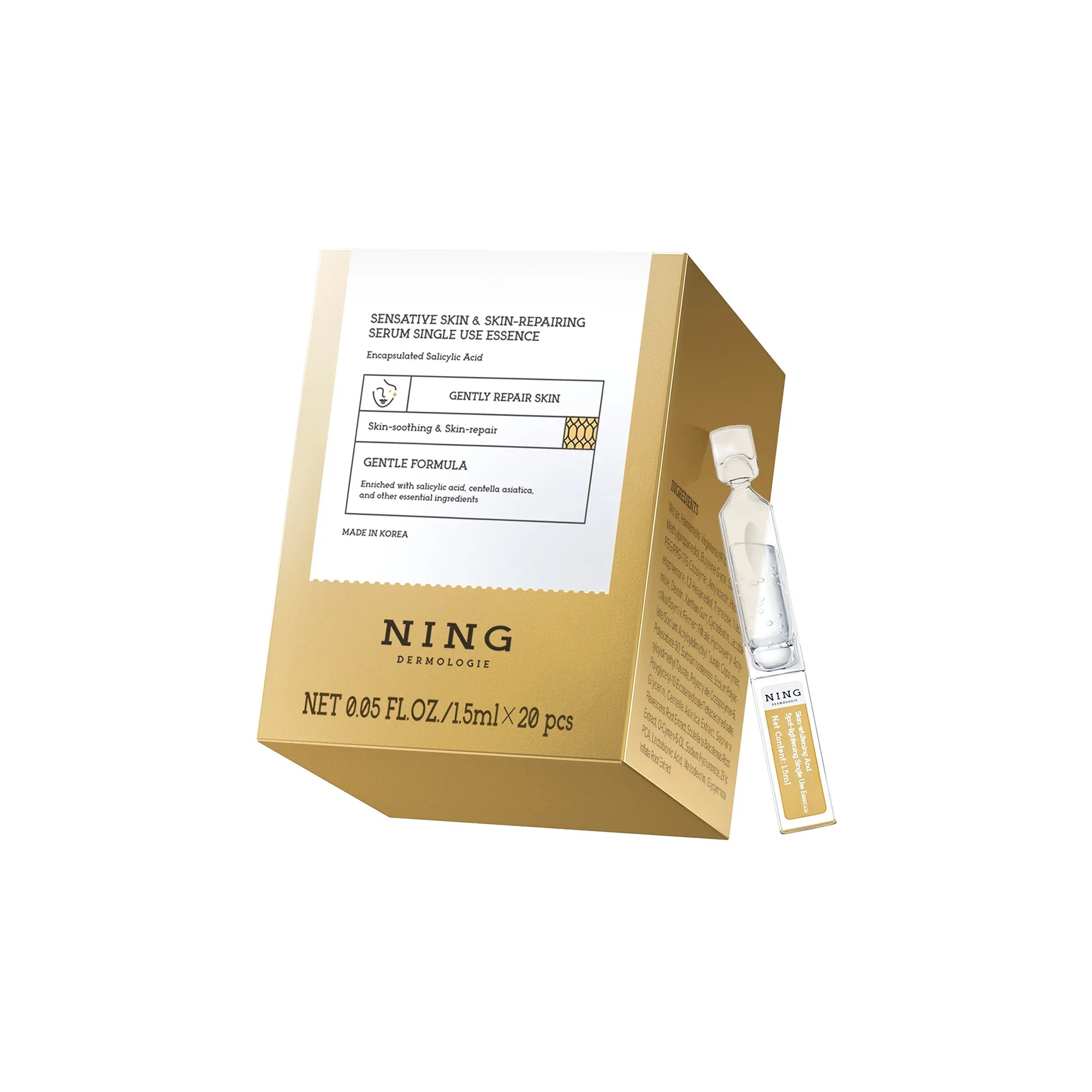
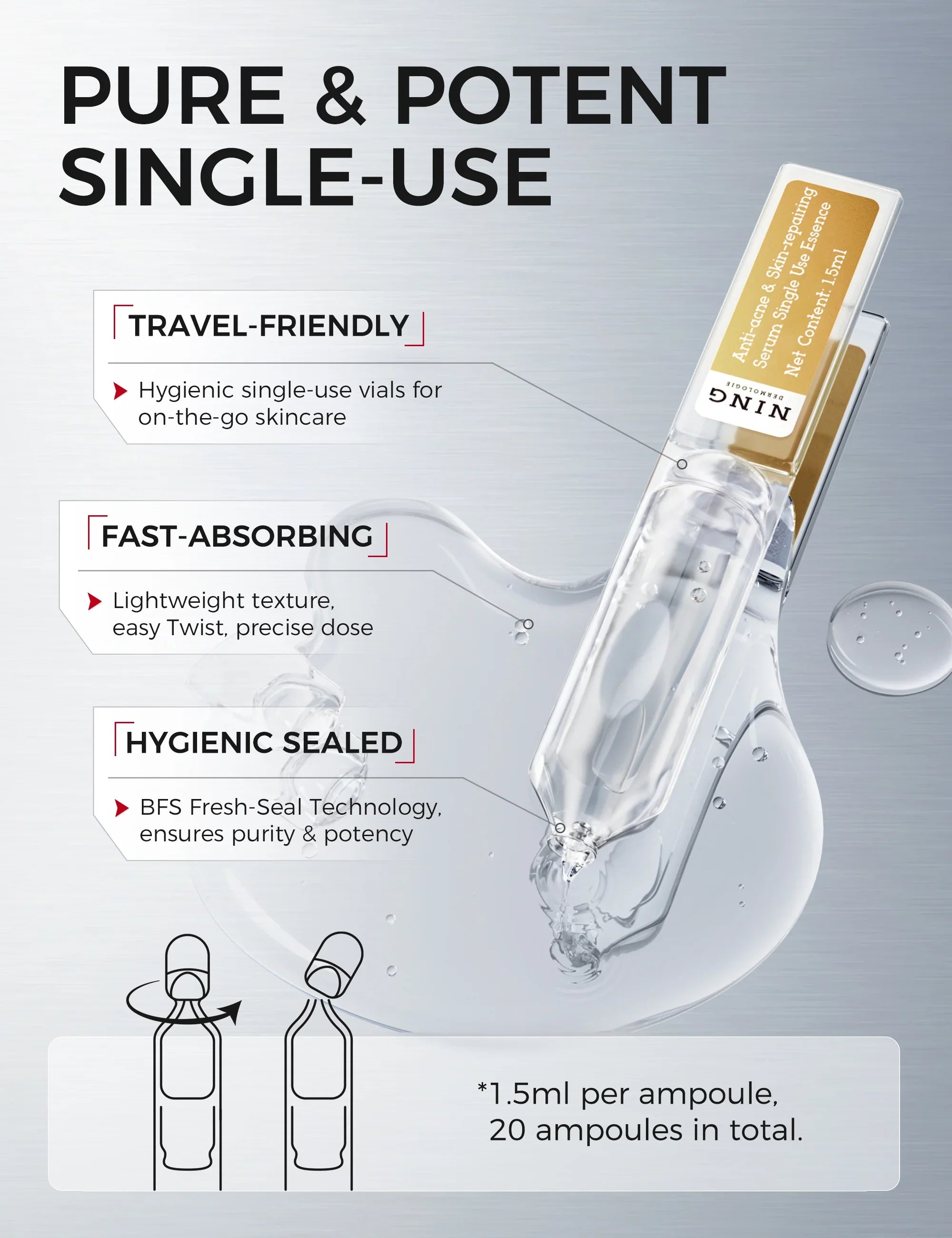
Your skin barrier is your armor. When you have sensitive skin, that armor usually has a few chinks in it. Salicylic acid is an ingredient that, while helpful, can strip away necessary lipids if overused. This is why we formulated the NING Dermologie 2% Salicylic Acid Serum with a focus on stabilization. It allows the acid to penetrate without declaring war on your moisture levels.
2. The Patch Test (No, Really, Do It)
I know, it’s boring. You want clear skin now. But applying a salicylic acid product to your entire face without a test is a recipe for disaster. Apply a small amount behind your ear or on your inner jawline. Wait 24 hours. If your skin reacts with anything more than a tiny tingle, reconsider.
3. The "Buffering" Method
One way to use salicylic acid safely is to apply a thin layer of hyaluronic acid or a basic moisturizer before your serum. This acts as a buffer, slowing down the absorption rate and giving your delicate skin time to adjust.
Why the NING Dermologie 2% Salicylic Acid Serum is Different
Most skincare products containing BHA are loaded with alcohol to make the product dry faster. That is the enemy of sensitive skin types. When we created our salicylic acid serum, we ditched the harsh solvents.
Our formula focuses on smooth skin through a slow-release mechanism. By using a 2% Salicylic Acid Serum, you’re getting the industry standard for acne treatment, but it’s balanced with hydrating ingredients like hyaluronic acid. It’s about getting the benefits of salicylic acid without the side effects of salicylic acid like peeling or redness.
Challenges of Using Salicylic Acid on Sensitive Skin
Let’s talk about the "ugly" side. Challenges of using salicylic acid include the "purge." Because BHA away dead skin cells and clears the gunk from your pores, things might look worse before they look better.
However, there’s a difference between "purging" and irritated skin.
- Purging: Small whiteheads in areas you usually break out. Usually lasts 2-3 weeks.
- Irritation: Redness, stinging, and itching in areas you don’t usually have issues.
If you see side effects of salicylic acid that look like a rash, stop. Let your skin breathe for a week before trying a lower frequency.
Best Practices for Your Salicylic Acid Skincare Routine
To use salicylic acid safely, you need to be a minimalist.
Step-by-Step Guide:
-
Cleanse Gently: Don't use a salicylic acid cleanser and a serum at the same time. If you’re using a salicylic acid cleanser, that’s your exfoliation for the day. If you prefer a serum, use a gentle, non-active cleanser.
-
Apply Sparingly: You only need a pea-sized drop of the NING Dermologie 2% Salicylic Acid Serum. More is NOT better.
-
Frequency is Key: Start once every three days. Seriously. Even if you think your skin is still fine, allow your skin to adjust. After two weeks, if your skin remains calm, move to every other night.
-
Hydrate, Hydrate, Hydrate: Always follow up with a product that contains hyaluronic acid or ceramides. Keeping your skin hydrated is the only way to use the product long-term without damage.
-
Sun Protection: This is non-negotiable. Even though BHA isn’t as photosensitizing as AHAs, it still exfoliate the skin, leaving new, delicate skin exposed. Protect your skin with an SPF 30+ every single morning.
Comparing Acids: Is BHA the Only Choice?
Sometimes people ask, "What about mandelic acid?" or "lactic acid?" While mandelic acid is ideal for sensitive skin because of its large molecular size (it doesn't penetrate as deep), it doesn't handle oil as well as salicylic acid. If your skin concerns involve deep-seated blackheads or cystic bumps, salicylic acid with the right formulation is usually more effective.
Salicylic acid could be the missing piece in your skincare routine, provided you don't treat it like a "quick fix." It’s a marathon, not a sprint.
Maintaining Your Results Without Irritation
Once you see your skin starting to clear up, don't get greedy. The biggest mistake people with oily skin make is increasing usage to twice a day once they see results. This almost always leads to a compromised skin barrier.
Keep your skin in a state of "controlled exfoliation." If you notice your face feels tight after washing, skip the salicylic acid product that night. Your overall skin health depends on you listening to these subtle cues.
Incorporating Other Actives
Be careful when you introduce salicylic acid alongside things like Retinol or Vitamin C. Using salicylic acid on sensitive skin is hard enough—don't throw five other actives at it. If you use Retinol at night, maybe use salicylic acid in a wash-off form in the morning, or alternate nights.

Final Thoughts: The NING Dermologie Philosophy
We believe that acid for sensitive skin types should be formulated with a "skin-first" mentality. Our salicylic acid in your skincare philosophy is simple: remove dead skin and excess oil and dead skin without causing a secondary problem.
Salicylic acid is a beta-hydroxy powerhouse, but it’s only as good as the person applying it. Use it wisely, keep your skin moisturized, and protect your skin from the sun. Clearer skin isn't about the strongest acid; it's about the smartest routine.
Frequently Asked Questions (FAQ)
1. How often should I use the 2% Salicylic Acid Serum if I have very sensitive skin?
Start slow. We recommend using the product just once or twice a week initially. This allows your skin to adjust to the beta hydroxy acid without triggering a massive inflammatory response. If your skin remains calm after two weeks, you can slowly increase frequency to every other night. Never rush the process; sensitive skin types require patience to see the best skin texture improvements.
2. Can I use salicylic acid and retinol together?
It is generally not recommended for sensitive skin to use both in the same application. Both salicylic acid and retinol are potent; combining them can lead to irritated skin and a broken skin barrier. Instead, try "skin cycling"—use your salicylic acid serum one night, a recovery moisturizer the next, and retinol the third. This way, you get the benefits of salicylic acid without the redness.
3. What should I do if my skin starts peeling or feels tight?
This is a sign of dry skin or over-exfoliation. Immediately stop using salicylic acid products for at least 5-7 days. Focus on hydrating ingredients like hyaluronic acid and ceramides to repair your skin barrier. Once the peeling stops and your skin feels normal, you can introduce salicylic acid back into your routine, but at a lower frequency or by using the "buffering" method.
4. Why is my acne getting worse after starting the serum?
This might be "purging." When salicylic acid works, it speeds up cell turnover, pushing oil and dead skin cells to the surface faster. If you have acne-prone skin, this can cause temporary breakouts. However, if the skin irritation includes burning or occurs in areas where you never get pimples, it’s likely a reaction, not a purge. Genuine purging should subside within a few weeks.
5. Does salicylic acid help with large pores?
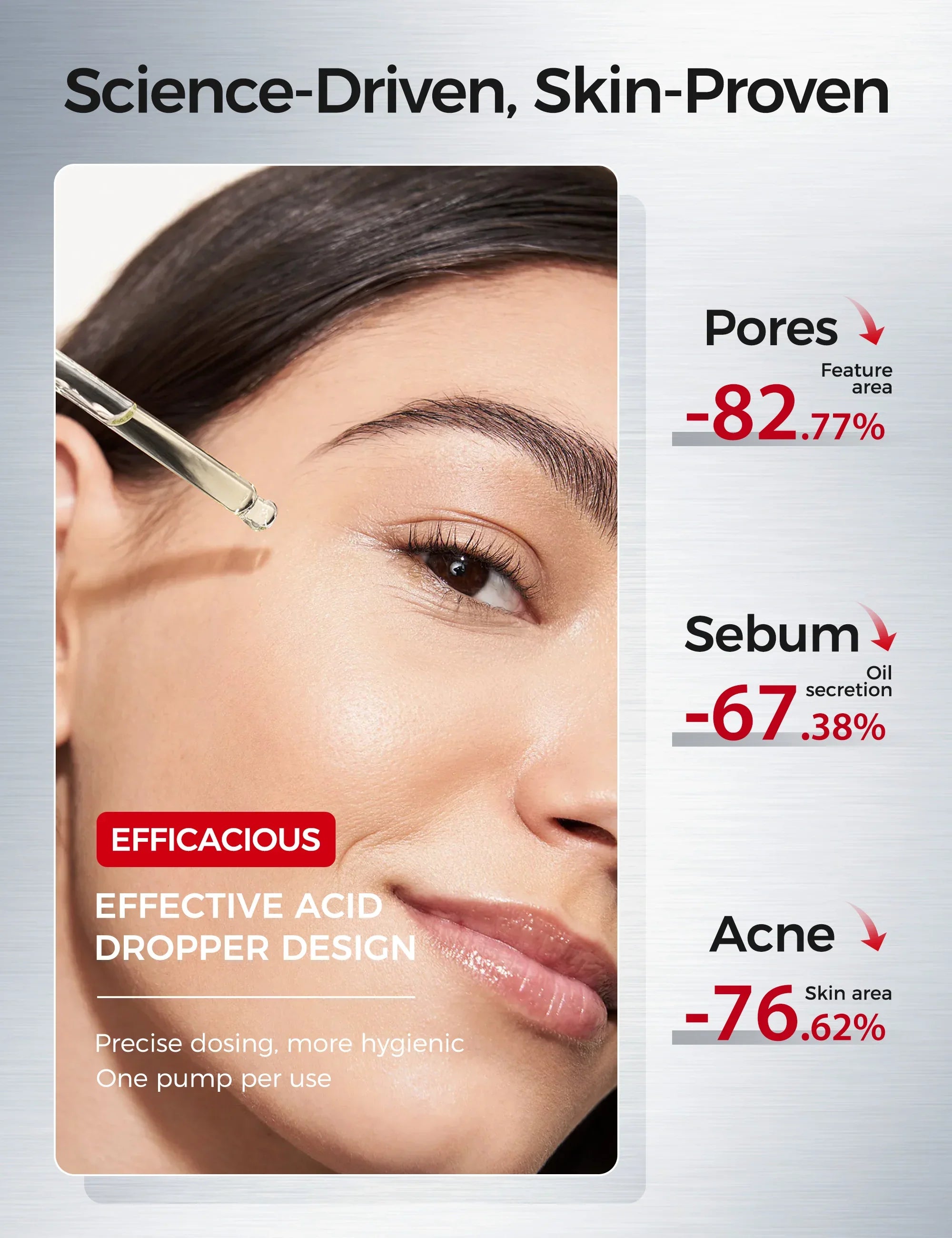
Yes. One of the primary benefits of salicylic acid is its ability to dissolve the "plug" of sebum and dead skin inside the pore. When pores are cleared of excess oil and dead skin, they appear smaller and the skin texture looks much smoother. For oily skin, regular use of the NING Dermologie 2% Salicylic Acid Serum is one of the most effective ways to maintain refined pores.





Share:
Salicylic Acid vs. Other Acne Treatments: Which Is Best for You?
Understanding Salicylic Acid: From Clearing Pores to Smoothing Skin Texture