



The Ultimate Sensitive Skin Survival Guide: How to Find Hypoallergenic Skincare Sets That Actually Work
Let’s be honest: having sensitive skin can feel like a betrayal. You buy a luxury cream that promises a "radiant glow," only to end up with a face that feels like it’s on fire and looks like a ripe tomato. If you are tired of playing Russian Roulette with your skincare products, you are not alone.
Navigating the aisle of products for sensitive skin is exhausting. One day your skin is fine; the next, it’s reacting to the wind, the water, or a moisturizer you’ve used for years. This isn’t just about vanity; it’s about comfort.
This ultimate guide is designed to stop the guesswork. We are going to break down exactly how to build a skincare routine for sensitive skin that respects your biological limits. We will look at why "hypoallergenic" labels can sometimes be misleading, how to spot hidden irritants, and why curated systems—like the NING Dermologie approach—might be the sanity saver you’ve been looking for.

Understanding Sensitive Skin: It’s More Than Just a Feeling
Before we dive into solutions, we need to understand the problem. Sensitive skin isn’t a medical diagnosis; it’s a description of how your skin behaves. For most people with sensitive skin, the root cause is a compromised skin barrier.
Think of your skin barrier as a brick wall. In healthy skin, the mortar (lipids and oils) is strong, keeping moisture in and bad stuff out. In sensitive skin types, that mortar is cracked. This allows hydration to escape (hello, dryness) and irritants to penetrate deep into the dermis, triggering inflammation.
Reactive Skin vs. Sensitive Skin
There is a subtle difference. Sensitive skin is often genetic (thinner skin, visible capillaries). Reactive skin, however, is characterized by a strong response to external triggers—stress, pollution, or harsh products.
If your skin feels tight, itchy, or stinging immediately after washing, you are dealing with reactive skin. Identifying your specific skin condition—whether it’s Rosacea, Eczema, or just a temporary barrier impairment—is crucial. If symptoms persist, seeing a dermatologist is always the smartest first step.
The "Hypoallergenic" Trap: What You Need to Know
We have all been trained to look for the word "hypoallergenic." But here is the hard truth: in the cosmetic industry, "hypoallergenic" is not a strictly regulated term. It simply means the manufacturer believes the product is less likely to cause an allergic reaction.
To find hypoallergenic skincare for sensitive skin that actually works, you have to look past the front label and flip the bottle over. You need to become an ingredient detective.
Common Irritants to Avoid
If you want to find skincare that soothes rather than stings, scan your skin care products for these offenders:
- Fragrance (Parfum): The number one enemy. Artificial scents are a cocktail of chemicals that frequently irritate sensitive skin.
- Sulfates (SLS/SLES): Often found in foaming cleansers, these are responsible for stripping the skin of natural oils.
- Alcohol (Denatured): It gives products a quick-dry finish but leaves delicate skin parched and vulnerable.
- Essential Oils: While natural, oils like peppermint, lemon, and bergamot can be major triggers for skin irritation.
At NING Dermologie, we formulate with a "safety-first" philosophy. We believe that skincare for sensitive skin shouldn't just be about removing bad ingredients, but about adding restorative ones.
Building an Effective Skincare Routine for Sensitive Skin
The biggest mistake people make? Doing too much, too fast. When your skin reacts, the instinct is to throw everything at it. But care routines for sensitive skin thrive on simplicity and consistency.
Here is the blueprint for an effective skincare routine that supports skin health without causing chaos.
1. The Cleanse: Do No Harm
Your routine starts with a cleanser. The goal is to remove dirt and grime without stripping the lipid barrier.
- Look for products that are cream, milk, or oil-based.
- Avoid high-foaming gels.
- Gentle products should leave your skin feeling soft, not "squeaky clean." Squeaky means you have just killed your barrier.
2. The Soothe & Repair Phase
This is where the magic happens. You need ingredients like ceramides, hyaluronic acid, Centella Asiatica, and niacinamide. These mimic the skin’s natural structure and speed up skin regeneration.
- Hypoallergenic moisturizers should be applied while the skin is still damp to lock in water.
- If your skin is dry, look for heavier occlusives like shea butter or squalane.
3. The Protection
Sunscreen is non-negotiable. UV rays cause inflammation, which worsens skin issues. For sensitive skin, mineral sunscreens (Zinc Oxide or Titanium Dioxide) are often better tolerated than chemical filters, which can convert heat in the skin and cause redness.
Why Skincare Sets Are a Game Changer
One of the hardest parts of managing skin concerns is figuring out which products play nicely together. You might find a great gentle cleanser from Brand A, but it reacts negatively with the serum from Brand B. This is referred to as "cocktailing," and it’s a recipe for disaster for reactive skin.
This is why we advocate for hypoallergenic skincare sets.
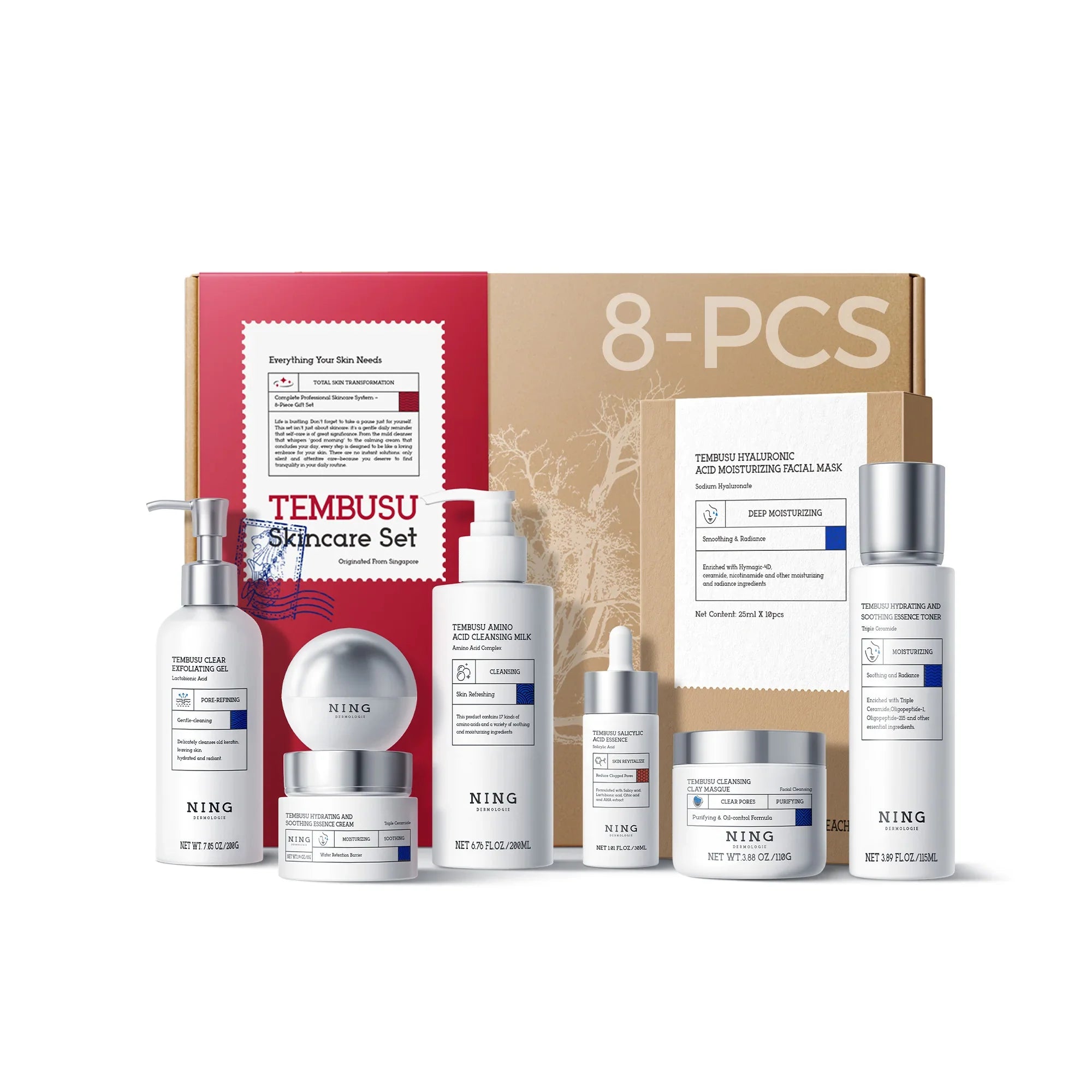
The Integrated Solution: TEMBUSU 8-Step Routine Skincare Set
At NING Dermologie, we developed the TEMBUSU 8-Step Routine Skincare Set specifically to solve the "mix-and-match" anxiety.
Instead of guessing if your toner matches your moisturizer, this set provides a comprehensive ecosystem specifically for sensitive skin. It covers everything from a gentle cleanse to deep barrier repair.
Why is the TEMBUSU 8-Step Routine Skincare Set ideal for sensitive skin types?
-
pH Balanced: Every step is formulated to maintain the skin’s acidity, preventing bacteria growth and irritation.
-
Synergy: The ingredients in the serum amplify the effects of the moisturizer.
-
Elimination of Triggers: We have removed the common irritants that cause skin reactions.
-
Comprehensive Care: It doesn't just hydrate; it helps protect sensitive skin from environmental stressors.
When you use a curated set, you are ensuring that your routine for sensitive skin is scientifically cohesive. You aren't just buying products; you are buying peace of mind.

Adapting Your Routine: Acne-Prone and Sensitive?
This is the trickiest combination. Most acne products are harsh (think Benzoyl Peroxide), which creates a vicious cycle: you treat the acne, the skin barrier breaks, inflammation rises, and you get more acne.
Effective skincare routine for sensitive acne-prone skin involves:
- Low concentrations: Use Salicylic Acid (BHA) but in low percentages or wash-off forms.
- Barrier support: You cannot starve oily or acne-prone skin of moisture. Dehydrated skin produces more oil to compensate.
- Patch testing: This is vital.
The Art of the Patch Test
Never apply new skincare all over your face immediately. Even the best skin products can cause a reaction if you have a specific allergy.
How to Patch Test:
-
Apply a small amount of the product behind your ear or on your inner arm.
-
Wait 24 to 48 hours.
-
Do not wash it off.
-
Check for redness, itching, or bumps.
-
If the area of skin looks calm, you are likely safe to proceed.
Patch test new products religiously. It is the only way for people with sensitive skin to stay safe.
Tips for Maintaining Calm Skin
Finding the right hypoallergenic products is only half the battle. Your lifestyle plays a massive role.
- Watch the Water Temperature: Hot water strips oils. Wash with lukewarm water only.
- Laundry Detergents: Your face touches your pillowcase for 8 hours a night. Switch to fragrance-free detergents.
- Diet and Stress: High sugar intake and high stress can trigger inflammation (like Rosacea flares).
- Simplify: If your skin reacts, strip your routine back to just a cleanser, moisturizer, and sunscreen until it heals.
Conclusion: Consistency is Key
There is no miracle cure that fixes sensitive skin overnight. It takes time for the skin barrier to rebuild. By choosing gentle products, avoiding harsh products, and sticking to a simple routine, you can transition from irritated skin to healthy, resilient skin.
Don't let the fear of a reaction stop you from caring for yourself. Whether you build your own regimen or opt for a trusted solution like the TEMBUSU 8-Step Routine Skincare Set by NING Dermologie, the goal is the same: to feel comfortable in your own skin.
Find gentle solutions, listen to what your skin is feeling, and remember: even sensitive skin can glow.
Frequently Asked Questions (FAQ)
1. How do I know if I have sensitive skin or just an allergic reaction?
Sensitive skin is a chronic condition characterized by frequent stinging, burning, or redness in response to multiple triggers. An allergic reaction (contact dermatitis) is usually specific to one ingredient and results in an itchy rash or blisters that appear 24-48 hours after exposure. If you suspect an allergy, a dermatologist can perform a patch test to identify the specific culprit. However, if your skin reacts to almost everything, you likely have a compromised skin barrier and sensitive skin.
2. Can I use anti-aging products like Retinol if I have sensitive skin?
Yes, but proceed with extreme caution. Standard Retinol can be very drying and irritating for sensitive skin types. Look for "encapsulated retinol" which releases slowly, or plant-based alternatives like Bakuchiol, which offers similar benefits without the harsh side effects. Always buffer strong actives by applying a layer of moisturizer first, then the active, then moisturizer again (the sandwich method). Start using it only once a week and monitor how your skin reacts.
3. Is "natural" or "organic" skincare always better for sensitive skin?
Not necessarily. This is a common myth. Poison ivy is natural, but you wouldn't put it on your face! Many natural ingredients, particularly essential oils (like lavender, peppermint, or citrus oils), are potent allergens that can cause severe skin irritation. "Chemical" synthetic ingredients are often lab-purified to be safer and more stable for reactive skin. Always judge a product by its specific ingredient list, not just its marketing claims of being natural.
4. How often should I exfoliate if my skin is sensitive?
Very rarely. Physical scrubs (products with beads or shells) can cause micro-tears in delicate skin and should generally be avoided. Instead, look for very mild chemical exfoliants like PHAs (Polyhydroxy Acids) or Lactic Acid, which hydrate while they exfoliate. Limit exfoliation to once every 10 to 14 days. If your skin feels tight or looks red, skip exfoliation entirely. Your primary goal is preserving the barrier, not scrubbing it away.
5. Why does my skin sting even when I use hypoallergenic moisturizers?
If even gentle, hypoallergenic products sting, it usually means your skin barrier is severely compromised. There are microscopic cracks in your skin letting the product penetrate too quickly and deeply, touching exposed nerve endings. When this happens, stop all active ingredients (acids, anti-aging). Switch to a very basic, bland routine (cleanser and healing ointment) until the barrier repairs itself. If stinging persists for more than a few minutes, wash the product off immediately.
6. Do I really need a dedicated skincare set, or can I mix brands?
While you can mix brands, it is riskier for sensitive skin. Different brands use different preservative systems and pH levels. Mixing incompatible formulas can lead to "cocktailing" reactions where ingredients destabilize each other, causing irritation. A curated set, like the TEMBUSU 8-Step Routine, is formulated so that all ingredients work synergistically. This minimizes the risk of adverse reactions and ensures the pH levels remain balanced throughout your entire routine.





Share:
Saving Dry & Dehydrated Skin: A Deep Dive into Hydrating Skincare Sets
Saving Dry & Dehydrated Skin: A Deep Dive into Hydrating Skincare Sets