

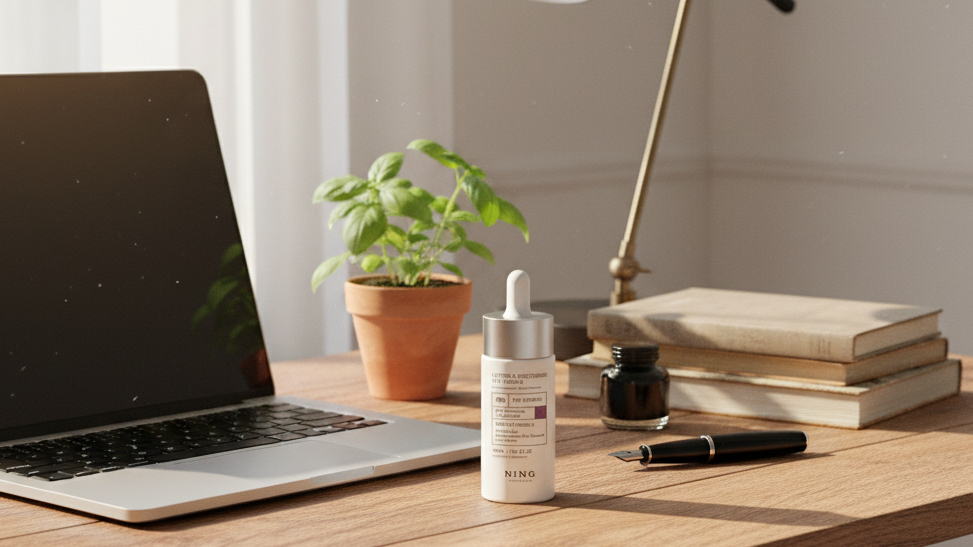

The alarm goes off entirely too early. You drag yourself out of bed, shuffle into the bathroom, and look in the mirror. Bam. Puffy eyes staring right back at you. Whether you live in the dry heat of Los Angeles or the heavy humidity of New Orleans, waking up with swollen under-eye bags is a universally frustrating experience. You look exhausted, even if you actually managed to sleep a solid eight hours. It’s what some people casually call "cortisol face"—a visible, physical stress response that shows up right on our most delicate facial skin.
You splash some cold water, hoping for a miracle. It rarely works. You might try layering heavy concealer, but that often just highlights the swollen texture. Today, we are going to fix this cycle. Not with empty marketing promises, but with a highly targeted, practical skin care routine designed to physically move stagnant fluid and tighten the eye contour.

The Science of the Swell: What is Happening While You Sleep?
Before we fix the problem, you have to understand why your eyes inflate like tiny balloons overnight. It comes down to a mix of basic physics, biology, and sometimes, your environment.
When you stand or sit during the day, gravity does a lot of heavy lifting for your lymphatic system, pulling fluids down. When you lie flat at night, that gravitational force stops working in your favor. Fluid retention and fluid redistribution happen. Water pools in the areas of least resistance.
Board-certified professionals, like dermatologist Dr. Marisa Garshick and Dr. Joshua Zeichner at Mount Sinai Hospital, frequently point out a simple anatomical fact: the undereye area has the thinnest skin on the entire human body. Because it lacks thick supportive tissue, any slight vascular changes or fluid buildup shows up instantly. It becomes a highly visible holding tank for overnight water retention. This temporary swelling is medically referred to as periorbital oedema.
Beyond just gravity, several triggers exacerbate the situation:
- Your Diet: A late-night salty snack spikes your sodium intake, causing your body to hold onto water like a sponge.
- The Environment: Seasonal allergies or dust mites in your bedroom trigger a histamine release. This immune response dilates blood vessels, causing inflammation and leakage of fluid into the surrounding tissues.
- Getting Older: As we hit our late twenties and beyond, we face natural collagen loss and decreasing skin elasticity. The structural support network holding the skin tight begins to weaken, making the visible signs of ageing and puffiness more pronounced.
- How You Rest: Your sleep position is a massive factor. If you sleep face down, you are essentially asking fluid to gather right around your eyes.
The Ultimate Morning De-Puff Routine
Forget aggressively rubbing random face moisturizer under your eyes. Thick Topical creams are often the enemy of morning puffiness. Heavy Eye Creams can actually trap fluid, suffocate the skin, and make under-eye bags look significantly worse. We need a targeted De-Puffing Eye Massage combined with rapid cooling action.
Here is the exact step-by-step morning routine to drain the fluid and wake up your eyes.
Step 1: The Cold Wake-Up
Cold temperatures force dilated blood vessels to constrict rapidly. Before you apply any skincare products, you need to shock the area. You can gently press coffee ice cubes wrapped in a soft cloth over the orbital bone. The sudden cold, combined with the natural caffeine from the coffee, jumpstarts circulation. Alternatively, steep green or black tea bags, keep them in the fridge overnight, and place them on your eyes for three minutes. The tannins in the tea work wonders for immediate tightness. Skincare experts like Allie Renee and celebrity aestheticians such as Joomee Song frequently utilize cold therapy to instantly reduce inflammation before big events.
Step 2: The Star Player - Serum Application
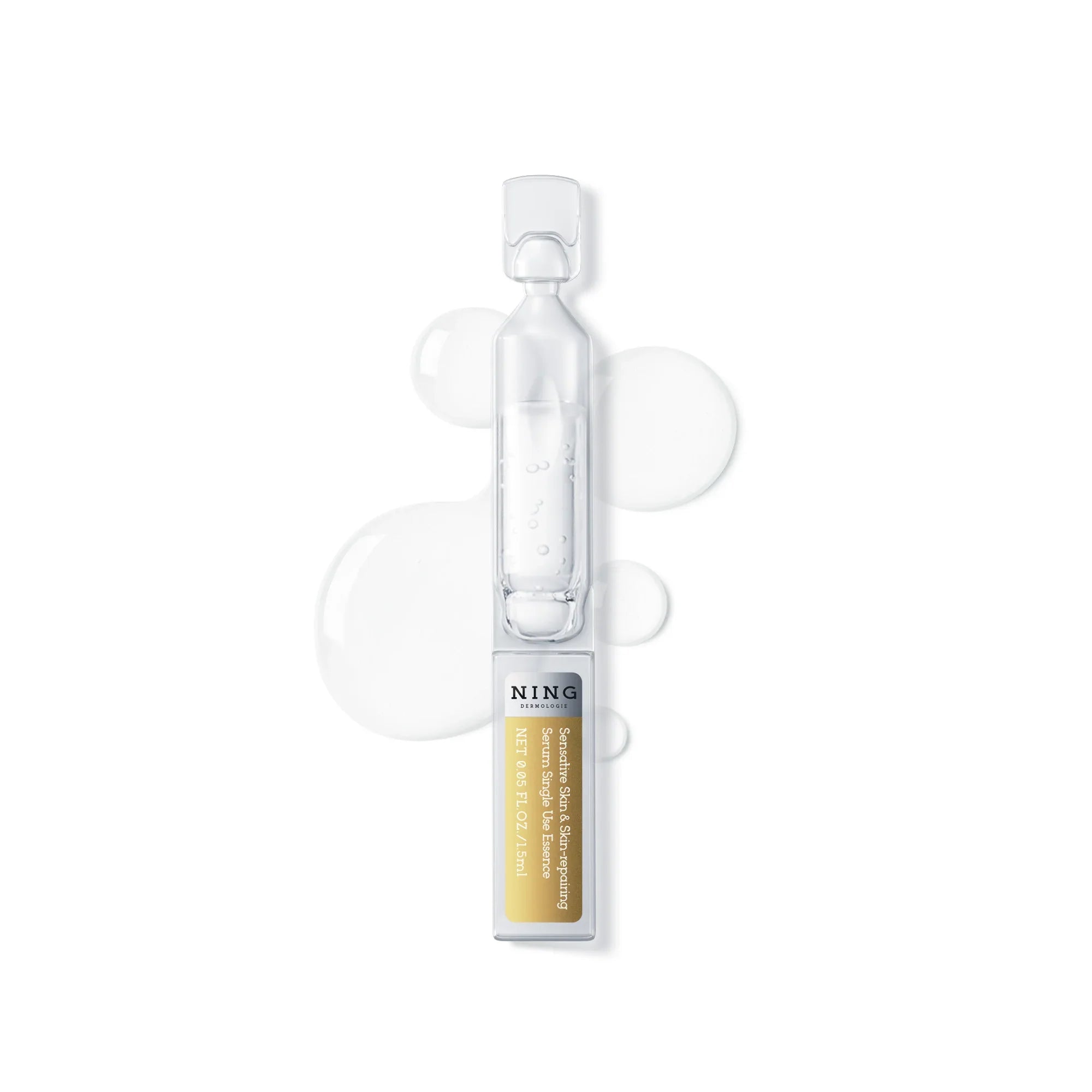
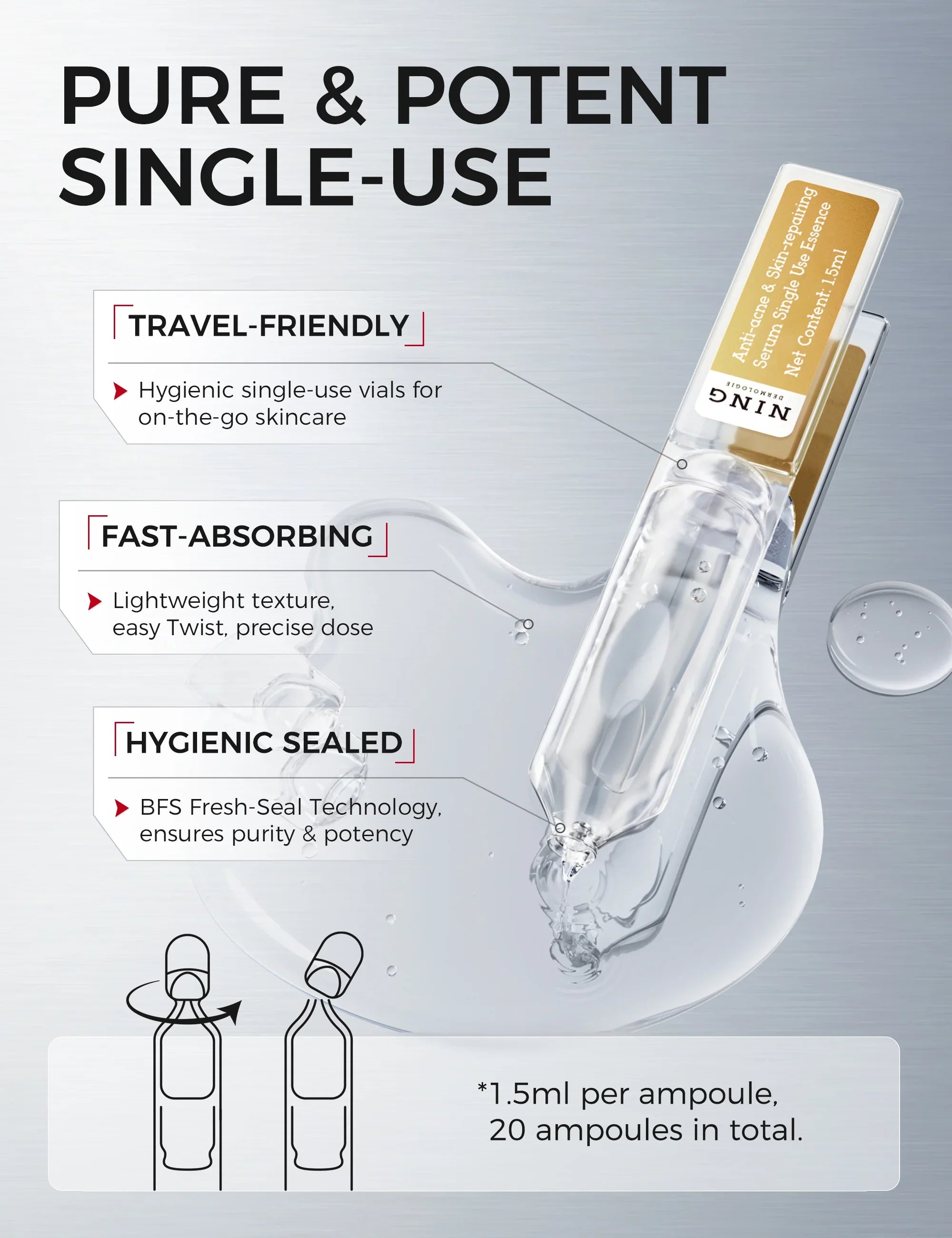
This is where the real magic happens. You need a lightweight, highly active eye serum that absorbs instantly. I constantly recommend incorporating the NING Dermologie Lifting & Tightening Eye Essence into your morning lineup.
Why this specific formula? Because it is engineered precisely to tackle fluid retention without the suffocating weight of traditional creams. It provides a tight, lifted sensation while delivering deep hydration.
Here is how you apply it: Dispense a tiny, pea-sized drop onto your ring finger. Your ring finger has the weakest muscle pull, ensuring you do not tug at the fragile skin. Start at the inner corner of your eye, right near the bridge of your nose. Gently tap the serum along the orbital bone, moving outward toward your temples. Do not drag the skin. The slip of this serum makes it the perfect medium for the crucial next step.
Step 3: Manual Lymphatic Drainage
Applying the serum isn't enough; you have to physically move the trapped fluid. You need to encourage lymphatic drainage manually.
Using your ring fingers, apply light pressure right at the inner corners of your brows, sweeping out and down along the cheekbones toward your ears. You are literally pushing the stagnant water out of the facial tissues so your body can clear it.
If you want to elevate this step, bring in the tools. A chilled gua sha stone feels incredible and provides the perfect rigid edge for sweeping motions. Skincare specialists like Jessica Cheung advocate for these precise, directional movements. You might also explore kansa wands or devices featuring Japanese-made microcurrents to stimulate the underlying muscles. Some modern serums even come with a built-in metal massage tip applicator, providing a cooling metal touch that makes this daily drainage effortless. If you want to learn advanced manual techniques, looking up tutorials on KAIKA sculpting facial massage can completely change your morning face shape.
Decoding the Ingredient List: What Actually Works?
You can walk into any beauty store and be completely overwhelmed by the sheer volume of Puffy Eye Treatments. Over the years, you might have experimented with a Mini Avocado Eye Cream, tried the tarte maracuja C-brighter™, or tested the classic All About Eyes™ Serum. Some work, some do absolutely nothing.
The difference lies entirely in the active ingredients. When fighting morning swelling and the accompanying dullness, your serum must contain specific compounds.
- Hyaluronic Acid: This is a tricky one. It is a moisture magnet, which is great for plumping Fine Lines and crow's feet. However, if formulated poorly or used in too high a concentration in a heavy cream, it can pull in too much water and worsen puffiness. In a well-formulated serum, it provides necessary hydration without the baggage.
- Vitamin C: The ultimate Brightening & Depuffing agent. It specifically targets Dark Circles by interfering with pigment production. More importantly, it is an antioxidant powerhouse that supports collagen production, keeping the under-eye skin thick and resilient over time.
- Caffeine & Green Tea Extract: These are non-negotiable for morning swelling. They act as potent vasoconstrictors, shrinking the visible blood vessels and acting as local diuretics to flush out water retention.
- Vitamin K and Vitamin A: Vitamin K is heavily researched for its ability to improve blood circulation and reduce vascular dark circles. Vitamin A (retinoids) speeds up cell turnover and thickens the dermis, though it should be used carefully around the eyes.
- Marine Algae: An incredible botanical ingredient that naturally tightens the skin surface and provides a wealth of minerals.
- Nourishing Oils (In extreme moderation): Ingredients like macadamia seed oil or coconut oil provide excellent barrier repair, but they belong in face moisturizers, not high-concentration eye products, as heavy oils can easily cause milia (tiny white bumps) under the eyes.
Beyond the Morning: Lifestyle Shifts and Professional Interventions
You cannot out-skincare a consistently bad lifestyle. If you are doing the morning massage, using the right serum, and still waking up heavily swollen, you have to look at your nightly habits.
Evaluate your sleeping environment. Are you sleeping on a flat pillow? Try elevating your head slightly to let gravity help you overnight. Are you using hypoallergenic bedding? Dust mites are a massive, hidden trigger for eye allergies.
Look at your internal health. Your circadian rhythm dictates your body's healing processes. High stress disrupts this, keeping cortisol high and driving systemic inflammation. Track your sodium intake, especially at dinner. A heavy, salty meal at 8 PM guarantees puffy eyes at 7 AM.
Sometimes, persistent eye concerns require more than topical solutions. If you notice the swelling never goes down, it might be time for blood tests to check your thyroid function, a common culprit for chronic facial swelling.
For structural issues, home care has limits. The American Academy of Ophthalmology points out that what many people perceive as "fluid bags" are actually under-eye fat pads that have herniated or slipped forward due to age and gravitational force. No serum can push a fat pad back into place.
If you are dealing with structural volume loss or severe laxity, consulting with professionals like Mamina Turegano or Dr. Adrienne O'Connell is a smart move. In a clinical setting, such as faceworks inc., experts offer a range of advanced options. Dermal fillers can smoothly camouflage the shadow of an eye bag. Laser therapy and radiofrequency devices stimulate deep collagen to tighten loose skin. Red light therapy helps with cellular energy and overall inflammation. For severe cases, surgical treatments (like a blepharoplasty) remain the gold standard for permanently removing under-eye bags.
However, for the vast majority of us dealing with standard, frustrating morning puffiness, a scalpel is entirely unnecessary. The daily commitment to a cooling ritual, a high-quality, targeted serum, and a physical massage is your strongest line of defense. Take those three extra minutes every morning. Your eyes will look wider, brighter, and significantly more awake.

Frequently Asked Questions (FAQ)
Does sleep position really cause puffy eyes?
Yes. Sleeping flat or face down allows fluid to pool around your eyes overnight due to gravity. Elevating your head slightly with an extra pillow encourages fluid redistribution downward while you sleep, drastically reducing morning water retention and facial swelling.
Can I just use my regular face moisturizer under my eyes?
It is highly discouraged. Face moisturizers are formulated for thicker skin and are often too heavy. Thick creams trap heat and fluid, worsening periorbital oedema. A lightweight eye serum absorbs instantly, delivering active ingredients without causing additional overnight swelling.
How exactly does caffeine help with under-eye bags?
Caffeine is a powerful topical vasoconstrictor. When applied to the skin, it temporarily shrinks the dilated blood vessels that contribute to dark shadows and puffiness. It also acts as a mild local diuretic, helping the tissue flush out trapped water retention.
At what age should I start using a dedicated eye serum?
Your mid-twenties is the ideal time. As we age, we naturally experience collagen loss and decreasing skin elasticity. Applying an antioxidant-rich serum early strengthens the delicate skin barrier and significantly delays the visible onset of fine lines and crow's feet.
Are my dark circles caused by a lack of sleep or allergies?
It can easily be both. Exhaustion causes blood vessels to dilate and become visible through the thin skin. However, seasonal allergies trigger a histamine release, causing inflammation and fluid buildup known as "allergic shiners." Identifying the root cause helps tailor your treatment.








Share:
Eye Serum for Bags Under Eyes: What Helps vs What Needs Lifestyle Changes
How to Apply Eye Serum: Amount, Order, and Mistakes That Waste Product