

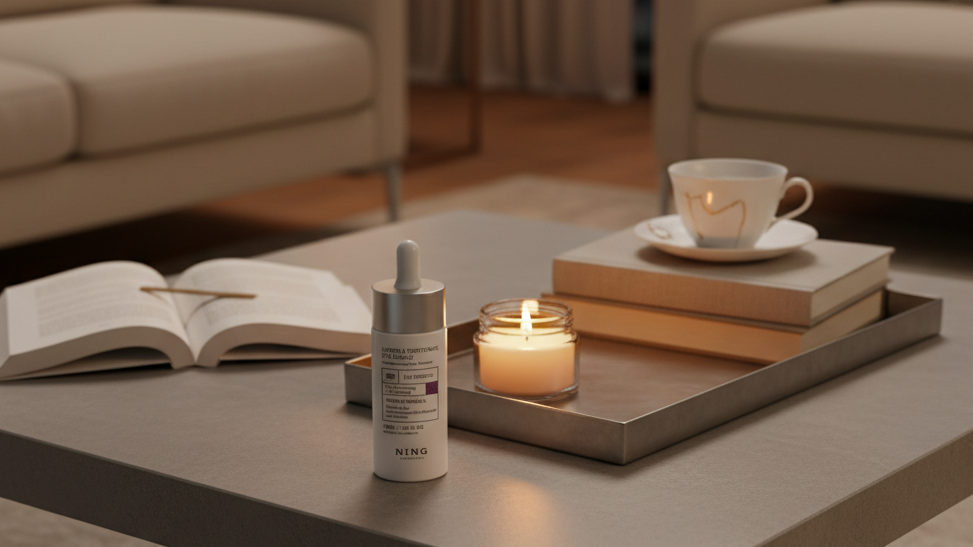

The idea of putting retinol near your eyes is terrifying for most beginners.
You want to smooth out those fine lines, but you’ve read the horror stories online. You’ve seen the photos of red, flaky, stinging eyelids. It’s enough to make anyone stick to basic moisturizers and just hope for the best.
But skipping out on this ingredient means missing out on the most proven anti-aging tool we have. You don't have to choose between wrinkles and a chemical burn. The secret isn't finding a "magic" product; it’s entirely about how you introduce it to your skin.
If you want to treat the delicate skin around your eyes without the dreaded redness and peeling, you just need a solid plan. Here is your step by step guide to getting it right.

The Science Made Simple: Why You Actually Need It
Before we talk about how to apply it, you need to understand what you are actually putting on your face.
Retinol is a vitamin A derivative. It is widely considered the gold standard in dermatology. Why? Because it actually communicates with your skin. As we age, our natural skin cell turnover slows down dramatically. Dead cells pile up, and our natural collagen factory goes on strike. This is what leads to visible skin aging.
When you apply a vitamin A product, you are telling your skin to speed up that cell turnover. You are effectively forcing your skin to act younger. Consistent use ramps up collagen production, which thickens the deeper layers of your skin and smooths out fine lines from the inside out.
The science is undisputed. The American Academy of Dermatology Association heavily advocates for retinoids, and foundational research (like the widely cited clinical reviews by Mukherjee S) proves that vitamin A derivatives are effective for a massive range of issues. Medically, stronger prescription retinoids have historically been used to manage severe conditions, and even related to treatments for ailments like Kaposi sarcoma. But in the cosmetic world, we use gentler over-the-counter versions to target age spots, sun spots, and overall texture.
Why the Eye Area is a Danger Zone
If retinol is so great, why does it burn our eyes?
It comes down to anatomy. The skin around your eyes is up to 40% thinner than the skin on your cheeks or forehead. It has fewer oil glands, meaning it has a naturally weaker barrier.
When you apply a strong active ingredient here, it penetrates much faster and deeper. This rapid penetration is what causes potential irritation. You cannot treat your under-eyes the way you treat your forehead. You need a dedicated approach and a specifically formulated product.
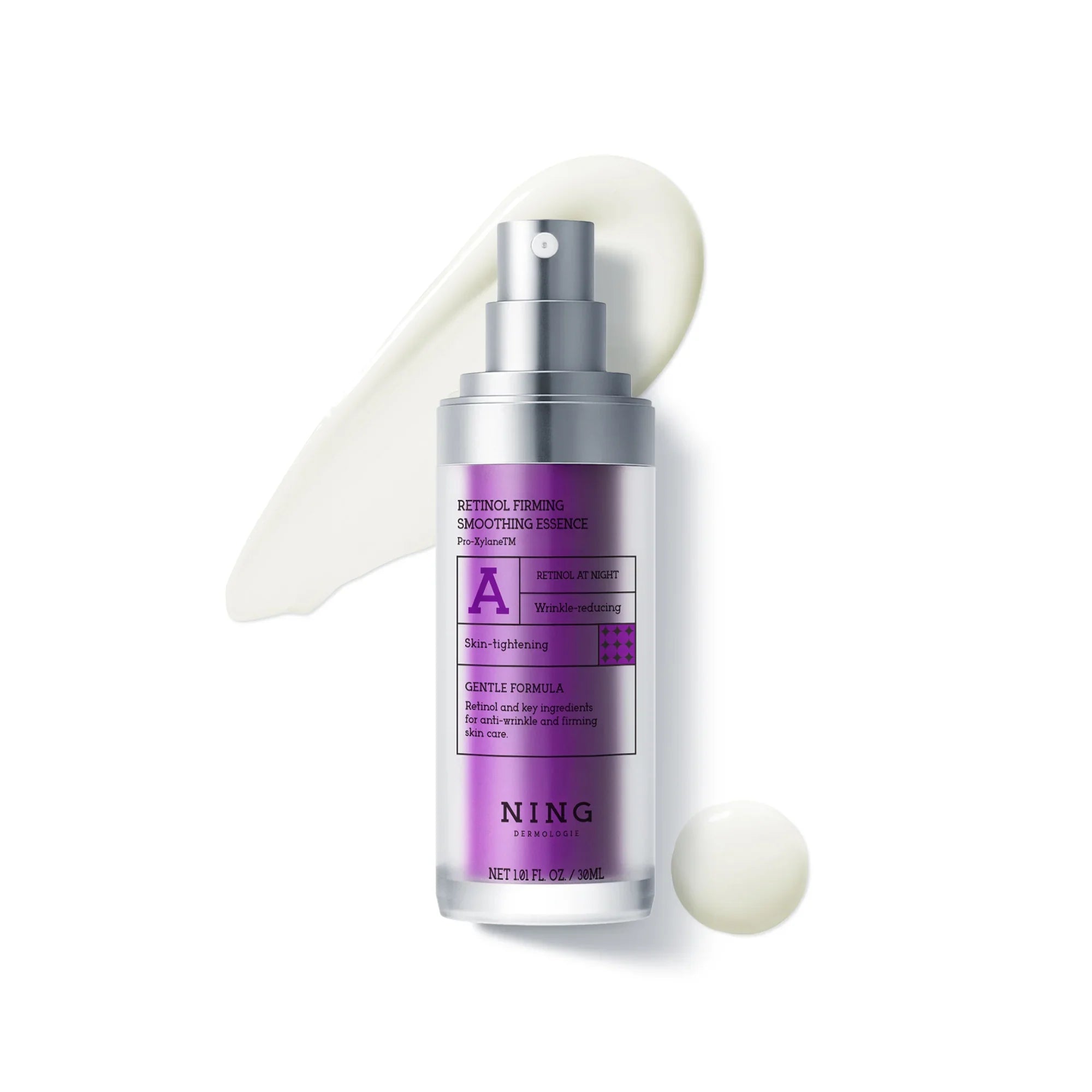
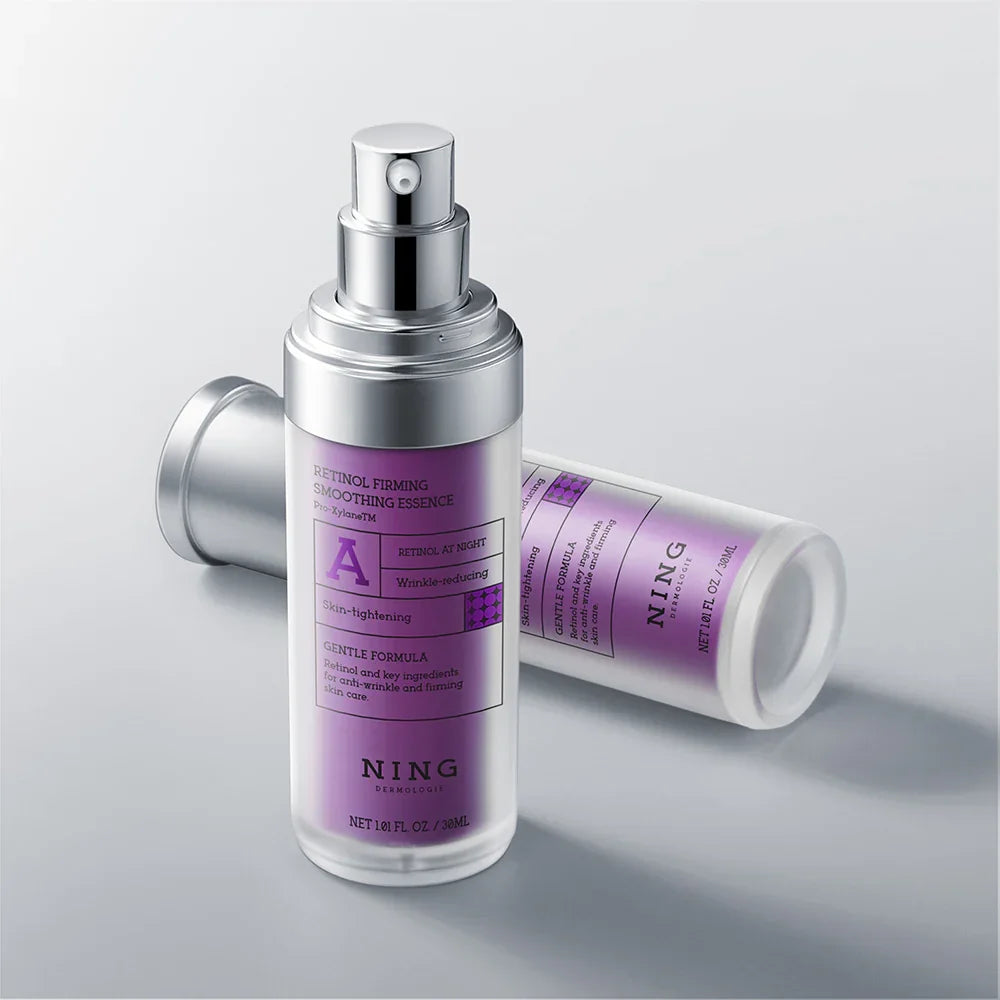
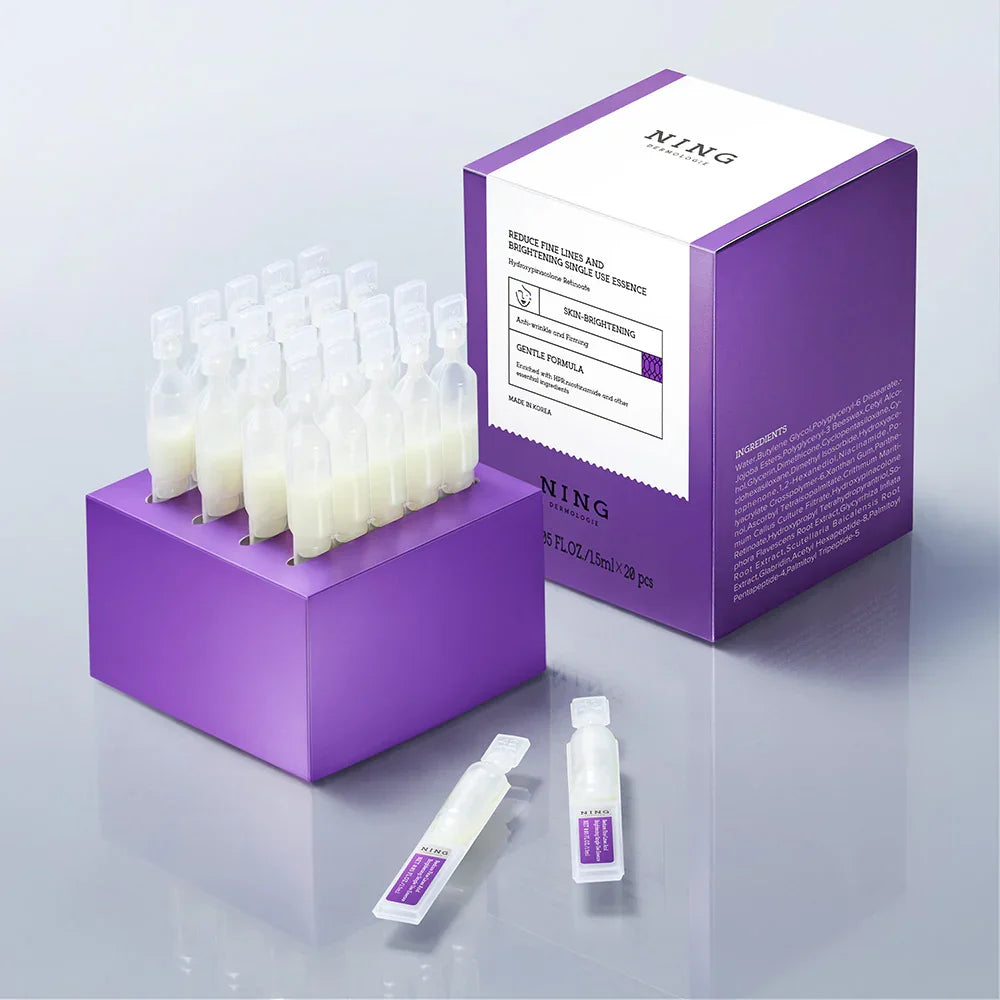
This is exactly why we developed the NING Dermologie Lifting & Tightening Eye Essence. Instead of using a harsh, generic face serum near your eyes, this formula is specifically buffered for that delicate, thin skin. It delivers the firming benefits you want, but it wraps the active ingredients in a hydrating matrix to prevent the burning sensation beginners fear most.
Prepping Your Canvas: What You Need Before You Start
Before you even open a bottle of eye serum, you need to look at your current Skincare routine. If your skin barrier is already compromised, retinol will only make it worse.
You need a solid routine focused on hydration. Look at your bathroom counter right now. Do you have a gentle cleanser? Do you have a basic, unscented moisturizer? You should also be incorporating a hydrating serum featuring hyaluronic acid to draw water into the skin.
You must establish a healthy baseline for at least two weeks before introducing active ingredients. Think of this as preparing the soil before you plant a garden.
Step by Step: The Zero-Irritation Introduction Period
So, you have your NING Dermologie eye essence, and your skin is hydrated. How do we actually do this?
The key to success here is starting ridiculously slow. Forget what you see on social media. More is not better. Faster is not better.
Here is the exact nighttime retinoid routine you should follow:
1. Cleanse and Dry Completely
Wash your face as usual. Now, wait. Pat your skin dry and wait another five to ten minutes. Applying vitamin A to damp skin increases penetration, which drastically increases the risk of irritation. Your skin must be bone dry.
2. The Sandwich Method
This is your ultimate defense against redness.
- Layer 1: Apply a very thin layer of a basic, hydrating eye cream or moisturizer around your orbital bone (the hard bone you feel around your eye socket). Let it absorb.
- Layer 2 (The Active): Dispense a tiny amount of the NING Dermologie Lifting & Tightening Eye Essence. We are talking about the size of half a grain of rice for both eyes. Tap it gently along the orbital bone. Do not put it directly on your eyelids or right up against your lash line. The product will naturally travel as it warms up on your skin.
- Layer 3: Apply another thin layer of your basic moisturizer on top to seal it in and provide a buffer.
A Realistic 4-Week Beginner Schedule
Do not use this every night. You need an introduction period to allow your skin to build tolerance.
- Week 1: Use the sandwich method just ONE night this week.
- Week 2: Use it TWO nights this week. Space them out (e.g., Monday and Thursday).
- Week 3: Use it THREE nights this week (e.g., Monday, Wednesday, Friday).
- Week 4: If you have zero redness or stinging, you can try using it four nights a week.
If at any point your skin feels tight, looks pink, or burns when you apply your normal moisturizer, stop. Your skin is telling you to back off. Drop all active ingredients and go into repair mode for a few days using only a gentle cleanser, hyaluronic acid, and a thick moisturizer.
The Retinol Purge: What to Expect
Around week two or three, you might notice some slight flaking or maybe even a tiny breakout near your temples. Don't panic.
This is known as the retinol purge. Because you are speeding up skin cell turnover, whatever was hiding under the surface is coming up faster. It usually resolves within a few weeks. However, if the area is bright red, incredibly itchy, or painful, that is not a purge—that is irritation. Wash it off and scale back your usage.
What NOT to Mix in the Same Routine
When you are using your eye essence at night, keep the rest of your routine boring.
Do not mix it with other strong exfoliating acids. Keep your salicylic acid and glycolic acid for different nights, or use them only on the areas of your face far away from your eyes.
The same goes for strong Vitamin C serums. While Vitamin C is excellent for brightening, using it at the exact same time as a retinoid can overwhelm a beginner's skin barrier. Save your Vitamin C for your morning routine.
The Morning After: Defending Your Future Skin
Speaking of the morning routine, there is one non-negotiable rule when using any vitamin A product: you must wear sunscreen.
Because these ingredients reveal fresh, new skin cells, your skin becomes much more sensitive to UV rays. If you skip sunscreen, you will actually accelerate skin aging and cause more dark spots.
Every single morning, apply a broad-spectrum sunscreen with an SPF 30 or higher. Apply it generously around the eye area. If you want a bit of coverage to hide dark circles, look for tinted physical sunscreens (something like Intellishade Original is a popular format, though many great options exist).
Navigating Global Trends and Market Noise
The skin care market is incredibly crowded right now. You will see endless promotions and aggressive marketing tactics globally.
For instance, you might see long lines outside The Ordinary stores in the United Kingdom or Hong Kong during a major event, or you might get emails about a Qualifying Purchase during The Ordinary Daily Hydration Bottle Promotion in the United States or South Korea.
While taking advantage of a Bottle Promotion Period for basic hydration serums is smart, you need to be much more selective when buying active treatments for your eyes. Hydration is universal; targeted anti-aging requires specialized formulation. Don't just buy the cheapest active ingredient on sale. Invest in formulas like NING Dermologie that respect the delicate nature of the eye contour. Interestingly, the South Korea beauty market has known this for years, heavily prioritizing gentle, buffered retinoids over harsh, high-percentage formulas.
Beyond the Eyes: The Powerhouse Ingredient
Once you master using vitamin A around your eyes, you’ll understand why dermatologists call it a powerhouse ingredient.
The exact same mechanism that smooths crow's feet works everywhere else. Body lotions containing retinoids are effectively used by dermatologists to treat stretch marks on the stomach and thighs. On the face, long-term use helps clear out debris, visibly shrinking large pores. It is also the most reliable topical treatment for fading stubborn age spots and dark spots caused by years of sun exposure.
By starting slow and respecting your skin barrier, you are laying the foundation for better, healthier future skin. Be patient, stick to the schedule, and let the science do the heavy lifting.

Frequently Asked Questions (FAQ)
1. Can I use the eye serum every night right away?
Absolutely not. Starting too fast is the main cause of irritation. Start by using it only one night a week. Slowly build up your tolerance over a month. Your skin needs time to adjust to the increased cell turnover.
2. What should I do if my under-eyes start stinging?
Stop using the serum immediately. Switch your skin care into repair mode. Use only a gentle cleanser and a thick, basic moisturizer. Wait until all the stinging and redness are completely gone before trying again, and use a much smaller amount.
3. Is it safe to put retinol directly on my eyelids?
No. Keep the product on the orbital bone—the hard bone under your eye and just under your eyebrow. The product will naturally migrate closer to your eye as it warms up. Putting it directly on the eyelid can cause severe irritation.
4. How long does it actually take to see results on fine lines?
Patience is key. While your skin might feel smoother quickly, true changes in collagen production take time. Expect to wait at least 8 to 12 weeks of consistent, careful use before you see a visible reduction in stubborn fine lines.
5. Do I need an expensive eye cream for the "Sandwich Method"?
Not at all. The goal of the sandwich method is simply to create a physical buffer. Any basic, fragrance-free moisturizer or simple hydrating eye cream will work perfectly to protect your skin barrier while the active ingredients do their job.





Share:
Vitamin C Eye Serum: Brightening Benefits and How to Avoid Irritation
Eye Serum for Sensitive Skin Low-Irritant Choices and How to Patch Test