


You bought a salicylic acid cleanser because you saw a video of someone with glass skin claiming it "saved their life," or maybe you’re just tired of seeing blackheads staring back at you in the mirror. You brought it home, used it morning and night, scrubbed hard, and three days later, your face felt like tight, dry parchment paper.
Sound familiar?
You aren't alone. According to a recent CeraVe Skin Survey, a huge percentage of people misunderstand how to clean their faces properly. We treat our skin like a dirty floor that needs to be scrubbed, but in reality, it’s a delicate ecosystem.
Salicylic acid (SA) is arguably the gold standard for acne-prone skin and clogged pores, but it is also one of the most misused ingredients in the skincare industry. The problem isn’t the ingredient; it’s the user error.
If you want to banish acne-causing bacteria without destroying your moisture barrier, you need to stop following generic advice and start understanding how this beta hydroxy acid actually works. Here is your comprehensive, no-nonsense guide to using salicylic acid face wash safely.

The Science: Why Salicylic Acid is Different
Before we get into the "how-to," you need to understand the "what."
Salicylic acid is a beta hydroxy acid (BHA) derived originally from willow tree bark. Unlike alpha hydroxy acids (AHAs) like glycolic acid or lactic acid, which are water-soluble and work mostly on the surface, salicylic acid is oil soluble.
This is a massive distinction. Being oil-soluble means SA doesn't just sit on top of your face; it can penetrate through the oil buildup (sebum) inside your hair follicles. It travels deep into the pore. Once there, it dissolves the "glue" that holds dead skin cells together. This is called having keratolytic properties.
Think of your pores like a pipe. Excess oil and dead skin create a clog. Physical scrubs just scrape the top of the pipe. Salicylic acid is like liquid drain cleaner—it goes inside and breaks down the clog from within. This gives it incredible acne-fighting capacity and deep-clearing properties.
However, because it is so good at stripping oil, it can be drying. This is why finding the right salicylic acid concentration and the right vehicle (the cleanser base) is critical.
The Trap of the "Beauty Aisle"
Walk down any drugstore beauty aisle, and you are bombarded. You see the CeraVe Foaming Facial Cleanser, the Bare Addiction Daily Foaming Gel Cleanser, or high-end options like Epicuren Discovery and Clarify Cleanser.
The market is flooded. The American Academy of Dermatology recommends benzoyl peroxide and salicylic acid as top tier Acne Treatment, but they don't always tell you which texture to buy.
Here is the reality: Most over-the-counter products are formulated with harsh sulfates (SLS) to create foam. When you mix a harsh foaming agent with an exfoliating acid, you create a recipe for disaster for sensitive skin. You might clear the acne, but you’ll trade it for inflammation, redness, and a compromised barrier.
This is why the dermatologist-recommended face wash landscape is shifting. Experts in modern dermatology—and voices like Dr. Maya Thosani or Dr. Mina Amin—are increasingly focusing on barrier health first. If you destroy the barrier, you create an acne-unfriendly environment, sure, but you also let in irritants.
The Solution: The "Gentle" Powerhouse
This brings us to a crucial pivot in your skincare routine. You don’t need the strongest acid; you need the smartest delivery system.
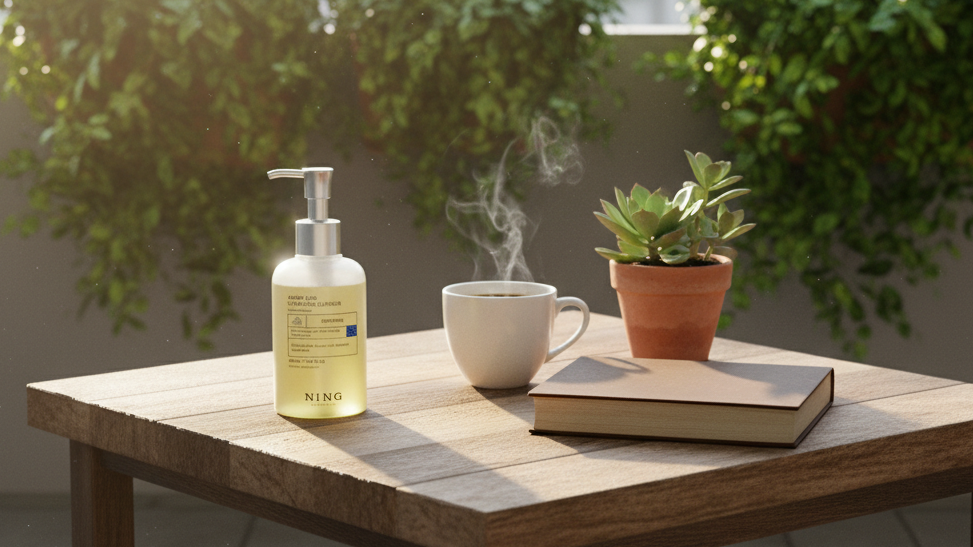
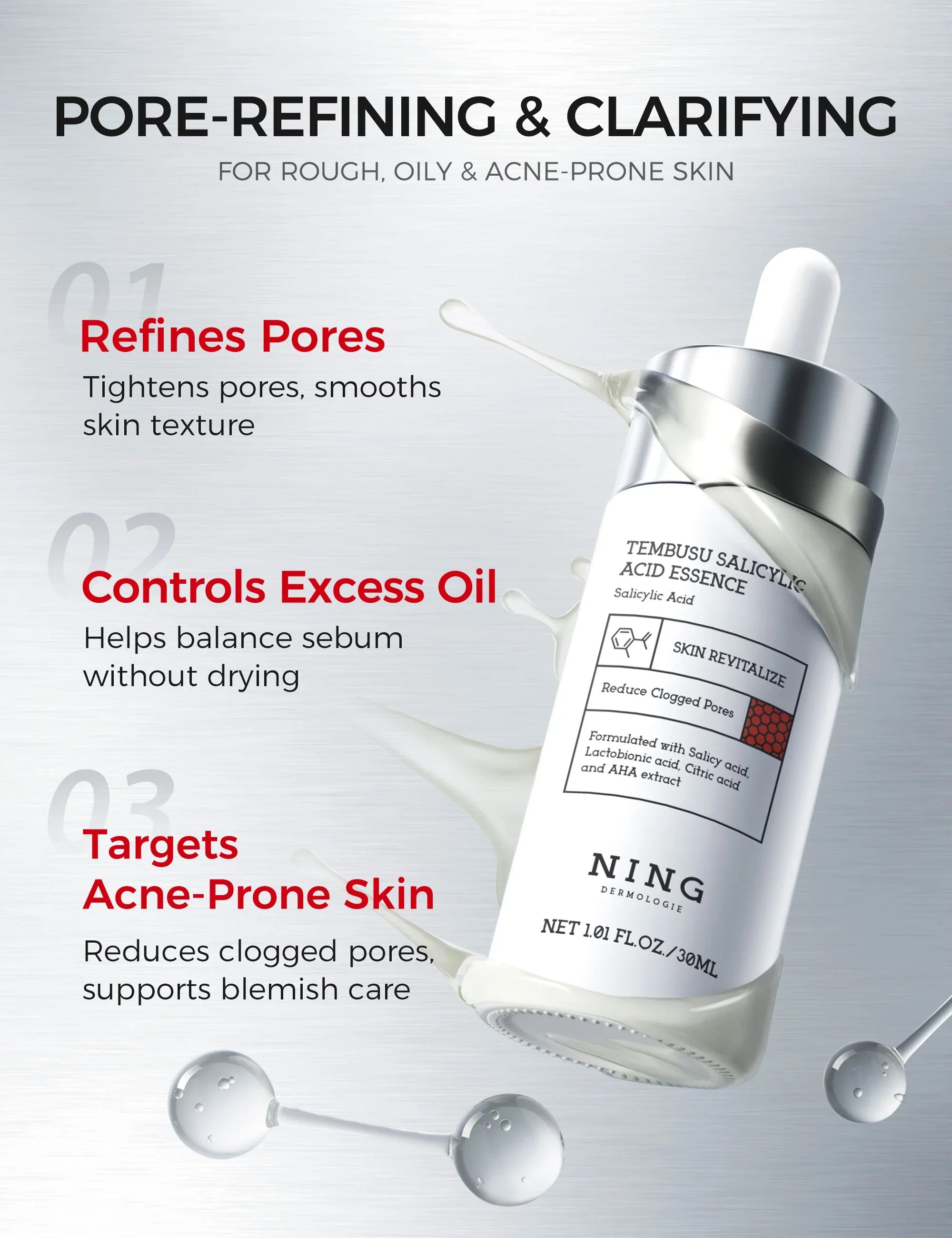
This is where NING Dermologie has cracked the code with their Amino Acid Facial Cleanser with Salicylic Acid.
Unlike standard "stripping" cleansers, NING uses an amino acid base. Amino acids are the building blocks of skin proteins. By using mild surfactants derived from amino acids instead of harsh soaps, this cleanser cleanses without attacking the skin’s structural integrity.
When you pair salicylic acid with amino acids, you get controlled exfoliation. You get the deep-clearing properties of the BHA to tackle pimples, blackheads, and comedogenic gunk, but the amino acids ensure the skin remains soft and hydrated. It’s a spot treatment mentality applied to a full-face wash, safe enough for daily use even on sensitive skin.
Step-by-Step: The "Zero Irritation" Method
Forget what the back of the bottle says. Here is how you actually use a salicylic acid cleanser like NING Dermologie to fix skin texture without the burn.
1. The Prep: Temperature Matters
One of the biggest Face Washing Mistakes is water temperature. Hot water melts sebum, yes, but it also strips your natural lipids. Use lukewarm water. It should feel boring—neither hot nor cold.
2. The "60-Second Rule"
This is the secret sauce. Most people slap the soap on and rinse it off in 10 seconds. That is useless. Salicylic acid needs time to penetrate the pore-clogging skin cells.
- Dispense a dime-sized amount of Amino Acid Facial Cleanser with Salicylic Acid.
- Massage it gently into wet skin.
- Wait. Sing the alphabet, or count to 60. Let the ingredients sit on your face. This allows the BHA to dissolve the pore-clogging dirt.
- Rinse thoroughly.
3. The Frequency: Less is More
If you have Oily Skin, you might be tempted to use it twice a day. Don't. Not at first.
- Week 1: Use it only at night, every other day.
- Week 2: Every night.
- Week 3: If your skin feels good, you can try morning and night, but for most people, once a day is the sweet spot. If you have dry skin or sensitive skin, treat this cleanser as a treatment. Use it 3 times a week, and use a plain hydrating wash on the other days.
4. The Aftercare: Hydration is Non-Negotiable
You just removed oil. You must put moisture back. Immediately after patting your face damp (don't dry it completely), apply a hydrating moisturiser. Look for ingredients like hyaluronic acid or Aloe vera. If you are worried about clogging, ensure you are using a non-comedogenic moisturizer. This seals the deal and prevents the "tight" feeling.
Advanced Routine: Pairing with Other Actives
This is where people ruin their skin. They mix too many acids. "I'm using salicylic acid, and glycolic acid, and retinol cream, and Vitamin C!" Stop.
If you are using a salicylic acid face wash:
- Morning: You can use Vitamin C (ascorbic acid) afterward, but only if your skin is tolerant. Vitamin C helps with dark spots and anti-inflammatory properties. Always finish with SPF, as exfoliation makes you susceptible to UV rays.
- Evening: If you wash with SA, be very careful with retinol cream. Both are drying. If you are new to retinoids, skip the SA wash on retinol nights and use a bland cleanser (like CeraVe Hydrating Cream-to-Foam Cleanser or just a basic cream wash).
- Don't Mix: Do not use a salicylic acid serum or leave-on BHA toner immediately after using a salicylic acid face wash. That is redundant and irritating. Choose one or the other.
Troubleshooting: Is it Purging or Irritation?
When you start using NING Dermologie's salicylic cleanser, you might see more bumps initially. This causes panic.
- Purging: This is normal. Cell turnover is increasing. The micro-comedones (baby pimples) deep in your skin are being pushed to the surface faster. These breakouts usually appear where you normally get acne and resolve quickly.
- Irritation: If you feel burning, stinging that lasts minutes, or see rash-like bump skin in areas you are usually clear, you have damaged your moisture barrier.
- The Fix: If irritated, stop the active ingredients. Go back to basics. Use a barrier repair cream. Once healed, reintroduce the Amino Acid Facial Cleanser with Salicylic Acid slowly (maybe twice a week).
Beyond the Face: Body Acne and Texture
Here is a pro tip often shared by specialists like Akruti Khandkar or in Minimalist Health Specialist circles: Salicylic acid isn't just for the face.
If you suffer from keratosis pilaris (chicken skin) on your arms or cystic bumps on your back ("bacne"), this ingredient is a miracle worker. Salicylic acid body cleansers work on the same principle. The skin on your body is thicker, so it can handle daily washing with SA better than your face can. Using the NING Dermologie cleanser on your chest or back is a great way to utilize its acne-fighting ingredients for clear skin all over. It helps dissolve the keratin plugs that cause that rough, bumpy texture.
Why NING Dermologie Wins on Usability
We've mentioned many brands. CeraVe is the standard budget pick. Murad or Clarify Cleanser are the high-end aggressive picks. But NING Dermologie sits in that rare middle ground of clinical efficacy and sensory pleasure. Because it avoids the harsh sulfates found in many beauty aisle products, it respects the skin's pH. It includes soothing agents that counteract the potential dryness of the beta-hydroxy acid.
It acknowledges that skin conditions vary. Whether you are fighting pimple-causing bacteria, trying to smooth out skin texture, or just want to maintain clear pores, the vehicle matters as much as the active ingredient. By buffering the SA with amino acids, NING reduces the risk of the "dreaded dry-out."
Summary
Using salicylic acid safely is about respect. Respecting the power of the acid, and respecting the fragility of your skin barrier.
- Ditch the physical scrubs.
- Choose a balanced formula like NING Dermologie Amino Acid Facial Cleanser with Salicylic Acid.
- Use the 60-second rule.
- Hydrate aggressively.
- Listen to your skin, not the influencers.
Clear skin is a marathon, not a sprint. Stop scrubbing, start dissolving, and let the chemistry do the work for you.

Frequently Asked Questions (FAQ)
Q1: Can I use salicylic acid face wash every single day?
A: Yes, but build up to it. Start with 3 times a week at night. If your skin isn't dry or tight, increase to nightly use. Only very oily skin types need it twice daily. If you feel tightness, dial it back immediately. Listen to your barrier.
Q2: Will this cleanser make my skin get worse before it gets better?
A: Possibly. This is called "purging." Salicylic acid speeds up cell turnover, pushing deep clogged pores to the surface. It usually lasts 2-4 weeks. If breakouts are inflamed or in new areas, it might be irritation, not purging—so take a break.
Q3: Can I use this wash if I am using Retinol or Tretinoin?
A: Proceed with caution. Both are drying. It is safest to use the Salicylic wash in the morning and Retinol at night. If your skin is sensitive, skip the salicylic wash on the nights you use Retinol to avoid chemical burns or peeling.
Q4: Is salicylic acid safe to use during pregnancy?
A: Doctors generally consider low concentrations (under 2%) in wash-off products safe, but high-dose leave-on treatments are often discouraged. However, always consult your OB-GYN. Ingredients like lactic acid or Malic acids (AHAs) are sometimes recommended as gentler alternatives during pregnancy.
Q5: Does this work for dry skin, or is it only for oily skin?
A: Dry skin can suffer from acne too! The key is the formula. NING Dermologie’s amino acid base makes it suitable for dry skin because it doesn't strip natural oils like harsh sulfates do. Just be sure to follow up immediately with a rich, non-comedogenic moisturizer.





Share:
Salicylic Acid vs. Benzoyl Peroxide: The Ultimate "Cheat Sheet" for Clearer Skin
Why I Put My Face on Autopilot: The Case for Salicylic Acid Subscriptions