



The "Magic" Behind the Pore: Why Salicylic Acid is Your Skin’s Best Friend
Forget the marketing fluff for a second. If you’ve ever stared into a magnifying mirror and felt personally victimized by those tiny black dots on your nose—those stubborn blackheads that seem to survive every scrub—you don’t need a miracle; you need a specific type of chemistry.
Enter salicylic acid.
In the chaotic world of skincare ingredients, few names carry as much weight (or clinical backing) as this one. But what exactly is it? And more importantly, how do you use it without turning your face into a desert? At NING Dermologie, we believe that understanding salicylic acid is the first step toward reclaiming your complexion.

What is Salicylic Acid and Why Should You Care?
If you want to get technical, salicylic acid is a beta hydroxy acid (BHA). But unlike its cousin glycolic acid (an alpha hydroxy acid or AHA), which is water-soluble and mostly works on the surface, salicylic acid is oil soluble.
Think of your skin like a house. AHAs are like a leaf blower for the front porch—they clear the surface debris. But BHAs? Salicylic acid penetrates deep into the "pipes" of your skin. Because it’s oil-soluble, it can cut through the sebum and dead skin cells that act like a greasy plug in your pore.
When we talk about the benefits of salicylic acid, we aren't just talking about a quick fix. We’re talking about a fundamental shift in how your skin behaves. It’s an exfoliant that actually understands how oily skin works.
How Salicylic Acid Works: The "Plumber" of Skincare
The reason salicylic acid helps so much with acne-prone skin is due to its unique chemical structure. It doesn't just sit there; it goes to work on the intercellular "glue" that holds dead skin cells together.
Normally, your skin has a natural process called skin cell turnover. In a perfect world, these cells shed invisibly. But for those with oily skin, that excess oil acts like a sticky trap. Instead of shedding, the cells get stuck, they clog the pore, and—voila—you have a blackhead or a full-blown breakout.
Salicylic acid penetrates deep into the follicle to dissolve this debris. By encouraging the shedding of dead skin cells, it prevents the blockage before it even starts. This is why salicylic acid is widely regarded as the gold standard for acne prevention.
Integrating an Acid Serum into Your Routine
When you’re new to salicylic acid, the temptation is to go 100 mph. You want the clearer skin and you want it now. But your skin barrier might have other plans.
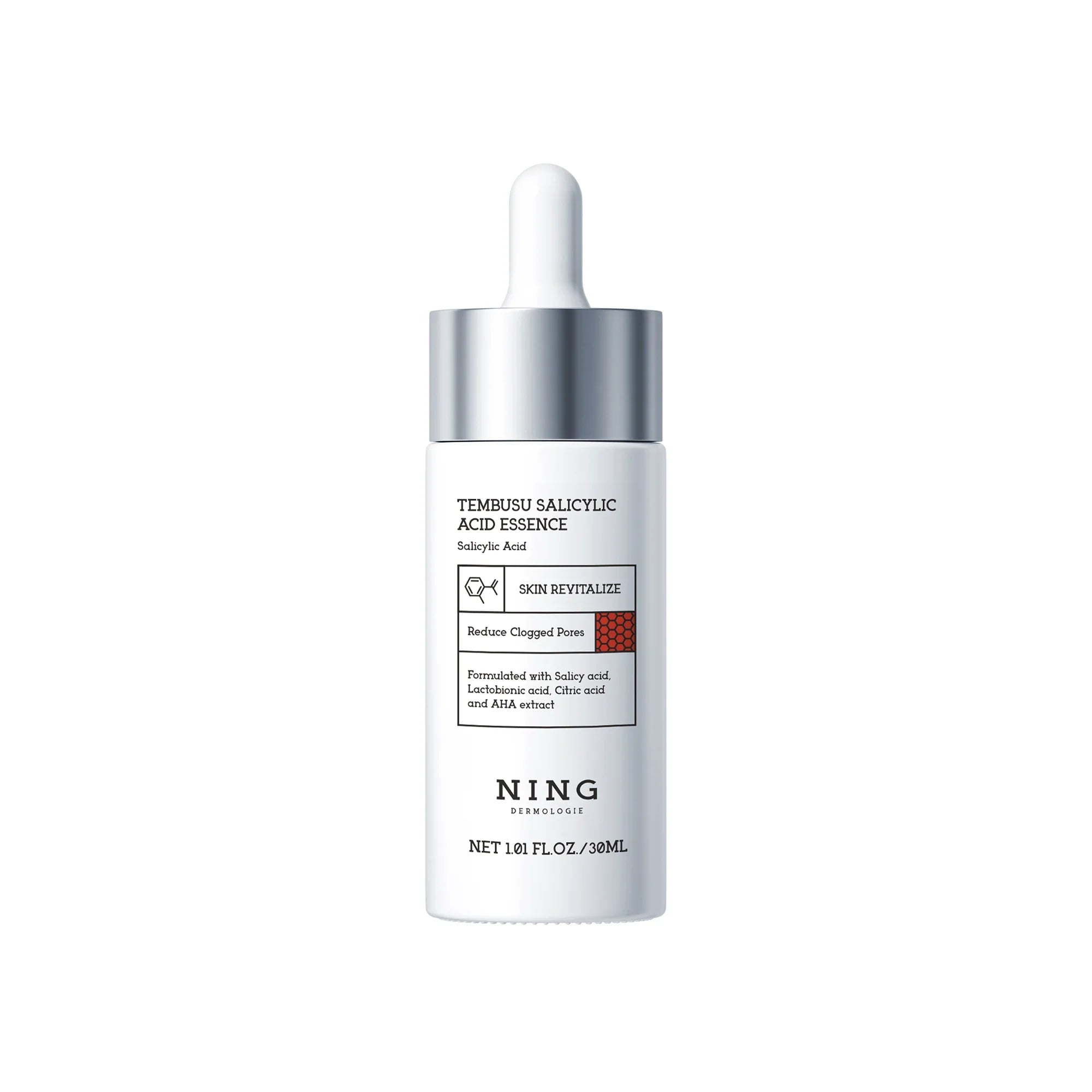
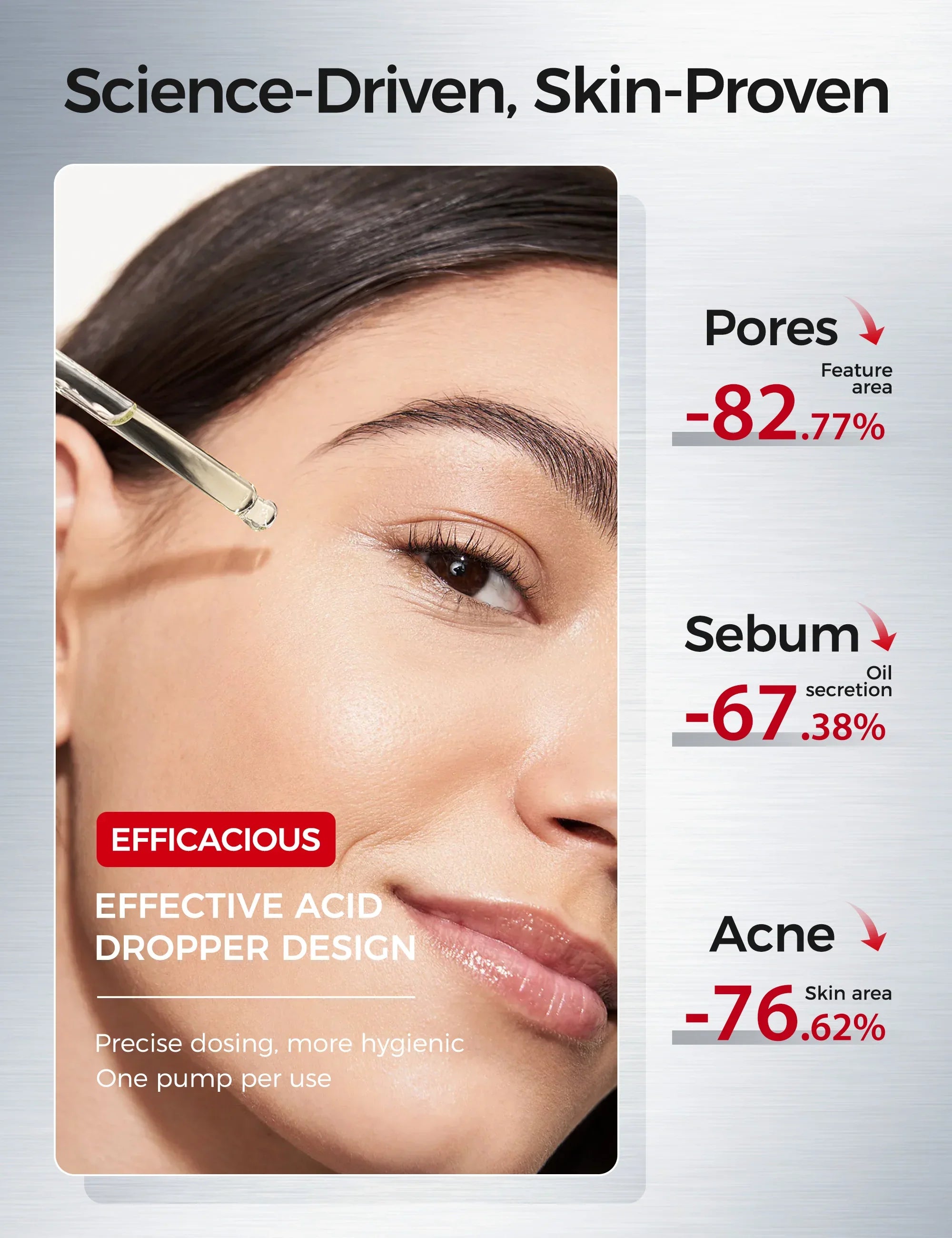
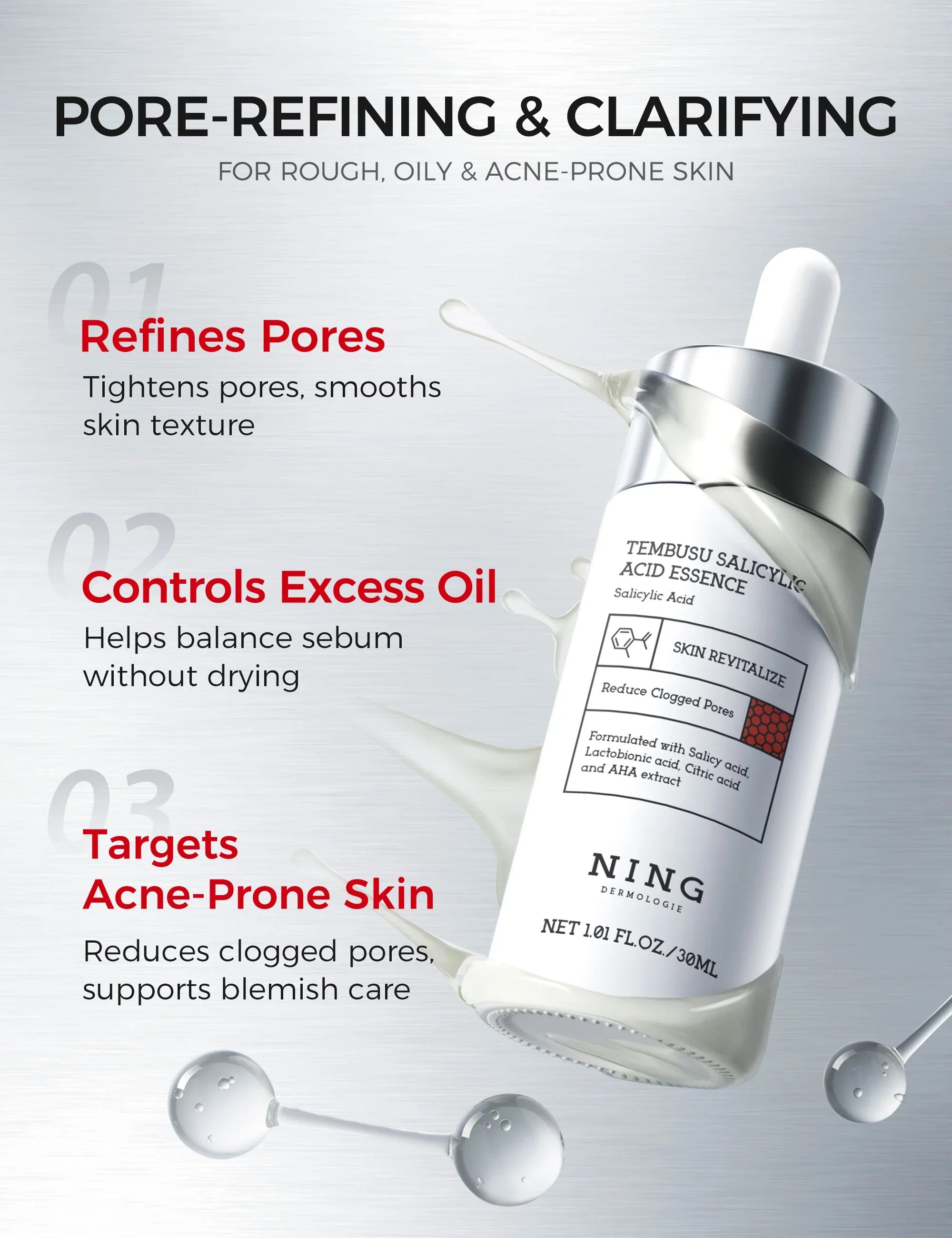
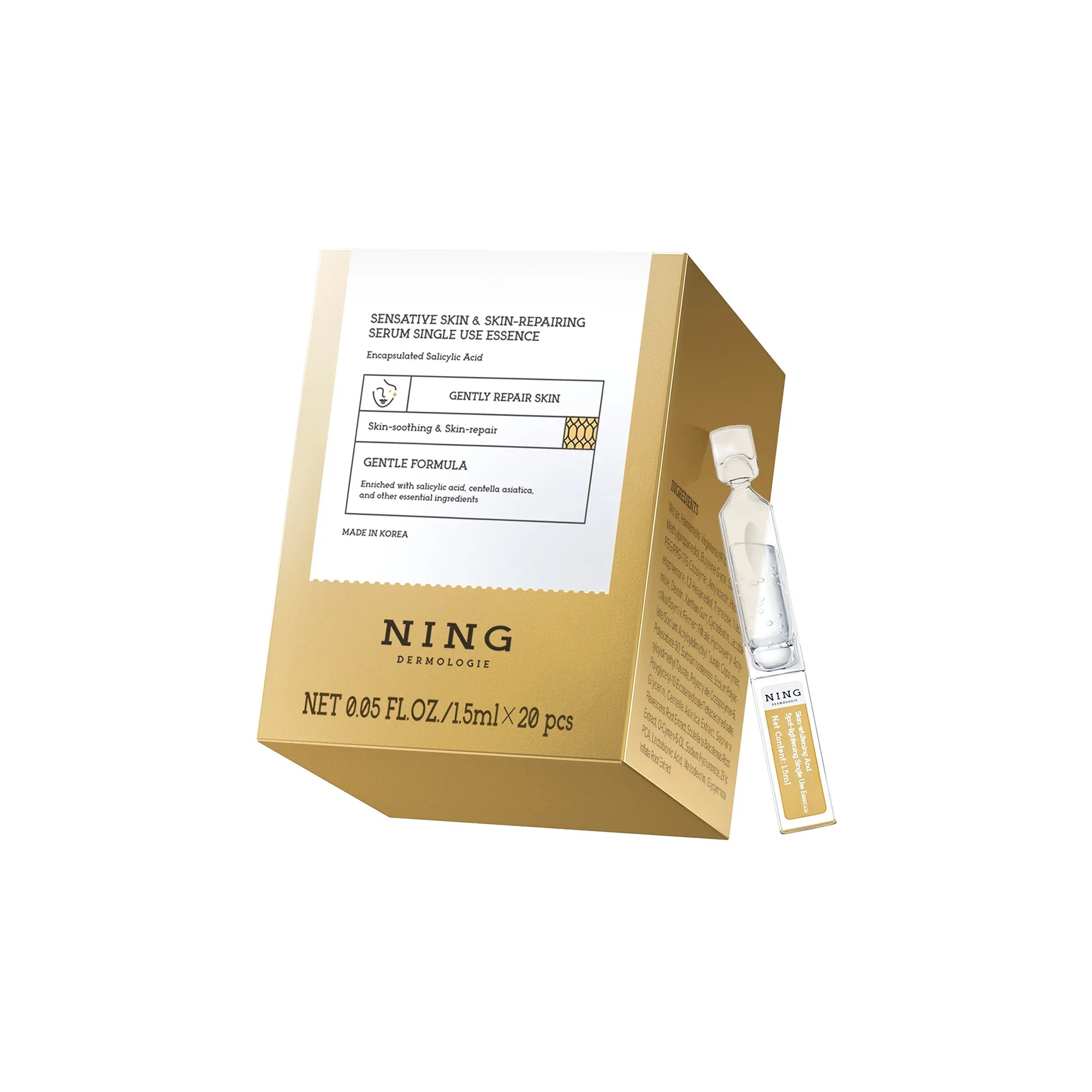
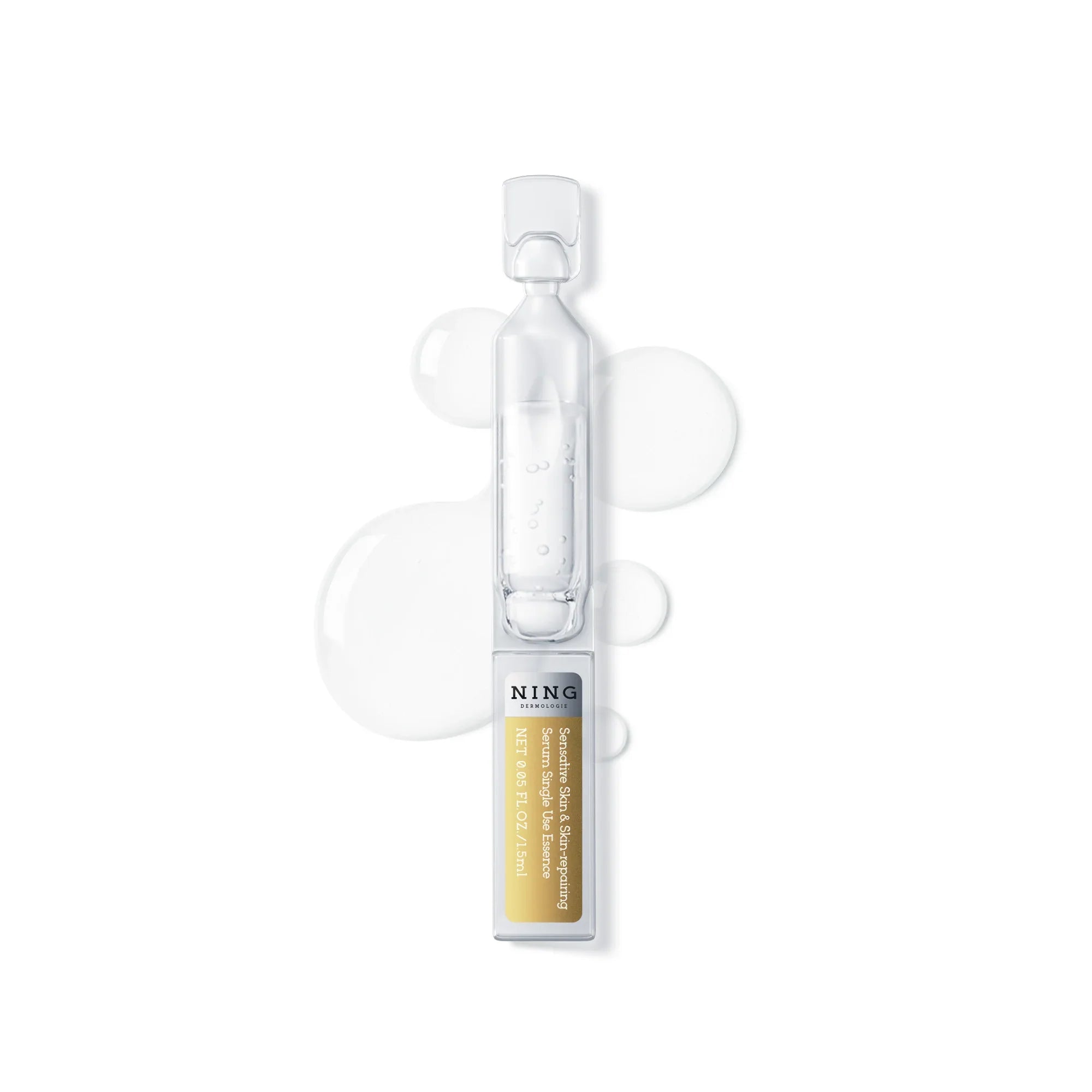
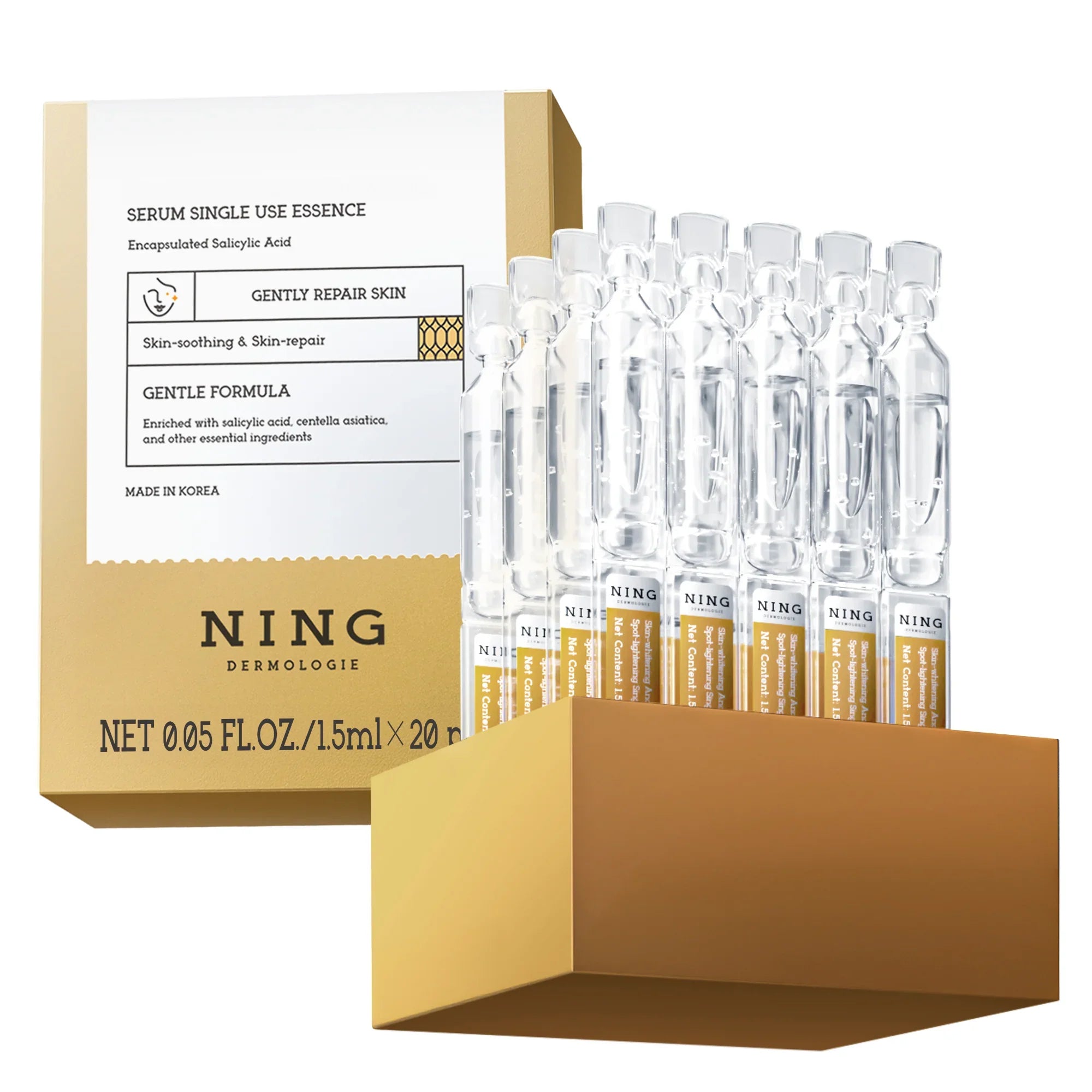
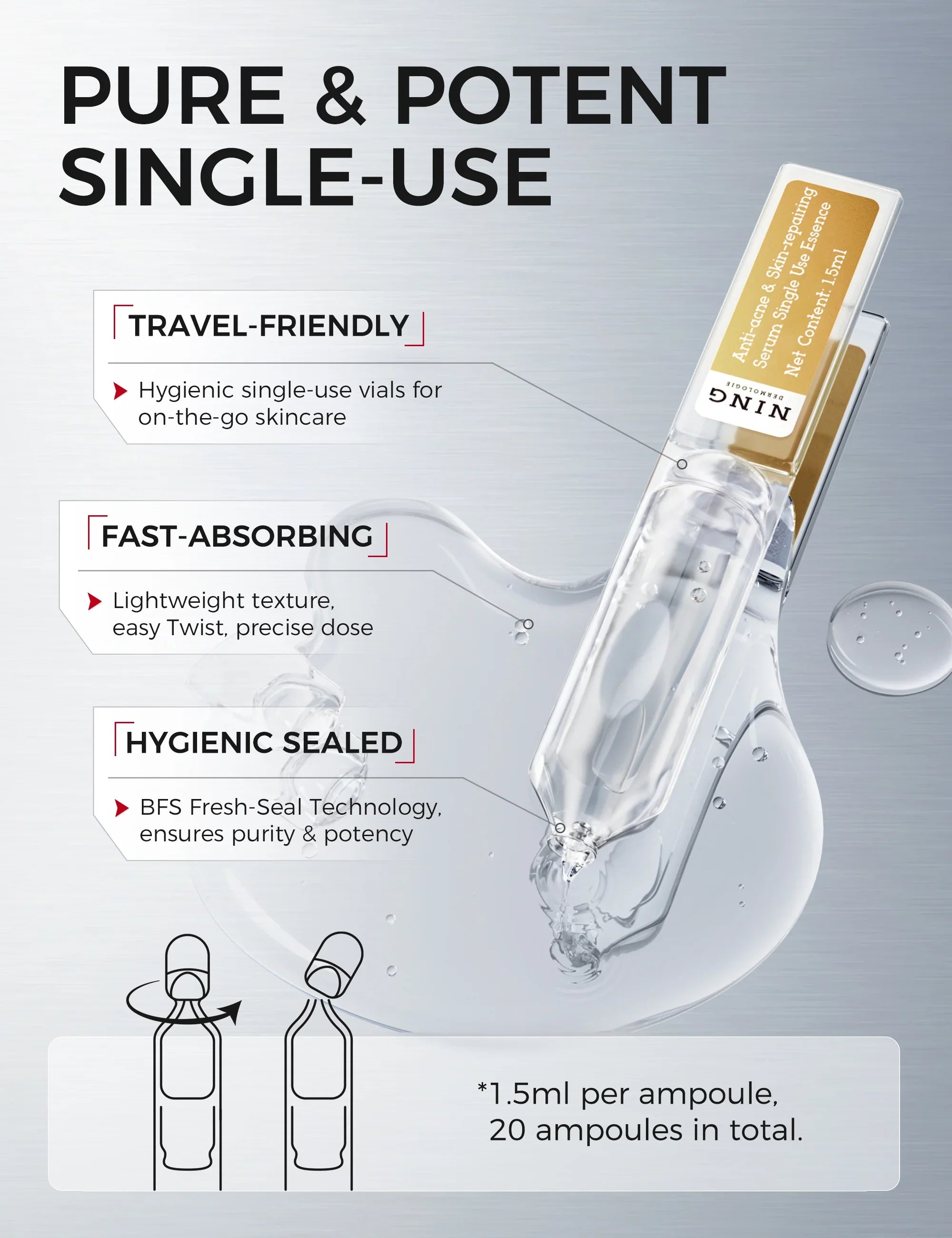
At NING Dermologie, we developed our 2% Salicylic Acid Serum to bridge the gap between "effective" and "gentle." 2% is the "sweet spot"—it’s strong enough to tackle rough skin and acne, but when formulated correctly, it won't leave your face feeling like sandpaper.
How to Use Salicylic Acid the Right Way:
-
Cleanse: Start with a gentle salicylic acid cleanser or a neutral wash.
-
Dry: Always apply salicylic acid to dry skin. Applying actives to damp skin can cause them to absorb too quickly, which may cause skin irritation.
-
Target: If you’re using our acid serum, apply a few drops to the T-zone or any acne-prone areas.
-
Hydrate: This is the non-negotiable step. Because salicylic acid also acts as a drying agent for oil, you must follow up with a moisturizer containing hyaluronic acid to keep your skin hydrated.
The Great Debate: BHA vs. AHA
I often get asked: "Should I use salicylic acid or glycolic acid?" The answer depends entirely on your skin type and skin concerns.
- Glycolic acid (AHA) and lactic acid are great for sun damage and fine lines. They exfoliate the skin surface to improve skin texture.
- Salicylic acid (BHA) is for the "oil dwellers." If you have oily and acne-prone skin, the BHA is your MVP because it gets inside the pore where the trouble starts.
Combining salicylic and alpha hydroxy acids is possible, but proceed with caution. Doing too much at once is a fast track to dry or sensitive skin.
Understanding Different Skin Types: Who is it for?
Oily and Acne-Prone Skin
For you, salicylic acid can help manage the constant "oil slick." By regulating sebum and clearing dead skin cells, it keeps the pore environment clean. Salicylic acid benefits you by reducing the frequency of inflammatory acne.
Sensitive Skin
Yes, you can use it, but you have to be smart. Possible side effects for sensitive skin include redness or peeling. We recommend starting just twice a week. Salicylic acid is generally well-tolerated if you don't overdo it.
Combination Skin
Focus the application of salicylic acid on your oily patches (usually the nose and forehead) and skip the dry cheeks. This targeted approach preserves your skin health without causing unnecessary skin irritation.
The NING Dermologie Approach: Why Our Serum?
Many salicylic acid products on the market are loaded with alcohol to make them dry faster. This is a nightmare for your skin barrier.
Our 2% Salicylic Acid Serum is a skincare product designed with a holistic view. We know that topical salicylic acid works best when it’s not fighting against a compromised barrier. By incorporating salicylic acid into a formula that respects the skin’s pH, we ensure that the shedding of dead skin cells happens without the drama of extreme peeling.
Whether you're dealing with various skin conditions like occasional breakouts or chronic congestion, our salicylic acid-based solution focuses on skin texture and long-term clearer skin.
Common Misconceptions: Is it Safe to Use Every Day?
The question of whether you should use salicylic acid every day is a big "maybe."
If you have very oily skin, your skin might eventually love a daily dose. However, if you have dry or sensitive patches, every other day is plenty. Salicylic acid may be a powerhouse, but it’s not a race. Salicylic acid is considered a treatment, not just a wash. Listen to your face—if it feels tight or looks shiny (but not oily), take a break.
Combining salicylic acid with other actives like Vitamin C or Retinol requires a staggered schedule. Use your acid serum in the morning (with SPF!) and your Retinol at night. This prevents potential side effects like "acid burn" or extreme sensitivity.

The Bottom Line on Salicylic Acid in Skincare
At the end of the day, everything you need to know about salicylic comes down to balance. It is a legendary skincare ingredient for a reason: it works. It treats acne, clears blackheads, and leaves your skin and reduce the appearance of pores.
By understanding salicylic acid as a tool rather than a weapon, you can transform your skincare routine into a targeted, effective ritual. Explore the NING Dermologie range and see how our 2% Salicylic Acid Serum can help you achieve the clearer skin you’ve been chasing.
Frequently Asked Questions (FAQ)
1. How long does it take to see results from salicylic acid?
Patience is key. While you might notice smoother skin texture after just one use, significant changes in acne and blackheads usually take 4 to 6 weeks of consistent use. This timeline aligns with your natural skin cell turnover. If you're using NING Dermologie’s 2% serum, stay the course—consistency beats intensity every time when it's about deep pore clearing.
2. Can I use salicylic acid with Vitamin C?
You can, but don't layer them directly at the same moment. Both are acidic, and using them together can spike irritation or neutralize their effectiveness. A better strategy is to use your Salicylic Acid Serum in the evening to clear pores and Vitamin C in the morning for antioxidant protection. Always remember to wear sunscreen, as acids can increase photosensitivity.
3. Will salicylic acid make me purge?
It’s possible. Since BHAs accelerate skin cell turnover, they may bring existing "clogs" to the surface faster than usual. This "purging" typically looks like small whiteheads in areas where you usually break out. If the breakout occurs in new areas or causes intense redness, it might be irritation rather than purging. Stick with it for a month to see the true results.
4. Is it okay to use salicylic acid while pregnant?
Most derms say a 2% topical dose is fine, but pregnancy skin is unpredictable. Since it's related to aspirin, some people prefer to play it safe and ditch it entirely for a few months. If you’re unsure, just swap it for something like Azelaic acid for a while. Definitely have a quick chat with your doctor before you keep using our serum—better to be safe while you’ve got that "glow" going on.
5. Why is my skin peeling after using the serum?
Think of peeling as your skin’s way of saying "slow down." You might be overdoing it or your barrier is just a bit overwhelmed. It’s an exfoliant, after all. If you start flaking, drop back to using it just twice a week and drown your skin in a thick, bland moisturizer. Once the peeling stops and your face feels bouncy again, you can slowly try increasing the frequency.
6. Can I use salicylic acid on dry skin?
You can, but don't paint your whole face with it. If you're dry but have localized blackheads, just "spot treat" those specific zones. Applying BHA to already parched cheeks is a recipe for redness. Use the NING Dermologie serum only where the oil is, then immediately layer up with a heavy-duty cream or facial oil to lock in moisture. It’s all about balancing that deep clean with heavy hydration.





Share:
Salicylic Acid: A Comprehensive Guide for Skincare Enthusiasts
Top Salicylic Acid Products for Achieving Clear Skin