



Can I Use a Skincare Set if I Have Sensitive Skin? The Truth About Building the Best Skincare Routine
Let’s be honest: having sensitive skin feels like walking through a minefield. One wrong turn—or one wrong ingredient—and your face is on fire. You see shelves lined with glossy, perfectly color-coordinated boxes promising the best skincare routine for sensitive complexions, and you hesitate.
The question isn't just "Can I use a set?" It's "Will this set destroy my barrier?"
Many people with sensitive skin are terrified of pre-packaged routines. The fear is valid. If you react to one product, how do you know which one it is? However, there is a flip side. Trying to build a skincare routine from scratch by mixing and matching random brands can be chemically chaotic. The pH levels might clash, or you might accidentally double up on exfoliants like glycolic acid, leading to disaster.
This guide cuts through the marketing noise. We are going to look at how to curate a skincare routine for sensitive skin that actually works, why NING Dermologie might be the exception to the "no sets" rule, and how to finally get that skin looking healthy, not inflamed.

The Reality Check: What Causes Sensitive Skin?
Sensitive skin isn't just a marketing buzzword; it’s a biological reality where your skin barrier (the outer layer of skin) is compromised. Think of your skin barrier as a security guard. When it’s strong, it keeps moisture in and irritants out. When it’s weak, the guard is asleep, and everything gets in.
What causes sensitive skin? It’s a mix of genetics and environment.
- Genetics: You might be born with a thinner barrier.
- Environment: Cold wind, sun exposure, and pollution.
- Over-stripping: Using a harsh face wash that leaves skin that feels tight.
- Skin Conditions: Eczema, rosacea, or contact dermatitis.
When the barrier is down, nerve endings are exposed. This leads to the classic signs of sensitive skin: redness, dryness, burning, stinging, and itching. If your skin reacts to tap water or changes in weather, you are dealing with skin sensitivity.
Identifying Your Specific Skin Type
Before you grab any care products, you need to know your baseline. Sensitive skin is usually a condition that overlays your actual skin type.
- Sensitive Dry Skin: Your skin feels rough, flaky, and tight. You need heavy oils and ceramides.
- Sensitive Oily Skin: You are shiny and prone to breakouts, but acne products make your face burn. You need hydration without the heavy grease.
- Sensitive Normal Skin: You are generally balanced but get red easily from friction or fragrance.
Understanding your skin type is the first step to ensuring your skin care routine heals rather than hurts.
The Problem with Generic Skincare Sets
Why do dermatologists often hesitate to recommend generic sets? Because most mass-market sets are designed for "average" skin. They often contain a cleanser that is too stripping (foaming agents like SLS) or a moisturizer filled with synthetic fragrances.
However, a dermatologist-formulated or scientifically balanced set is different. A high-quality set is designed so that the cleanser prepares the pH of the skin for the serum, and the serum is sealed in by the moisturizer. This synergy is often missing when we DIY our routines.
This is where NING Dermologie enters the conversation. We realized that people with sensitive skin don't need fewer products; they need better products that work in harmony.
Building a Skincare Routine for Sensitive Skin: The Essentials
If you want to build a skincare routine that calms the fire, you need to focus on ingredients that soothe, hydrate, and strengthen the skin barrier. Here is the blueprint for the best skincare strategy.
Step 1: The Gentle Cleanse
The goal of a face cleanser is to remove dirt, dead skin cells, and makeup without stripping the skin's natural oils. If your skin feels squeaky clean, you’ve gone too far. Look for a gentle cleanser that is creamy or milky. Avoid sulfates. A good cleanse ensures your pure skin is ready for treatment without being irritated.
Step 2: Soothe and Prep
Toning has a bad reputation because of alcohol-based astringents from the 90s. But for sensitive skincare, a hydrating essence or toner is vital to hydrate the skin immediately after washing.
Step 3: The Power of Serums
This is where the magic happens. A serum penetrates deeper than a moisturizer. For sensitive skin types, you want ingredients like:
- Hyaluronic acid: pulls water into the skin cells.
- Centella Asiatica: to soothe inflammation.
- Niacinamide: to calm redness.
Step 4: Moisturize and Seal
You must moisturize. Even oily skin needs it. A moisturizer acts as a sealant. It locks in the water and repairs the barrier. Look for ceramide complexes, which mimic the skin’s natural lipid structure. This helps strengthen the skin against future attacks.
Step 5: Sun Protection (Non-Negotiable)
The sun is the number one enemy of sensitive skin. UV rays trigger inflammation. You need a broad-spectrum sunscreen with SPF 30 or higher. Sun protection helps shield your skin from the sun’s harmful rays, which can cause flare-ups in super sensitive skin.
Why the TEMBUSU 8-Step Routine Works
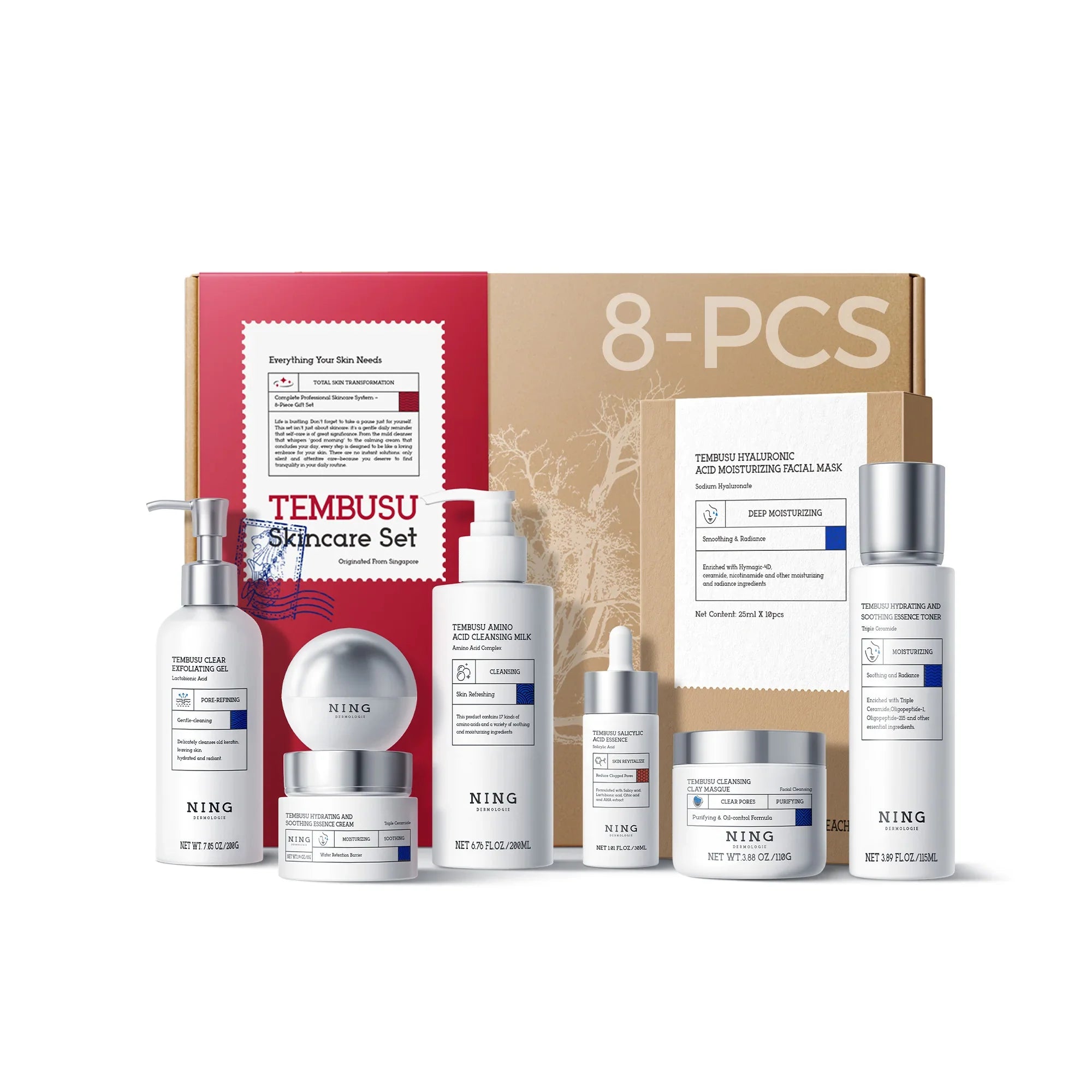
Instead of guessing which face cream works with which face wash, we recommend a cohesive system. The TEMBUSU 8-Step Routine Skincare Set by NING Dermologie was crafted specifically to address the dilemma of choosing skincare for sensitive skin.
Discover the TEMBUSU 8-Step Routine Skincare Set Here
Here is why this set is the best skincare routine for sensitive complexions:
-
Phased Hydration: It doesn't just dump moisture on your face. It layers it. From the cleanser to the final cream, every step adds hydration.
-
Barrier Repair: The Tembusu extract and supporting ingredients focus on the moisture barrier. When you strengthen the skin barrier, skin sensitivity decreases over time.
-
No Guesswork: You don't have to worry if your serum creates a chemical reaction with your toner. The skincare products in this set are chemically compatible.
-
Targeting Inflammation: It is designed to soothe irritated skin and reduce skin redness.
This isn't just skin care; it’s a restoration project for your face.
Tips for Managing Sensitive Skin (Beyond Products)
Even with the best skincare products, lifestyle choices play a huge role. Here are actionable tips for managing sensitive skin:
- Watch the Water Temp: When washing your face, use lukewarm water. Hot water strips natural moisture and causes dryness.
- Patch Test Everything: Before applying a new face cream all over, test it on your neck. This is crucial for sensitive skin products.
- Don't Over-Exfoliate: Dead skin cells need to go, but harsh scrubs are the enemy. If you use exfoliants like glycolic acid, use them sparingly and ensure they are buffered.
- Simplify: If your skin is prone to breakouts or rashes, strip the routine back to basics, then re-introduce products like the TEMBUSU set slowly.
Choosing Skincare for Sensitive Skin: Ingredients to Avoid
To keep skin looking calm, you must be a label detective.
- Fragrance: The #1 cause of skin reactions.
- Alcohol (Denatured): It dries out skin face layers instantly.
- Harsh Sulfates: Found in cheap face wash options.
Instead, look for soothing skin heroes like Aloe, Allantoin, and Hyaluronic acid. The TEMBUSU 8-Step Routine Skincare Set focuses on these restorative ingredients to ensure skin remains soft and plump.

Hydration: The Key to Skin Care Survival
Hydration and moisture are different. Hydration adds water (think hyaluronic acid), while moisture adds oil (think ceramide). Sensitive dry skin needs both. If you skip hydration, your skin produces more oil to compensate (if you are oily) or cracks (if you are dry). A routine that focuses on hydrate steps will make skin that feels tight become supple again.
Drink water, yes, but topical hydration is what stops the signs of sensitive skin from flaring up.
Conclusion: Yes, You Can Use a Set
So, can you use a set? Absolutely, but only if it’s the right set. A disjointed routine causes chaos, but a harmonized system like NING Dermologie brings peace. By using a formulated skincare routine for sensitive skin, you ensure that you cleanse, soothe, moisturize, and protect your skin without the risk of incompatibility.
Your skin concern shouldn't dictate your life. With the right sensitive skin routine, you can repair that barrier and finally enjoy skin that feels as good as it looks.
Frequently Asked Questions (FAQ)
1. How do I know if a skincare set is safe for my sensitive skin?
Always check the ingredient list first. Look for sets labeled as hypoallergenic, fragrance-free, and non-comedogenic. A good set for sensitive skin should focus on barrier repair ingredients like ceramides and soothing botanicals rather than harsh actives. We recommend checking if the brand specializes in sensitive skincare, like NING Dermologie, which formulates specifically to soothe and strengthen the skin barrier. If the set contains high concentrations of alcohol or synthetic fragrances, avoid it.
2. Can I use anti-aging products if I have sensitive skin?
Yes, but proceed with caution. Many anti-aging products contain Retinol or high-strength glycolic acid, which can trigger redness and irritation in sensitive skin types. Look for gentler alternatives like Bakuchiol or peptides, which are found in the TEMBUSU 8-Step Routine Skincare Set. These ingredients stimulate collagen and keep skin looking youthful without the harsh side effects. Always patch test these products for sensitive skin before full application.
3. How often should I exfoliate sensitive skin?
People with sensitive skin should be very careful with exfoliants. Physical scrubs (with beads or shells) can cause micro-tears. Chemical exfoliants are better but should be used sparingly—perhaps once every 7 to 10 days. Listen to your skin. If you feel stinging or see dryness, stop immediately. A gentle cleanser is often enough to remove daily grime without stripping the protective barrier.
4. Why does my skin sting even when I use "gentle" products?
If your skin stings upon application of even mild products, your moisture barrier is likely severely compromised. This exposes your nerve endings. In this state, even water can hurt. Stop using all active ingredients. Switch to a bare-bones sensitive skin routine focused purely on healing—think a milky face wash and a rich ceramide moisturizer. Once the barrier heals, the stinging will stop, and you can resume a full skin care routine.
5. Is natural skincare always better for sensitive skin?
Not necessarily. Essential oils like lemon, peppermint, and lavender are "natural" ingredients that can make skin sensitive and cause contact dermatitis. Just because it comes from a plant doesn't mean it's gentle on your face. Scientific formulas that separate the calming compounds, like the Tembusu extract in NING Dermologie, are usually safer because they don't contain the allergens that are present in raw plant materials. Always prioritize formulation over the "natural" label for the best skincare results.
6. What is the most important step in a sensitive skincare routine?
While cleansing and moisturizing are vital, sun protection is arguably the most critical for preventing flare-ups. UV rays cause inflammation that weakens the skin further. Using a broad-spectrum sunscreen with SPF 30+ every day is non-negotiable to protect the skin. Without it, all the soothing skin products in the world won't be able to undo the daily damage caused by the sun’s harmful rays.





Share:
Acne Solutions: Discover the Best Salicylic Acid Serums
Exfoliation Explained: How to Safely Use AHA/BHA Skincare Sets Without Damaging Your Barrier