

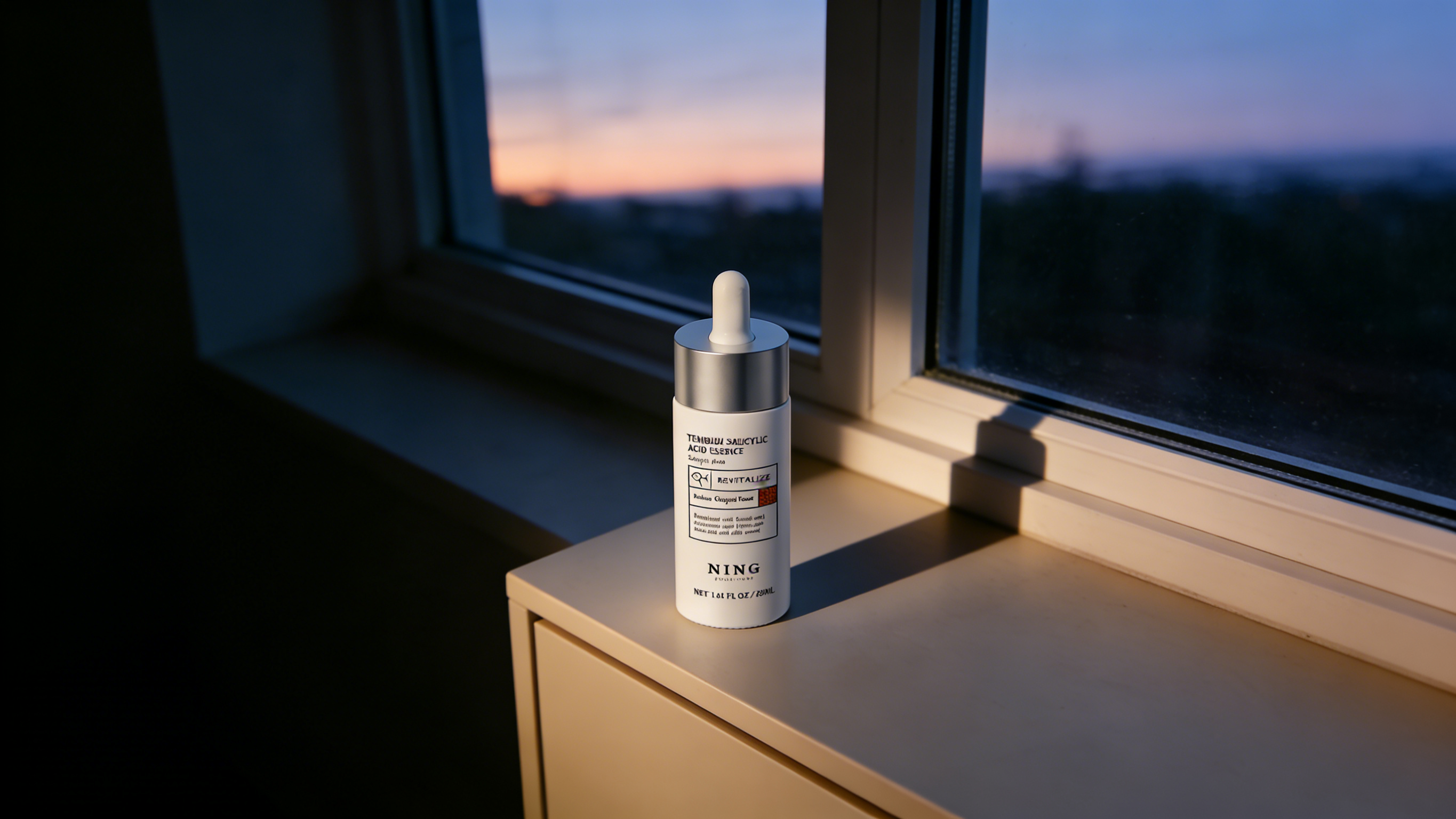

The Deep Dive: How Salicylic Acid Actually Transforms Your Skin
Let’s be honest: looking in the mirror and seeing a fresh cluster of blackheads or a stubborn breakout can ruin your morning. You’ve probably heard people rave about salicylic acid, but if you’ve ever tried a random drugstore scrub and ended up with flaky, red patches, you know that "more" isn't always "better."
The truth is, salicylic acid helps transform your face from a congested "oil field" to a canvas of clearer skin, but only if you understand the mechanics. At NING Dermologie, we believe skincare shouldn't be a guessing game. Whether you are battling chronic acne and oily skin or just trying to refine your skin texture, here is everything you actually need to know about this powerhouse beta hydroxy acid.

What Exactly Is This Stuff?
Salicylic acid is found naturally in willow bark, but in modern skincare, it’s a high-precision tool. Unlike an alpha hydroxy acid (like lactic acid or glycolic acid), which is water-soluble and sits on the surface, salicylic acid is oil-soluble.
Why does that matter? Think of your pores like narrow pipes. Most exfoliants just wash the top of the drain. Because this beta-hydroxy-acid loves oil, it actually dives down into the sebum, cutting through the grease to clog-proof your face from the inside out.
How Salicylic Acid Works
The magic happens through a process called desmolysis. Essentially, salicylic acid works by breaking down the bonds between dead skin cells. When these bonds are tight, dead skin gets trapped, mixes with oil, and creates a "plug." By dissolving those glues, the use of salicylic acid ensures that debris flows out naturally rather than turning into a painful cyst.
Why Your Current Routine Might Be Failing You
If you’ve used salicylic acid products before and didn’t see results, the delivery system was likely the culprit. Wash-off cleansers are great for maintenance, but they don't stay on the facial skin long enough to do the heavy lifting.
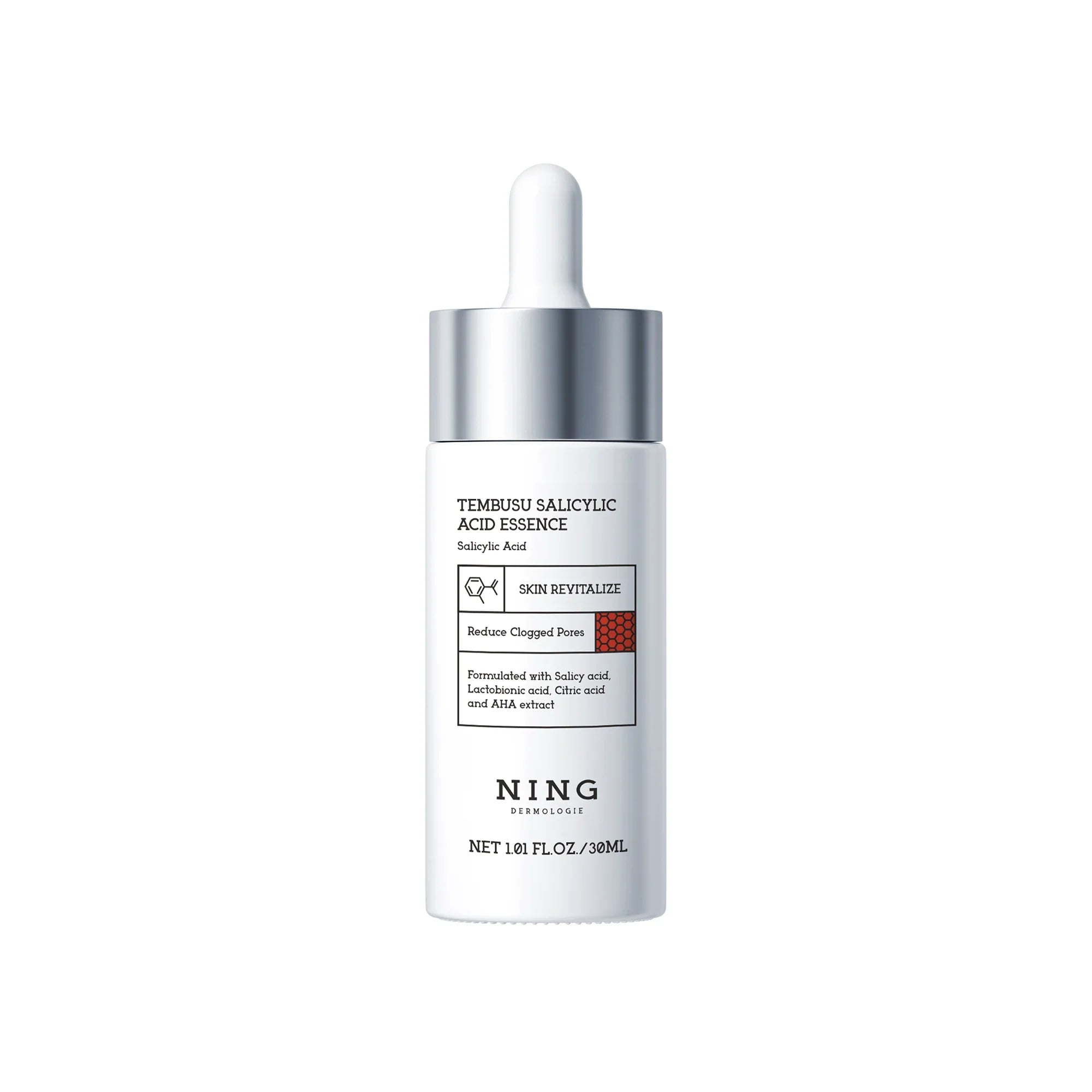
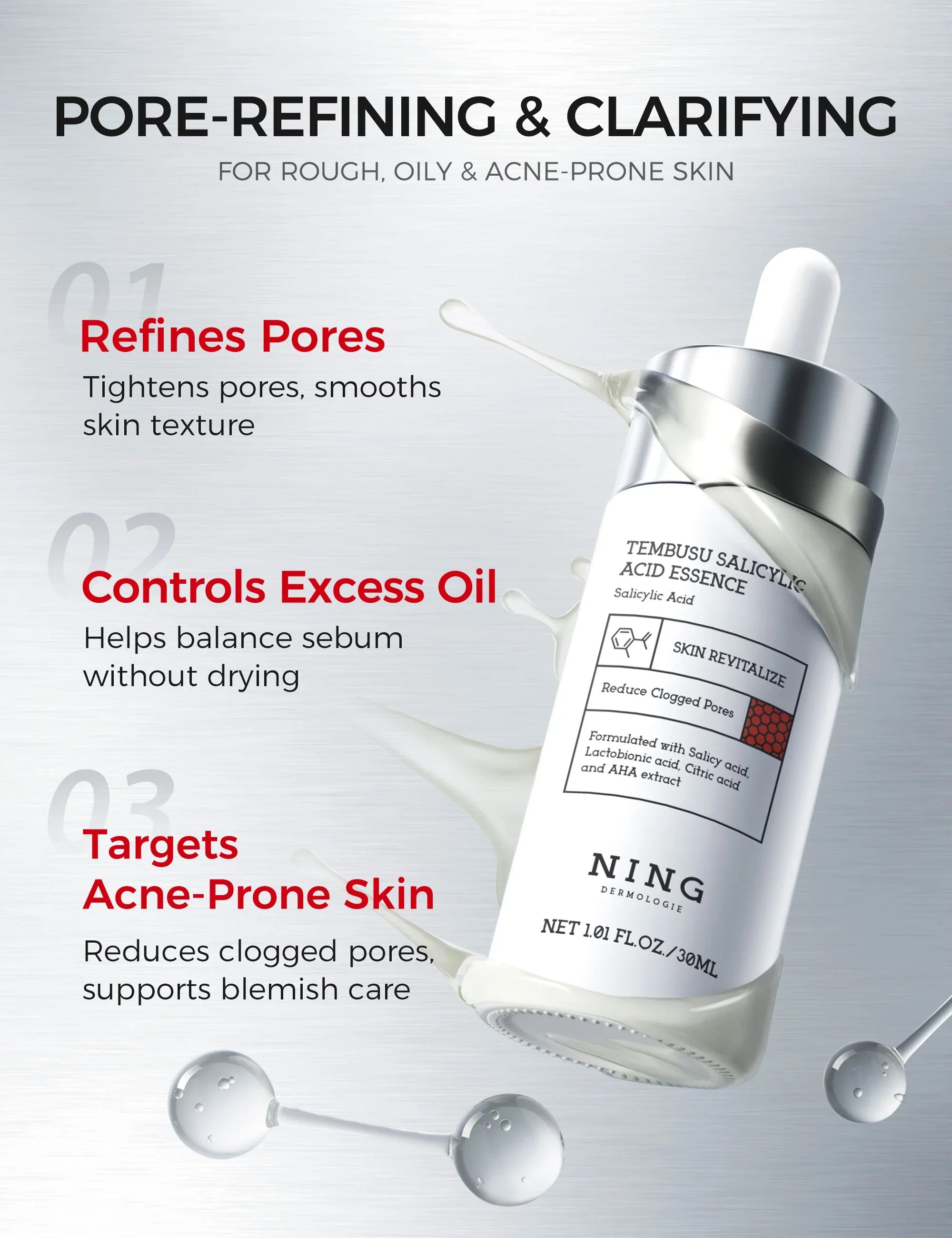
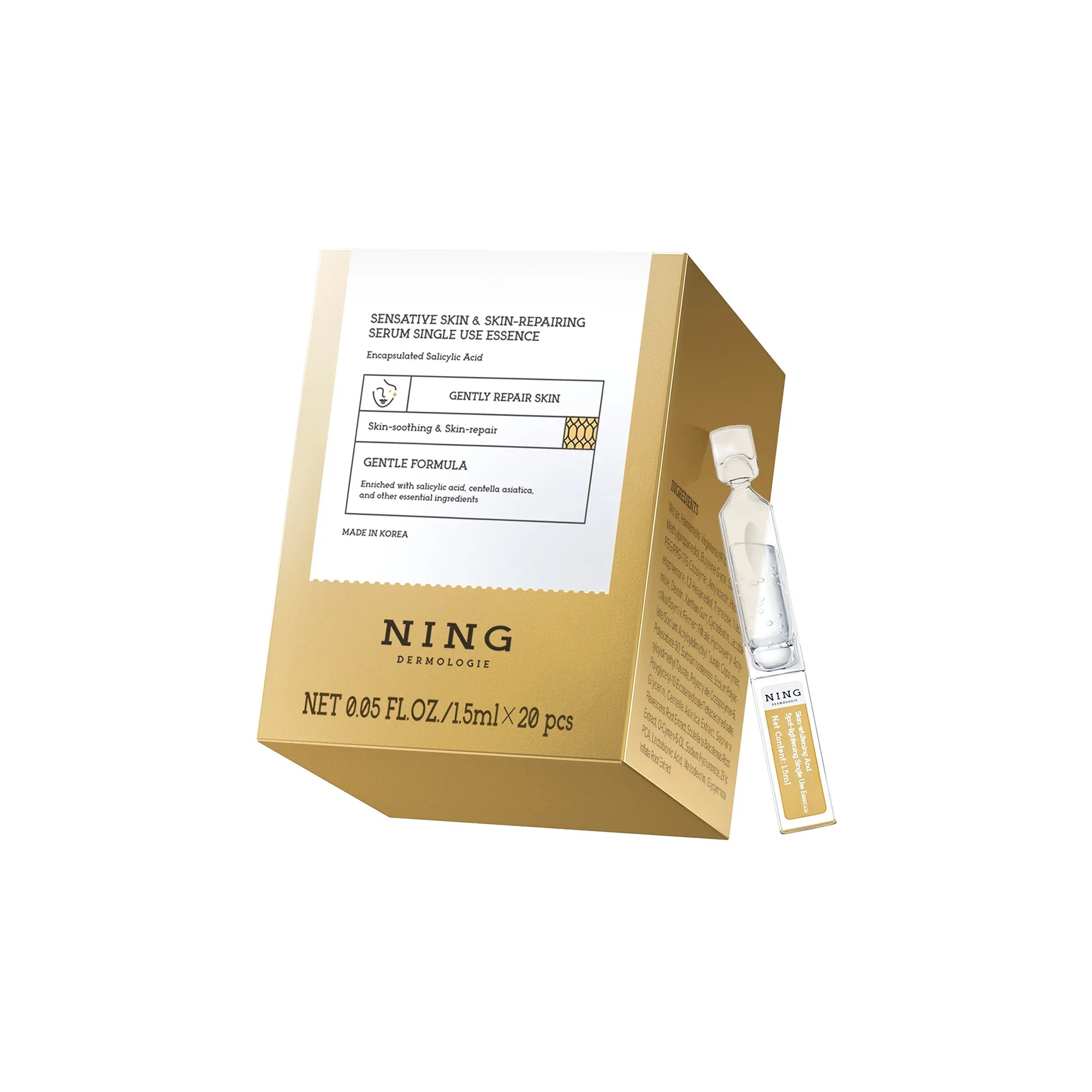
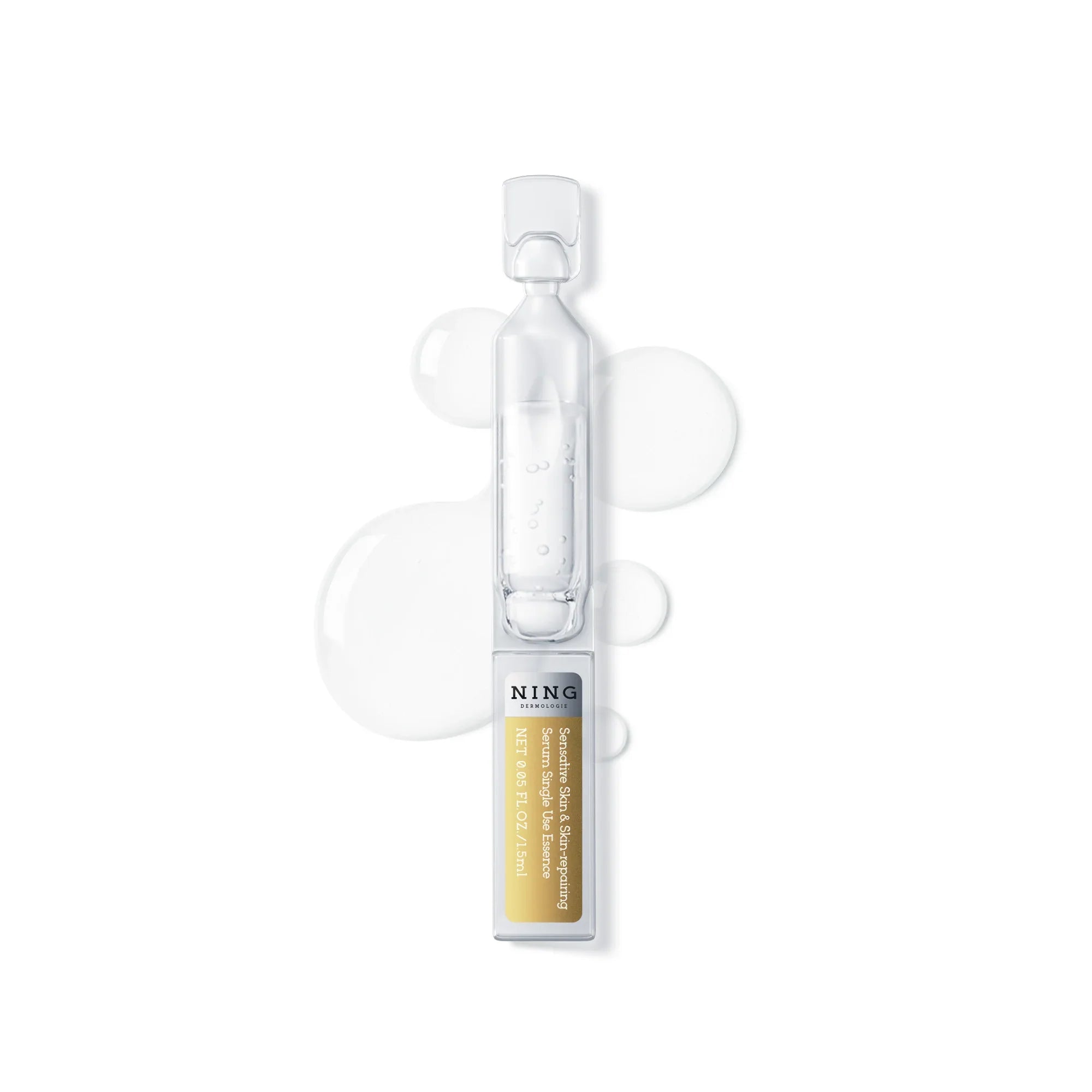
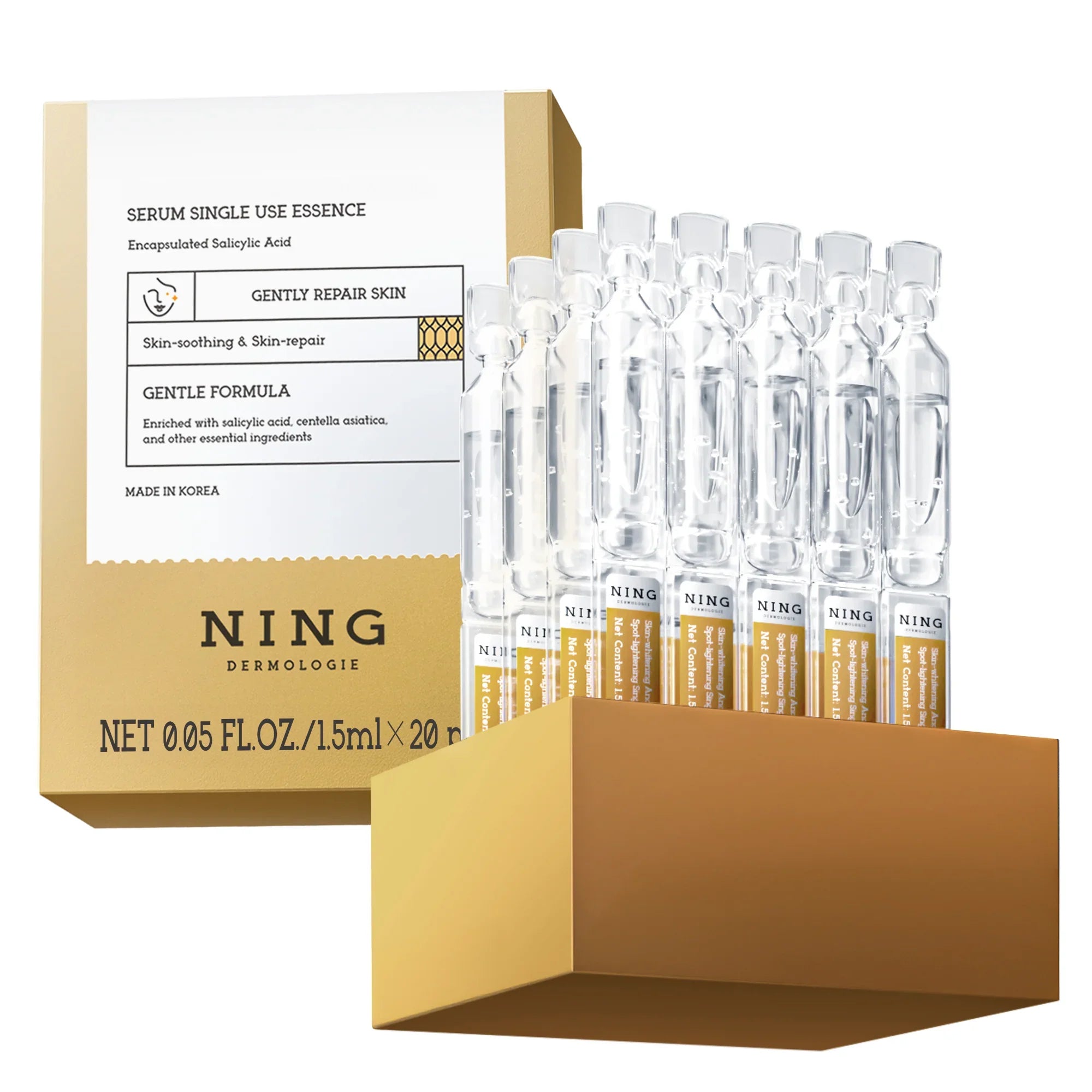
This is where a salicylic acid serum changes the game. A concentrated serum stays on the skin, allowing the dose of salicylic acid to penetrate deep into the follicular lining. At NING Dermologie, our 2% Salicylic Acid Serum is formulated to balance this intensity with soothing agents, ensuring you get radiant skin without the dreaded "chemical burn" look.
The Big Benefits: More Than Just Zapping Pimples
While most people incorporate salicylic acid to treat acne, the benefits of salicylic acid go much further:
-
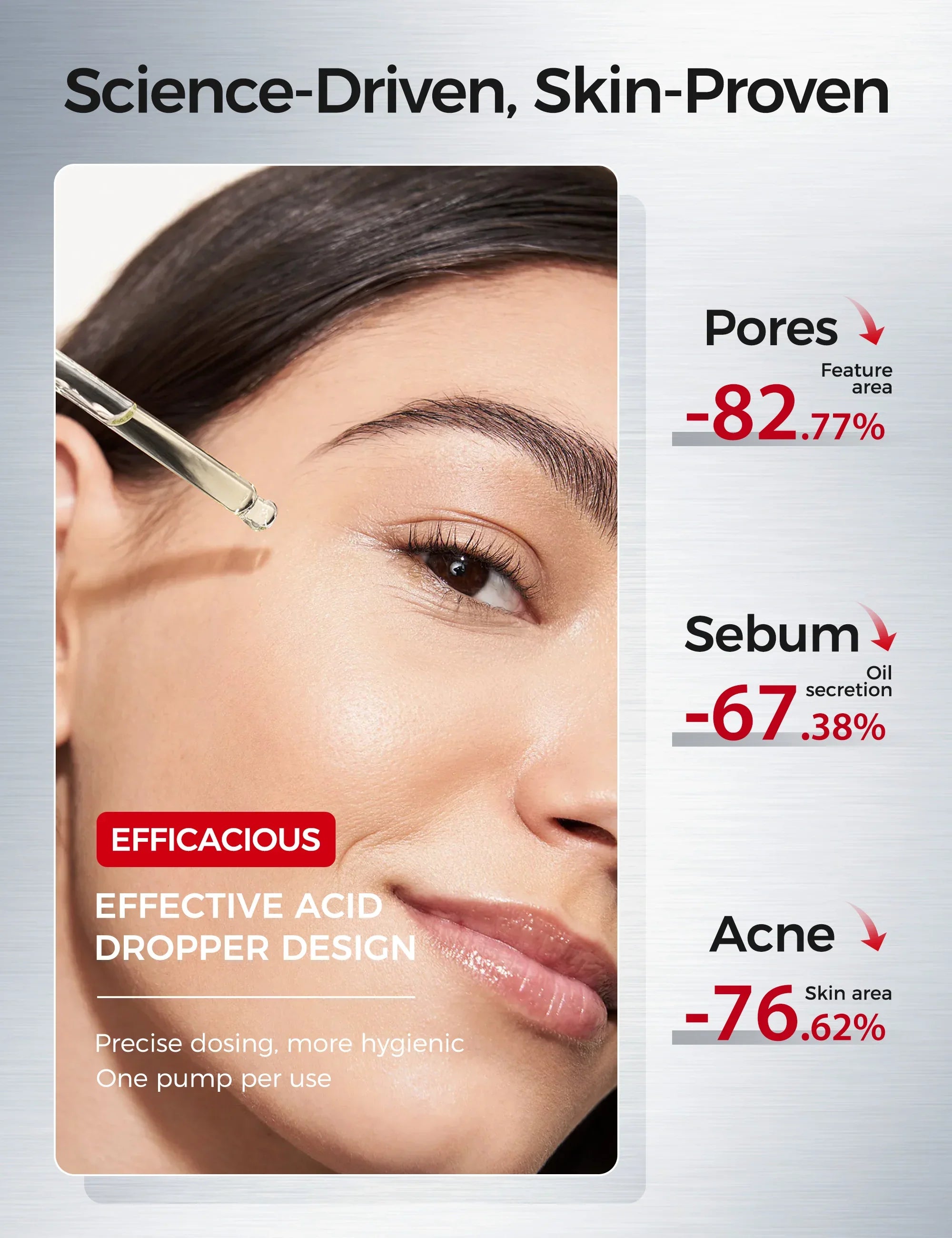
Blackheads and Whiteheads: By keeping the pore clear of "sticky" cells, it stops these non-inflammatory bumps before they even start.
-
Oil Control: Regular use of salicylic acid can actually slow down excess sebum production, making your skin less of a magnet for dirt throughout the day.
-
Refined Skin Texture: It removes dead skin cells that make your face look dull or rough skin. After a few weeks, you’ll find it leaves the skin feeling significantly smoother.
-
Calming Inflammation: Believe it or not, topical salicylic acid has anti-inflammatory properties (it's a derivative of the same family as aspirin), which helps calm the redness of active skin issues.
How to Use Salicylic Acid Serum Without Wrecking Your Barrier
The "more is better" trap is real. If you apply salicylic acid three times a day, your skin may rebel. Here is the NING Dermologie guide to a safe skin care routine:
Step 1: The Patch Test
Before you cover your various skin areas, test a small spot near your jawline. Wait 24 hours to see how your skin feels. If there’s no extreme irritation, you’re good to go.
Step 2: Nighttime Application
Salicylic acid can make your skin more vulnerable to the sun. We recommend using your salicylic acid serum during your evening skin care ritual. Start with twice a week and let your skin adjusts.
Step 3: The Buffer Method
If you have dry or sensitive skin, apply a thin layer of hyaluronic acid or a light moisturizer before your salicylic serum. This slows down the penetration just enough to prevent possible side effects while still delivering results.
Step 4: Sunscreen is Non-Negotiable
Since any hydroxy acid exfoliates the skin, it reveals fresh, "baby" cells that burn easily. If you use an acid in skincare products, you must wear SPF 30+ the next morning.
Troubleshooting: Potential Side Effects
Is salicylic acid generally safe? Yes. But it is a potent active. You need to know about salicylic acid triggers to avoid making your skin worse.
-
Dry Skin & Flaking: This is the most common of the potential side effects. If you notice scaly skin, dial back the frequency.
-
Purging: Sometimes, salicylic acid penetrates deep and pushes hidden gunk to the surface all at once. This "purge" usually lasts 2–4 weeks. If it lasts longer, it might be irritation, not a purge.
-
Sensitivity: Salicylic acid can also interact poorly with Retinol or Vitamin C if used at the exact same time. Space them out—one in the morning, one at night.
Salicylic Acid vs. Glycolic Acid: Which One Wins?
Many people ask if they should use glycolic acid instead. Glycolic acid is an alpha hydroxy acid that is incredible for even skin tone and anti-aging. However, for oily and acne-prone skin, salicylic acid wins every time because glycolic acid cannot dissolve oil.
If you have oily or combination skin with large pores, stick with the BHA. If you have dry skin and are mostly worried about fine lines, go with the AHA. At NING Dermologie, we often suggest alternating them once your skin barrier is strong enough.

The NING Dermologie Difference
Our 2% Salicylic Acid Serum isn't just a bottle of acid. We’ve focused on a "slow-release" logic that revitalizes the skin without the aggressive sting found in cheaper formulations. It leaves your skin feeling balanced, not stripped. When you use salicylic acid from our line, you are investing in a formula that respects your skin condition while aggressively targeting acne.
Whether you’re dealing with scaly skin, rough skin, or just those pesky blackheads and whiteheads, remember that consistency is your best friend. Salicylic acid penetrates the problem, but time and patience provide the cure.
Frequently Asked Questions (FAQ)
-
Can I use salicylic acid every day?
While salicylic acid is generally safe for daily use, you shouldn't start that way. Begin with 2–3 times per week. If your skin feel remains comfortable and you aren't seeing dry skin, you can move to once-daily application. Over-exfoliating can damage your skin barrier, leading to more skin problems like redness and oil rebound.
-
Why is my skin peeling after using the serum?
Peeling is one of the possible side effects when the dose of salicylic acid is too high or used too frequently. It means the hydroxy acid is working too fast for your skin type. Pause use for three days, focus on hyaluronic acid for hydration, and then restart with less frequency.
-
Is it safe for sensitive skin?
Yes, but with caution. Sensitive skin types should look for salicylic acid included in soothing bases. Use the "buffer method" by applying moisturizer first. If you experience burning or extreme irritation, wash it off immediately. Many with dry or sensitive skin find they only need it as a spot treatment.
-
Can I use it while pregnant?
Most dermatologists recommend avoiding high concentrations of topical salicylic acid during pregnancy. While the small amount in a serum is likely fine, always consult your doctor first. Lactic acid is often suggested as a safer alpha hydroxy acid alternative during this time to maintain healthier skin.
-
How long does it take to see clearer skin?
Patience is key. While your skin texture might feel better in days, acne takes longer. It usually takes 4–6 weeks of regular use of salicylic acid to see a significant reduction in blackheads and whiteheads. Your skin adjusts to the treatment over one full cellular turnover cycle.
-
Does it work on body acne?
Absolutely. Salicylic acid helps with "bacne" or chest breakouts just as well as facial skin. Since the skin on the body is tougher, you can often apply salicylic acid here more frequently than on the face to help clog-proof those larger pores and achieve clearer skin all over.





Share:
Combatting Skin Imperfections with Salicylic Acid: Benefits and Uses
Exploring the Skincare Advantages of Salicylic Acid